The European Union enters one of its most geopolitically charged sessions today, Monday, as the Foreign Affairs Council (Defence) convenes in Brussels.
Two major issues overshadow everything else:
- Ukraine’s urgent need for military support, at a moment when U.S. funding hangs by a thread.
- The SAFE program, a €150-billion European defence financing scheme set to reshape the continent’s strategic capabilities.
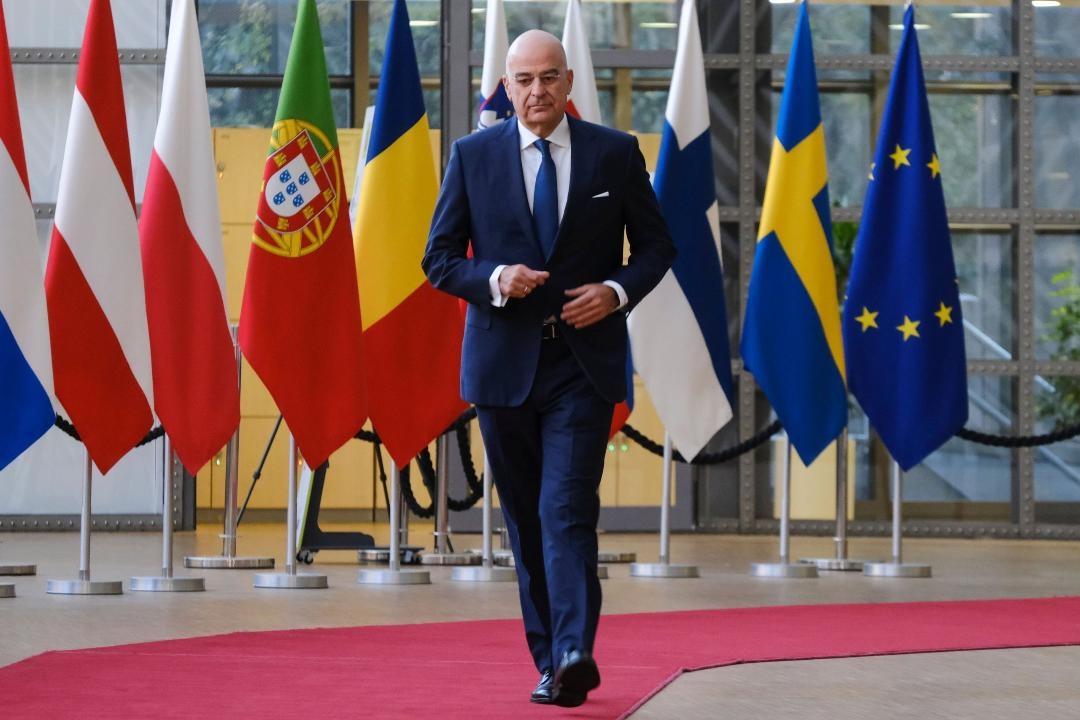
Greece is represented by Defence Minister Nikos Dendias, who arrives in Brussels during a period of intense pressure for unity, credibility, and rapid decisions.
Ukraine: Europe’s Test of Resolve as Washington Hesitates
Ukraine tops today’s agenda. Uncertainty over U.S. funding — with negotiations in Florida still inconclusive — has created fresh anxiety inside European chancelleries. Several EU states fear a scenario in which Europe must shoulder a far greater share of Kyiv’s defence without American backing.
Participating in today’s talks are:
- Ukrainian Defence Minister Denys Shmyhal,
- NATO Secretary General Mark Rutte,
a clear sign that Ukraine is no longer just a European concern but a full transatlantic stress test.
Diplomatic officials warn that without predictable, multi-year commitments, the EU risks appearing weak, divided, and strategically dependent.

SAFE: Europe’s New “Power Multiplier” — or a New Battlefield Between States?
Beyond Ukraine, the EU’s brand-new defence financing tool — SAFE — is triggering intense behind-the-scenes negotiations.
SAFE, with €150 billion available for long-term loans and collaborative defence procurement, aims to:
- fund joint European weapons programs,
- expand production lines for ammunition and drones,
- strengthen critical infrastructure,
- and reduce dependence on U.S. and non-European suppliers.
It is, in essence, the EU’s first serious move to build a continental defence industrial base.
But unresolved questions remain:
- Which countries get priority access?
- Which projects qualify?
- How will the financing be shared among states with competing agendas?
The working lunch in Brussels is expected to be tense and highly political, as states attempt to position themselves inside the new defence landscape.
Greece’s Strategy: Securing a Place in Europe’s Next Defence Cycle
Minister Nikos Dendias approaches the meeting with three core objectives:
- ensuring Greece’s participation in the first wave of SAFE-funded programs,
- pushing projects tied to Greek shipbuilding, naval infrastructure, defence tech, and ammunition,
- and strengthening ties with EU states that view the Eastern Mediterranean as strategically crucial.
Athens considers SAFE a historic opportunity to boost its defence industry and secure funding for sectors where Greece has natural competitive advantages — particularly naval systems and emerging dual-use technologies.
Analysis: Europe at a Crossroads — Strategic Autonomy or Strategic Illusion?
Today’s Council meeting is more than a diplomatic formality. It is a moment of truth.
Europe must demonstrate that it can:
- organize its own defence,
- invest at a scale matching global threats,
- and respond to crises without waiting for Washington.
Ukraine represents the immediate battlefield.SAFE represents the long-term strategy.
If EU ministers fail to align today, the consequences will be severe:fragmentation, weakened deterrence, and lost credibility.
If they succeed, however, this meeting could mark Europe’s most decisive step toward real strategic autonomy in decades.
Source: pagenews.gr