
Europe Pays, Trump Decides, Ukraine Waits: A New Geopolitical Reality
As the war in Ukraine enters its fourth year, the shock for Kyiv no longer comes from the battlefield — it comes from Washington, D.C. With Donald Trump back in the White House, the United States has frozen all new funding for Ukraine, abruptly halting the support that kept Kyiv’s defense stable since 2022.
Meanwhile, Europe has stepped into an unprecedented role: it has become the primary financial and military backer of Ukraine, allocating almost €50 billion between January and August 2025 alone, according to the Ukraine Support Tracker of the Kiel Institute.
This marks a historic reversal. Under the Biden administration, the U.S. had committed more than €100 billion in military, financial, and humanitarian aid. But with Trump’s return, the transatlantic equation has flipped.
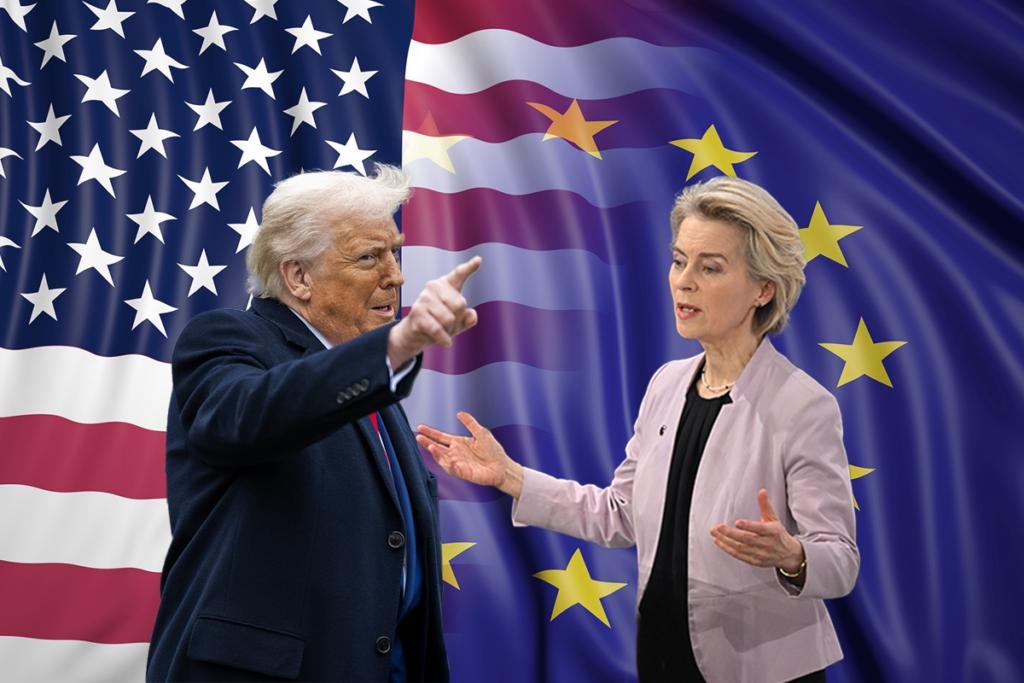

A War Europe Must Now Carry
The latest data clearly shows what was once unthinkable: Europe is now shouldering the war effort, just as Ukraine faces:
- a stretched defense industry,
- war fatigue among European publics,
- Russian advances exploiting the U.S. vacuum.
The absence of U.S. support is not just a budget issue — it is a strategic void. Moscow knows that without American intelligence, ammunition, and long-range capabilities, Ukraine’s ability to hold out diminishes by the month.
Trump’s New Doctrine: A Return to American Isolationism?
The funding freeze is not a bureaucratic delay — it reflects a new Trump-era doctrine:
“America First means Europe Alone.”
The message to Brussels is unmistakable: this is Europe’s war, Europe’s region, and Europe’s problem. The U.S. is no longer willing to bankroll the conflict.
This leaves Europe facing a stark strategic crossroads:
- either build a self-sufficient defense architecture capable of sustaining Ukraine and deterring Russia,
- or accept that the Western order formed post-1945 is cracking open.
Can Europe Carry the War Alone?
Europe has the industrial base. Europe has the resources. But does Europe have the unity, the speed, and the political will?
Some EU states push for increased defense spending. Others hesitate, fearing domestic backlash. And all the while, Russia is accelerating production, mobilizing troops, and betting that Western cohesion will crumble.
Analysts warn that 2025 may be the decisive year: If Western support weakens further, the war risks tipping toward a Russian strategic victory with catastrophic consequences for European security.
Europe Faces an Existential Question
Ultimately, this is not just about Ukraine. It’s about the future of the West.
Can Europe defend its values, its borders, and its security architecture without the United States?
The war has become the ultimate test:
- of NATO’s credibility,
- of EU defense autonomy,
- of the transatlantic alliance itself.
With Trump pressing “pause” in Washington, Europe has no choice but to press “play” — alone.
Source: pagenews.gr