


Papastavrou:Greece Channel Defense Spending into Energy Security,Aiming to Become Eastern Mediterranean Hub
 ΧΡΟΝΟΣ ΑΝΑΓΝΩΣΗΣ 4 '
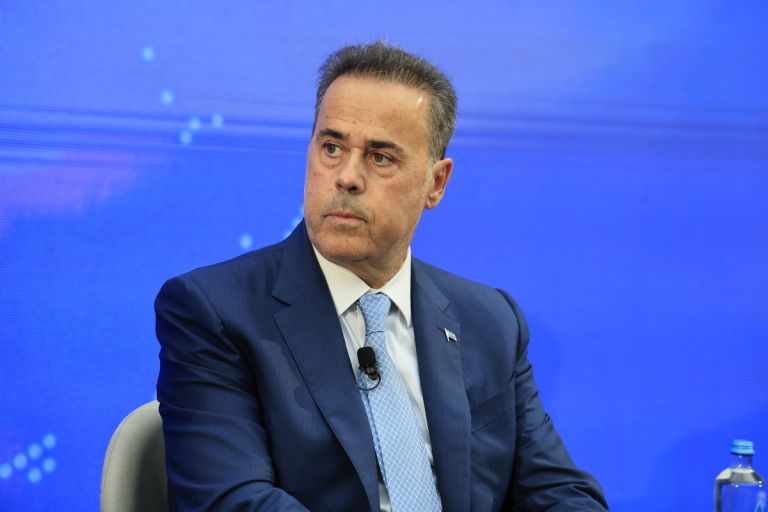
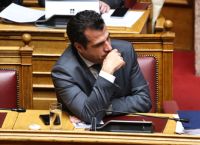
Πηγή Φωτογραφίας: eurokinissi/Papastavrou: Greece to Channel Defense Spending into Energy Security, Aiming to Become Eastern Mediterranean Hub



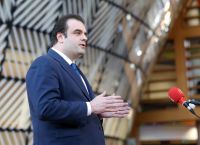
Greece is taking bold steps to establish itself as a strategic energy hub linking the Eastern Mediterranean, Europe, and beyond, Energy Minister Stavros Papastavrou said in a keynote address at the Foundation for the Defense of Democracies in Washington.
Highlighting the rapidly changing global energy landscape, Papastavrou outlined Greece’s plan to leverage two major energy corridors—the Vertical Corridor and the India–Middle East–Europe Corridor (IMEC)—while fostering closer cooperation with the United States and Europe.
“In a world where instability is the new norm, Greece relies on strong alliances but is also building its own energy resilience through coordinated strategic moves,” Papastavrou emphasized.
The Vertical Corridor: Greece to Ukraine
At the heart of Greece’s energy strategy is the Vertical Corridor, a network of pipelines and infrastructure connecting Greece with Bulgaria, Romania, Moldova, and Ukraine. The corridor will deliver U.S.-sourced LNG to Ukraine, providing Europe with a reliable alternative to Russian gas. Papastavrou described it as a “corridor of peace and prosperity,” strengthening countries facing energy coercion.
The project will require long-term contracts and billions in investment, he noted, and will complement the EU’s RepowerEU initiative to replace Russian gas, including the 14–15 billion cubic meters currently entering Southeastern Europe via TurkStream.
Innovative Financing: Defense Spending for Energy Security
Papastavrou proposed an innovative approach to financing these projects: allocating 1.5% of NATO defense spending obligations to energy security initiatives. Under NATO guidelines, member states allocate 5% of budgets to defense, and this portion could fund LNG terminals, pipelines, storage, and transport infrastructure.
“Energy independence is now a pillar of strategic security,” he said, framing energy infrastructure as an integral component of collective defense.
IMEC and the 3+1 Framework
Greece is also investing in the India–Middle East–Europe Corridor (IMEC), designed to create a secure westward energy and trade route linking India to Central Europe. The upcoming 3+1 summit (Greece–Cyprus–Israel + U.S.) in Washington will focus on gas and electricity infrastructure projects that strengthen connectivity and stability across regions.
Papastavrou described IMEC as the first modern, secure corridor from India to Europe, built on shared values of stability, cooperation, and conflict avoidance.
Domestic Energy Production and Infrastructure
Papastavrou stressed that Greece must not rely solely on international corridors. The government is moving forward with ExxonMobil for hydrocarbon exploration, the first in 40 years, expected within 18 months, while Chevron will conduct seismic surveys in 2026.
“We are pursuing all technologies, not just hydrocarbons, to achieve energy security,” he said, signaling a commitment to diverse energy sources and long-term domestic resilience.
Transatlantic Cooperation and Policy Alignment
European governments are increasingly aligning with U.S. approaches on energy, Papastavrou noted, citing a €250 billion annual energy trade agreement through 2028 and ongoing efforts to simplify methane regulations.
“These measures create a new framework of EU–U.S. policy convergence,” he said, enhancing energy security while ensuring supply safety and affordability.
Mega-Interconnections and the Future Grid
Greece is advancing major electricity interconnection projects, including the Greece–Cyprus Interconnection (GSI), and exploring links with Middle Eastern partners, including Saudi Arabia. These initiatives integrate domestic and international infrastructure into a cohesive framework that enhances regional energy security.
Papastavrou framed Greece’s strategy as a multi-layered approach, combining domestic energy production, international energy corridors, and transatlantic cooperation. By positioning itself as a regional energy hub, Greece seeks to reinforce European energy security, resilience, and geopolitical stability.
Source: pagenews.gr
Διαβάστε όλες τις τελευταίες Ειδήσεις από την Ελλάδα και τον Κόσμο




Το σχόλιο σας