


Investment Boom Reshapes Greece’s Supermarket Industry as Competition Intensifies
 ΧΡΟΝΟΣ ΑΝΑΓΝΩΣΗΣ 6 '
Πηγή Φωτογραφίας: Greece’s supermarket chains are entering one of the most capital-intensive phases in the sector’s history, rolling out investment programmes worth billions of euros as competition sharpens and consumer behaviour shifts.



Greece’s supermarket chains are entering one of the most capital-intensive phases in the sector’s history, rolling out investment programmes worth billions of euros as competition sharpens and consumer behaviour shifts. From logistics hubs and digital platforms to energy upgrades and new store formats, the country’s largest food retailers are betting heavily on scale, efficiency and technology to defend market share in a high-cost environment.
A sector investing against the cycle
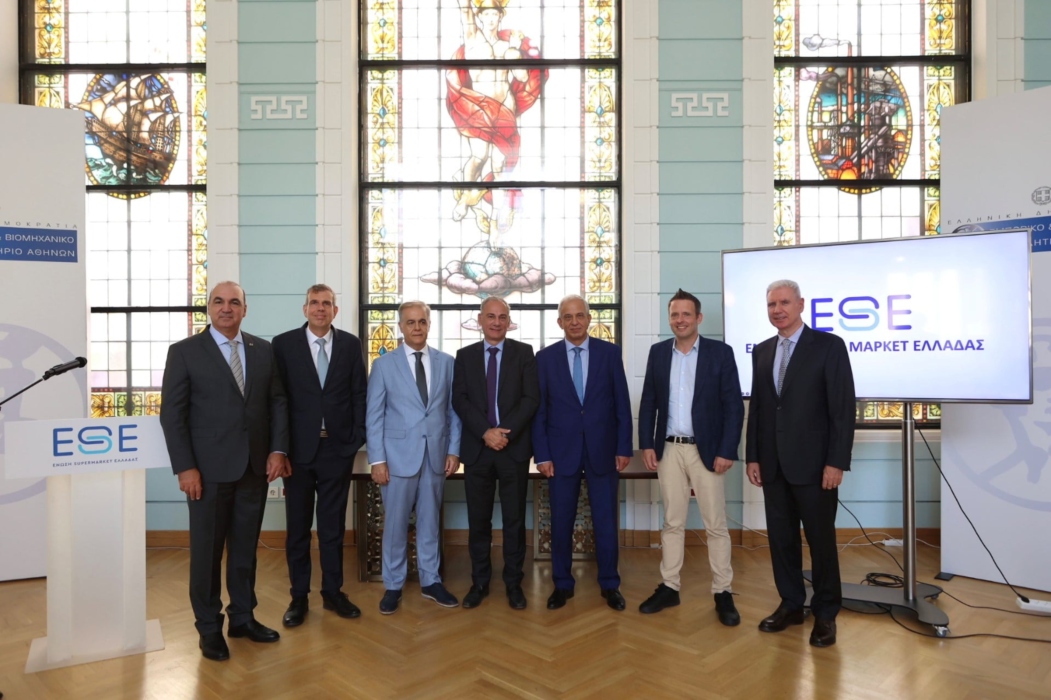
Despite inflationary pressures, elevated energy costs and softer demand in selected product categories, organised food retail remains one of the most resilient pillars of the Greek economy. According to the Hellenic Super Market Association, sector investments reached €2.2bn between 2020 and 2025, bringing total spending over the past decade to approximately €3.5bn.
“In an environment of rising competition and higher operational demands, supermarkets continue to invest,” said Apostolos Petalas, Director General of the Association. “This confirms the strategic importance and long-term confidence in the sector.”
Retailers are repositioning the modern Greek supermarket as more technological, greener and more consumer-focused, redefining the economics of food retail.
Logistics become a strategic battlefield
Supply chains have emerged as a key competitive differentiator, prompting heavy investment in automated distribution centres, real-time inventory systems and temperature-controlled fleets.
From Attica to northern Greece, new warehouses are being built or expanded, while retailers deploy smart logistics solutions to reduce delays, prevent shortages and optimise costs. Cold-chain infrastructure, in particular, has become a priority amid rising demand for fresh and ready-to-eat products.
E-commerce and last-mile delivery
Online grocery sales, which surged during the pandemic, have stabilised at structurally higher levels. In response, chains are upgrading digital platforms, mobile apps and fulfilment capabilities, while expanding partnerships with rapid-delivery services.
So-called dark stores—small facilities dedicated exclusively to online orders—are proliferating, cutting delivery times and improving picking accuracy. Retailers increasingly view digital channels not as add-ons, but as core revenue drivers.
Energy costs push supermarkets green
With energy representing one of the largest operating expenses, supermarket groups are accelerating green investments. Photovoltaic installations, energy-efficient refrigeration, LED lighting and heat-recovery systems are becoming standard across stores and warehouses.
Many chains have also set carbon reduction targets, alongside initiatives to reduce plastic packaging and food waste—measures that increasingly influence both cost structures and brand perception.
Store upgrades and the battle for the fresh category
At store level, investment remains relentless. Chains are renovating older locations, expanding selling space and enhancing fresh-food departments, which have become a key differentiation lever.
Self-checkout systems, digital shelf labels and smart promotional tools are now embedded in the daily shopping experience, while smart checkout solutions aim to reduce queues and improve customer flow.
People and skills
Beyond infrastructure, retailers are also investing in human capital. Digitalisation has increased demand for data analysts, automation technicians and e-commerce specialists, prompting new training and reskilling programmes. Improving working conditions and workforce management tools has become critical in a tight labour market.
What the market leaders are planning
Sklavenitis
The market leader plans €350m in investments for 2026–2027, including a 45,000 sq m temperature-controlled distribution centre in Fyssa, expected to become operational in 2027. The group will also roll out electronic shelf labels across its network, open 15 new stores and renovate around 60 locations.
A flagship project is The Food Hall, a €150m+ redevelopment of the former Pitsos factory in Rentis into Greece’s largest food, leisure and cultural destination, expected to attract over 20,000 visitors daily and create 1,200 jobs.
Lidl Hellas
Lidl is rolling out a €200m investment programme for 2026–2027, including five new stores, network upgrades and logistics expansion. Its new 62,000 sq m logistics centre in Elefsina, a €120m green-certified project, is due for completion by 2029 and will create up to 200 jobs.
Self-checkout systems are being deployed nationwide, with full coverage expected by 2027.
AB Vassilopoulos
AB continues its €180m investment plan for 2023–2025, focusing on store expansion, technology upgrades, fast delivery and e-commerce growth. In 2024 alone, investments totalled €41.5m, spanning new stores, renovations, logistics, infrastructure and green initiatives.
METRO (My market & METRO Cash & Carry)
METRO has earmarked €280m for 2023–2026, with €95m planned for 2025. Growth will be driven by new My market and My market Local stores, deeper penetration into the HoReCa segment and a new distribution centre in Aspropyrgos, alongside a broad digital transformation programme.
Masoutis
Northern Greece-based Masoutis is investing around €25m annually, while advancing a €30m mixed-use project in Athens’ Three Bridges area, including a flagship Grand Masoutis store. The group is also accelerating investments in AI-driven inventory and supply-chain management, as well as in-store and online customer experience.
Outlook
As margins remain under pressure and consumer expectations evolve, Greece’s supermarket industry is entering a phase where scale, technology and operational efficiency will define winners and losers. The current investment wave suggests that the sector is preparing not just to weather volatility—but to emerge structurally transformed.
Source: pagenews.gr
Διαβάστε όλες τις τελευταίες Ειδήσεις από την Ελλάδα και τον Κόσμο








Το σχόλιο σας