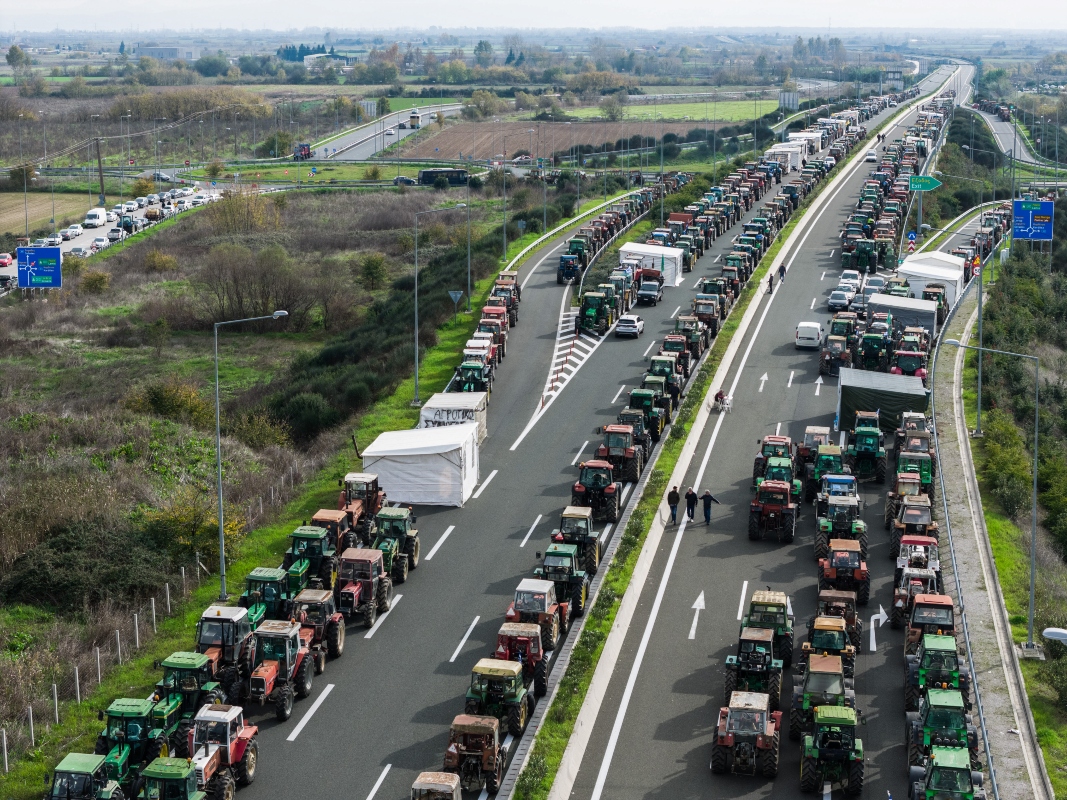
Greek farmers are refusing formal talks with the government while maintaining nationwide road blockades, underscoring a widening rift between Athens and the rural economy at a politically sensitive moment ahead of the holidays.
Despite a renewed invitation for dialogue from Agriculture Minister Kostas Tsiaras, farmers gathered at key protest hubs — most notably Nikaia in Thessaly — insist that the government’s responses so far amount to vague assurances rather than concrete commitments. While rejecting negotiations for now, they have agreed to temporarily lift toll barriers to facilitate Christmas travel, a move designed to preserve public support without retreating from pressure tactics.
Tsiaras: Blockades hurt society and the economy
Speaking publicly, Tsiaras warned that the continued blockades disrupt transport, unsettle markets and burden families planning to travel during the festive period. He argued that many farmer demands are already being addressed, citing government progress on compensation payments, tax adjustments and administrative simplifications.
The ministry says 16 out of 27 farmer demands have either been met or are under active consideration, including delayed subsidies, partial tax relief and changes to land registry codes affecting small holdings. Farmers, however, dismiss the assessment as selective and insufficient.
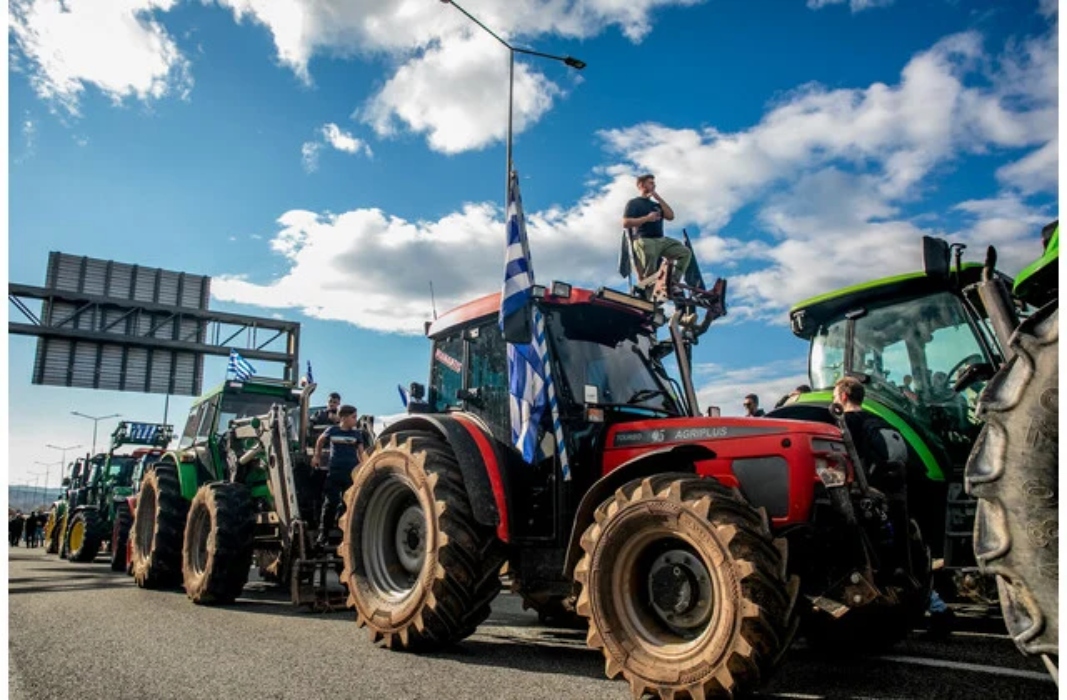

“We want answers, not generalities”
At the heart of the standoff lies distrust. Representatives at the Nikaia blockade say they are not opposed to dialogue in principle, but insist that negotiations must be based on clear timelines and binding measures, particularly on income support and disaster compensation.
Their core demands include:
- 100% compensation by ELGA for crop and livestock losses
- Debt freezes to banks and social security funds
- Full reimbursement for herds culled due to disease
- Income replacement for beekeepers and livestock farmers
- Broader tax and bureaucracy relief for primary producers
A general assembly is scheduled at Nikaia to determine next steps, including possible escalation after the holidays.
Symbolic concessions, strategic pressure
In a carefully calibrated move, farmers across several toll stations raised barriers, allowed free passage and distributed produce such as apples and olive oil to motorists. Leaflets outlining their demands were handed out, and many drivers expressed sympathy.
Traffic flows are expected to remain largely open from December 23 through December 26, with tractors repositioned to avoid blocking main arteries. Partial closures may still occur on secondary roads and border points, particularly for freight traffic.
Legal risks emerge
The protests are not without consequences. In Ioannina, prosecutors have ordered a preliminary investigation into the lifting of toll barriers at Droschori, raising the prospect of criminal charges if offenses are confirmed. Farmer groups say legal pressure will not deter them.
A broader test for Mitsotakis’ government
The standoff highlights the structural vulnerability of Greece’s agricultural sector, squeezed by climate shocks, rising costs and thin margins. For Prime Minister Kyriakos Mitsotakis’ government, the protests pose a delicate challenge: conceding too much risks fiscal slippage, while appearing inflexible could fuel rural backlash.
For now, farmers are betting that measured disruption — not full shutdown — keeps leverage on their side. Athens, meanwhile, is urging talks before the tractors roll deeper into winter.
Source: pagenews.gr