


Brussels Regulates the World – Why Washington Should Push Back Without Tariffs
 ΧΡΟΝΟΣ ΑΝΑΓΝΩΣΗΣ 4 '

Πηγή Φωτογραφίας: AP Photo/Brussels Regulates the World – Why Washington Should Push Back Without Tariffs



When a British entrepreneur recently remarked that “if you want to be a real brand, you have to make it in the United States”, she unintentionally highlighted a deeper geopolitical truth: the US market is the ultimate validator of global business success. But the reverse is also true. American companies dominate globally precisely because their products, services, and brands are demanded far beyond US borders.
This mutual interdependence now sits at the center of a growing transatlantic tension — not over tariffs, but over regulation.
The Issue at Stake
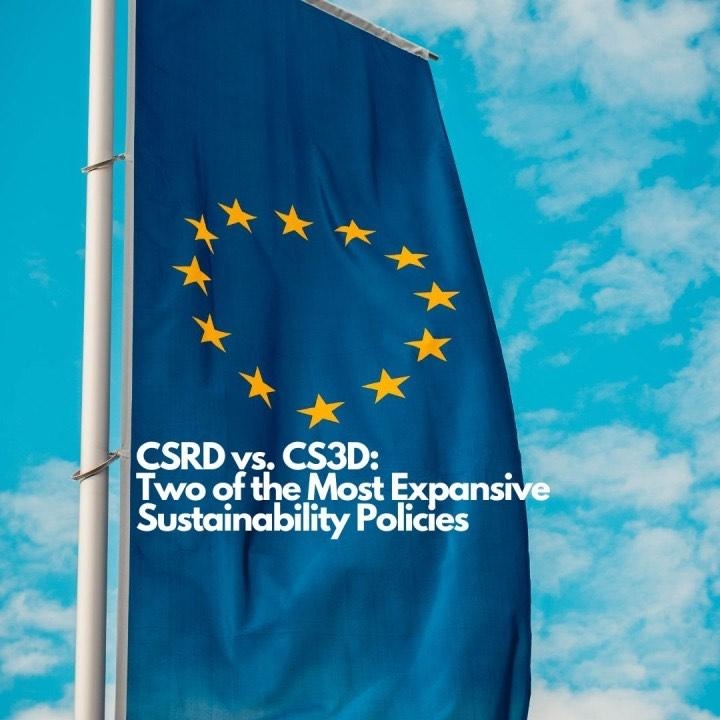
The European Union’s flagship sustainability laws —Corporate Sustainability Reporting Directive (CSRD) and
Corporate Sustainability Due Diligence Directive (CS3D) —were designed to embed environmental, social, and governance (ESG) principles into corporate behavior.
On paper, these are internal EU rules.
In practice, they function as global regulatory instruments.
Companies with substantial EU turnover — even if headquartered in the United States — are expected to:
- Report ESG data across global operations
- Monitor supply chains worldwide
- Face legal exposure in EU courts for activities occurring outside the EU
This is not trade policy. It is regulatory extraterritoriality.
Why US Companies Are Disproportionately Affected
The thresholds built into CSRD and CS3D mean that large, globally successful firms are the primary targets. And globally successful firms are, overwhelmingly, American.
This creates a paradox:The very openness and scale that make US companies competitive also make them vulnerable to foreign regulatory reach.
From fast food and consumer tech to finance and logistics, US firms operate globally because demand exists. Yet that success now triggers compliance regimes written in Brussels — not Washington.
The Cost of Regulatory Overreach
Business groups estimate that compliance with EU sustainability directives could impose hundreds of billions — even trillions — of dollars in long-term costs on US companies.
The burden is not only financial:
- Legal uncertainty over jurisdiction
- Duplicative reporting across regulatory systems
- Chilling effects on expansion into EU markets
- Strategic disadvantage versus firms operating only domestically
More critically, EU rules increasingly expect companies to apply EU standards globally, even where those standards conflict with US law or business practice.
This is not harmonization.It is regulatory dominance.
Why Tariffs Are the Wrong Response
Some argue that Washington should respond with tariffs or trade retaliation.
That would be a mistake.
Tariffs:
- Raise costs for American consumers
- Distort supply chains
- Punish domestic firms alongside foreign ones
- Escalate disputes without addressing the root problem
Regulatory conflicts cannot be solved with trade weapons.
What the US Should Do Instead
A smarter strategy would rest on three pillars:
1. Regulatory Clarity Washington should clearly state that US companies are accountable to US law for activities conducted in the United States, not to foreign regulators.
2. Diplomatic Pressure, Not Punishment Engage the EU directly to limit the extraterritorial scope of CSRD and CS3D, especially where no material EU nexus exists.
3. Strategic Confidence The US does not need to imitate European regulation to remain competitive. Its market remains the global benchmark — the place where brands are proven and scaled.
The Bigger Picture
Europe seeks sustainability through regulation. America achieves growth through innovation.
Both models can coexist — but only if regulation stops pretending it has no borders.
The irony is clear:
- Europe wants access to global markets
- Europe wants global standards
- But Europe risks exporting stagnation along with its rules
In the end, economic gravity still matters.And gravity, for now, still pulls toward the United States.
Regulation should follow markets — not try to replace them.
Source: pagenews.gr
Διαβάστε όλες τις τελευταίες Ειδήσεις από την Ελλάδα και τον Κόσμο








Το σχόλιο σας