


WSJ: Why Selling F-35s to Turkey Could Undermine Regional Balance and Risk Conflict
 ΧΡΟΝΟΣ ΑΝΑΓΝΩΣΗΣ 4 '
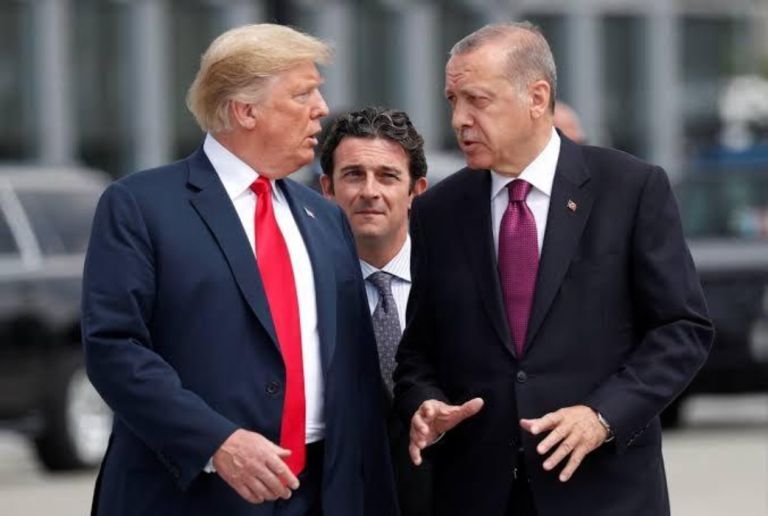
Πηγή Φωτογραφίας: LAMARQUE | Συντελεστές: REUTERS//WSJ: Why Selling F-35s to Turkey Could Undermine Regional Balance and Risk Conflict



The potential sale of F-35 fighter jets to Ankara is not a routine arms deal, but a geopolitical decision with far-reaching consequences for deterrence, alliances, and regional stability.
A WSJ Warning and a Red Flag for the West
In a sharply worded opinion piece for the Wall Street Journal, Amit Segal, political commentator for Israel’s Channel 12, raises a stark question: Is it wise to arm Turkey with America’s most advanced fighter jet at a time when its foreign policy is becoming increasingly aggressive and ideological?
Segal’s answer is unequivocal. He frames Turkey’s posture through the lens of “projection”—a psychological mechanism in which actors attribute to others the very ambitions and behaviors they themselves pursue.
Neo-Ottoman Ambitions and Escalatory Rhetoric
When President Recep Tayyip Erdoğan accuses Israel of pursuing a “Greater Israel,” Segal argues that he is in fact mirroring his own vision of a neo-Ottoman sphere of influence—one stretching across regions once ruled by the Ottoman Empire.
From Syria and Libya to the Caucasus, Turkey has increasingly projected military and political power beyond its borders. At the same time, anti-Israel rhetoric has intensified:
- public prayers for the destruction of the “Zionist state,”
- denial of the Armenian genocide,
- and symbolic moves such as converting Hagia Sophia from a museum into a mosque despite international objections.
Together, these signals point to an assertive, identity-driven foreign policy rather than a status-quo one.
From “Sick Man of Europe” to Regional Disruptor
According to Segal, Turkey has evolved from a difficult yet predictable ally into a destabilizing regional actor. Aligning closely with Qatar, Ankara has backed radical players, fueled regional instability, and—according to multiple reports—hosted senior Hamas figures.
A telling moment came last year, when Israel killed Hamas leader Ismail Haniyeh and the Turkish embassy in Tel Aviv lowered its flag to half-staff—an act widely interpreted as political signaling rather than diplomacy.
Why the F-35 Changes Everything
Against this backdrop, renewed talk of selling F-35 stealth fighters to Turkey has alarmed regional observers. The U.S. ambassador to Ankara has spoken of “productive discussions,” while an Israeli official estimated in mid-December that approval odds now stand at around 40%—far higher than just weeks earlier.
Segal poses the central strategic question: Why does an already formidable military power need a fifth-generation stealth aircraft?
Unlike countries such as the UAE or Saudi Arabia—where F-35s would primarily serve as a counterweight to Iran—Turkey has openly identified Israel as a strategic and even existential threat, reportedly enshrining it in its national security “Red Book.”
“Turkey Is Beginning to Resemble Iran”
Public opinion underscores the shift. More than one-third of Turkish citizens now view Israel as their country’s greatest threat, with the United States close behind.
Segal invokes historian Bernard Lewis, who once warned that “one day Iran would look like Turkey, and Turkey would look like Iran.” That warning, Segal suggests, is no longer theoretical.
From Washington’s perspective, selling F-35s to Turkey might deliver short-term economic gains, but at a steep cost:
- weakening regional deterrence,
- destabilizing the balance of power,
- and undermining Israel’s Qualitative Military Edge, which the U.S. is legally and politically committed to preserving.
The debate over F-35s is not about hardware—it is about strategy, trust, and long-term consequences.
As Segal concludes, “It would be a grave mistake to arm an increasingly aggressive and Islamist Turkey with America’s most advanced weapons—especially if those weapons could one day be turned against an ally.”
The decision on Turkey’s F-35s will reverberate far beyond Ankara.It will test the future of Western alliances, regional deterrence, and stability in an already volatile Middle East.
Source: pagenews.gr
Διαβάστε όλες τις τελευταίες Ειδήσεις από την Ελλάδα και τον Κόσμο







Το σχόλιο σας