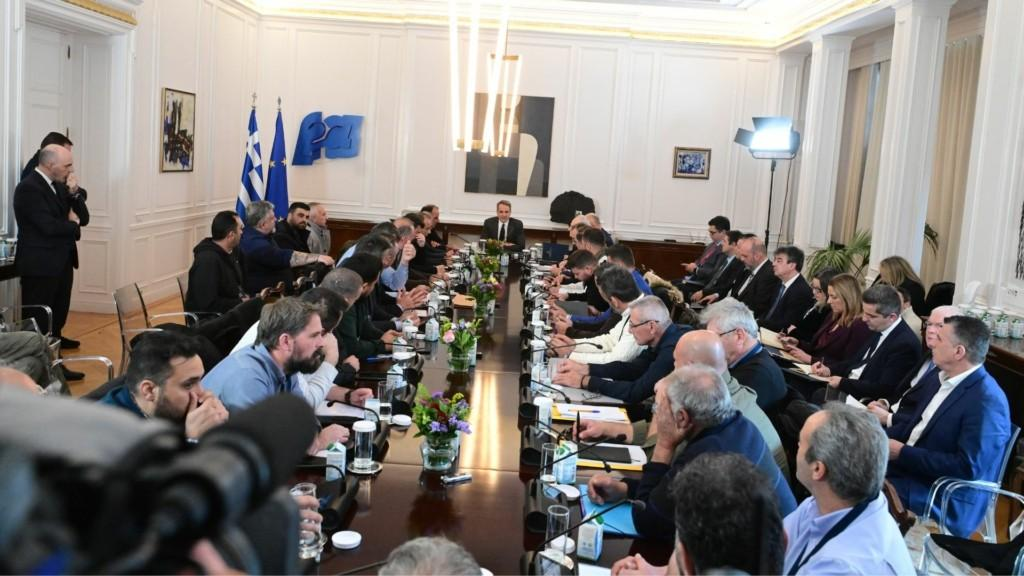
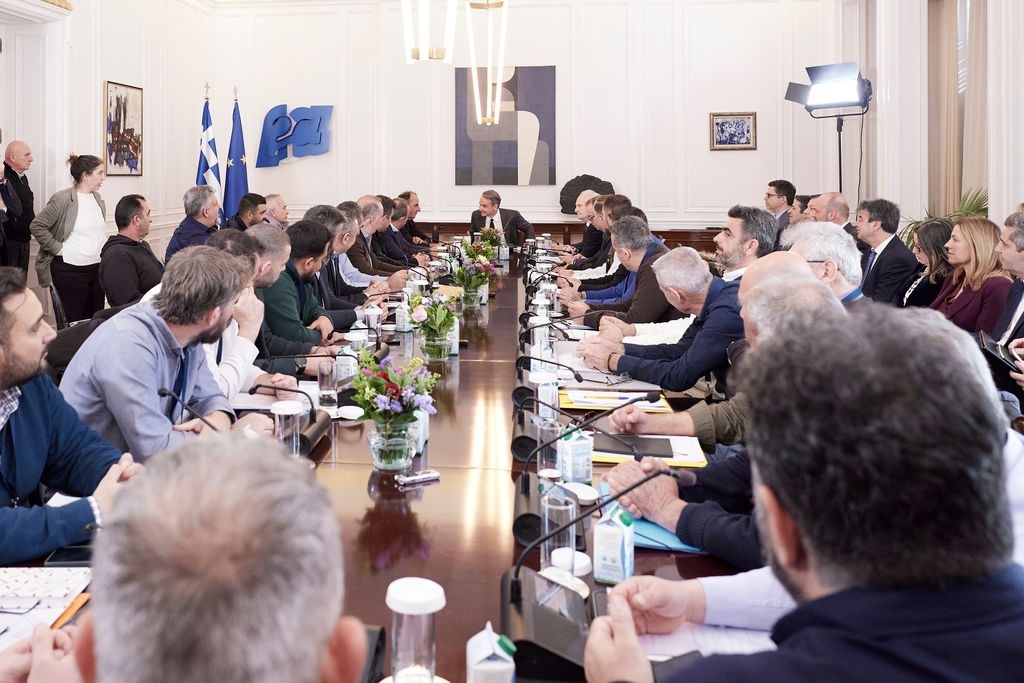
A prolonged and high‑stakes dialogue between the Greek government and farmers concluded without definitive announcements, as agricultural producers prepare to return to roadblock assemblies nationwide after the state talks. The marathon 4.5‑hour meeting at the Maximos Mansion in Athens focused on core challenges facing the primary sector, particularly production costs, income sustainability and targeted support measures.
According to Agriculture Minister Kostas Tsia̱ras, the discussion with Prime Minister Kyriakos Mitsotakis and dozens of farmer representatives was “analytic and productive”, giving both sides the opportunity to examine in detail the difficulties confronting farmers across Greece.
Key government priorities discussed included:
- Production costs, with emphasis on electricity pricing and implementation of the fuel excise tax cut at the pump — a long‑standing farmers’ request that the cabinet has pledged to roll out.
- Sustaining producer income, addressing both market price volatility and lost earnings.
- Sector‑wide matters from livestock and beekeeping, to specific crop support, veterinary challenges (like goat and sheep pox), and agricultural traceability systems.
Prime Minister Mitsotakis acknowledged the need for the meeting to have happened earlier and highlighted the interventions already in place — such as support for rural electricity costs and restoring the tax refund for diesel at service stations — which aim to mitigate input cost pressures.
He also pointed to reallocation of funds unlocked by administrative changes (e.g., the shift from OPEKEPE to AADE for some agricultural payments) as a source for bolstering support for crops struggling with low market prices.

What Happens Next: Back to the Roadblocks
Rather than issuing new policy decisions at the conclusion of the negotiations, the focus now shifts back to the grassroots. Farmers are due to convene in assemblies across the country’s roadblock protest sites to decide next steps for continued mobilization and possible escalation. One such gathering is planned for Tuesday afternoon at the Nikaia roadblock, where participants will determine future tactics.
This dynamic reflects a dual‑track approach: while the state underscores its openness to negotiation and implementation of targeted measures, farmers continue to emphasize collective action and direct pressure on public opinion and logistics.
Political & Policy Context
The government’s attempts at dialogue come amid broader debates on agricultural policy and rural livelihoods, with farmers demanding not just piecemeal relief, but systemic changes. Recent proposals from farm representatives (outside the formal meeting) have included tax‑free fuel, VAT exemptions on agricultural supplies, guaranteed minimum prices, expanded irrigation infrastructure and full coverage agricultural insurance — illustrating the breadth of pressure on policymakers.
Within political circles, positions vary:
- New Democracy figures have called for structured talks and targeted measures, stressing that alleviating costs like energy and fuel is essential for farm viability.
- SYRIZA and other opposition voices have criticized the government for delays and insufficient agricultural support, framing the situation as evidence of policy shortcomings and faltering subsidy systems like OPEKEPE.
Why It Matters
Farmers in Greece have long struggled with rising input costs — electricity, fuel and other supplies — often unable to cover expenses with producer prices, a structural weakness that highlights broader competitiveness issues in the sector. Studies and stakeholders note that without deeper policy reform (modern technology, scale efficiencies, and long‑term strategic planning), many producers will remain vulnerable no matter short‑term subsidies.
The government’s pursuit of dialogue and incremental support measures reflects an attempt to balance economic realities with political pressures, but the farmers’ return to grassroots mobilization underscores that the political dimensions of agricultural policy remain volatile and consequential.
Source: pagenews.gr