


Greece–Israel Cooperation on Drones Redraws the Strategic Map in the Eastern Mediterranean
 ΧΡΟΝΟΣ ΑΝΑΓΝΩΣΗΣ 5 '
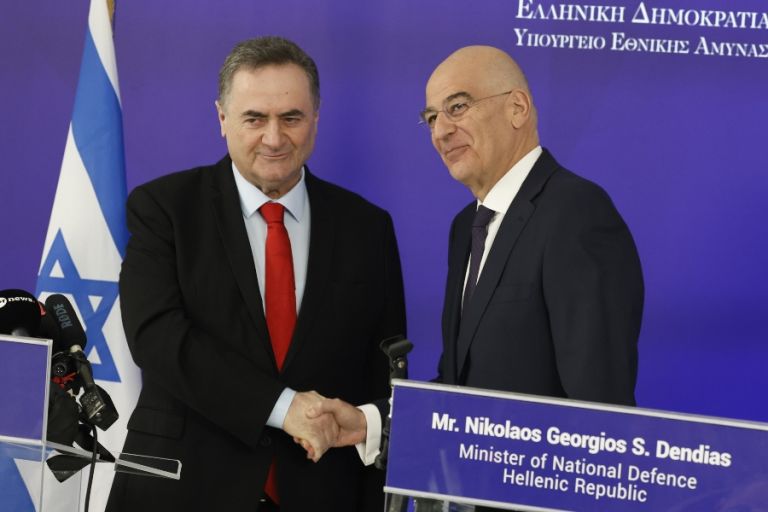
Πηγή Φωτογραφίας: eurokinissi//Greece–Israel Cooperation on Drones Redraws the Strategic Map in the Eastern Mediterranean



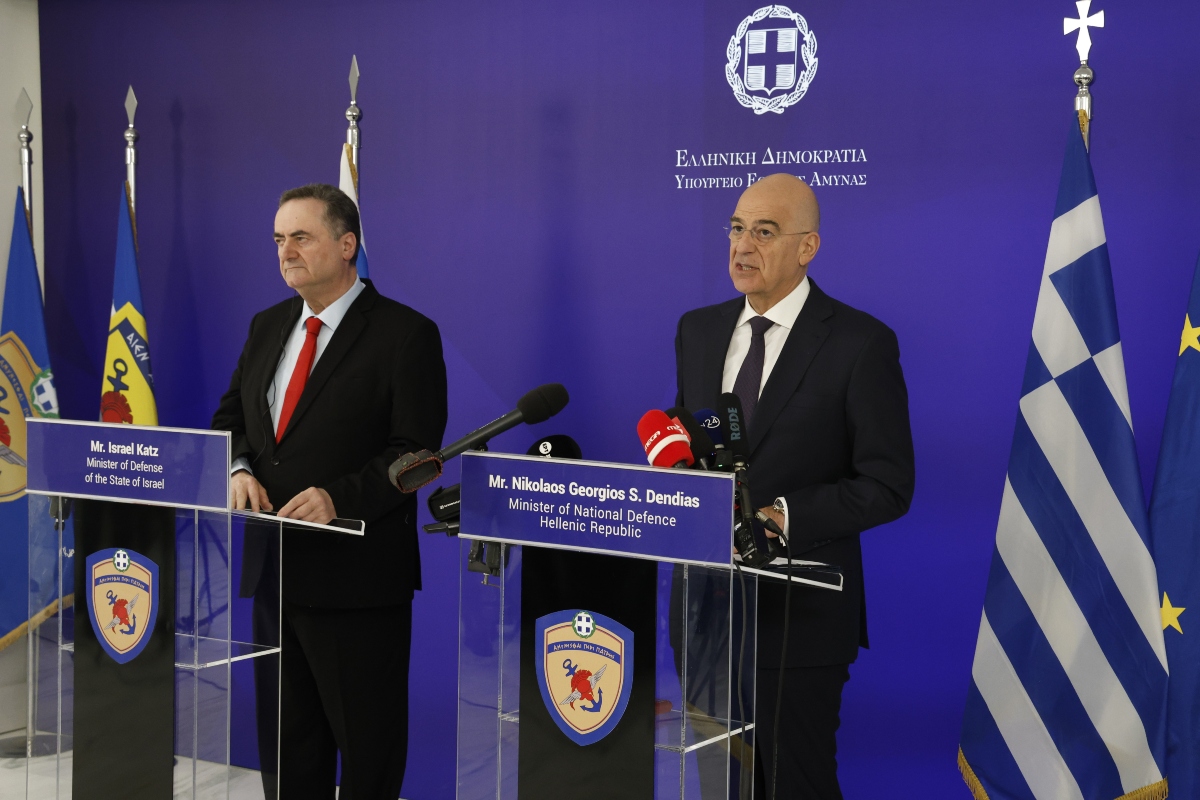
Speaking on the sidelines of high-level contacts, Defence Minister Nikos Dendias framed the cooperation as a response to emerging threats. Behind the diplomatic language, however, lies a clear acknowledgment: drones—and especially drone swarms—have become one of the most disruptive tools in modern conflict, fundamentally altering deterrence calculations in Greece’s immediate neighbourhood.
The drone factor and the end of traditional deterrence
Unmanned aerial systems are no longer confined to surveillance or tactical reconnaissance. They are now inexpensive, scalable and increasingly autonomous weapons capable of overwhelming conventional air defence systems. The wars in Ukraine, the Middle East and the South Caucasus have demonstrated how relatively low-cost drones can neutralise high-value military assets and reshape battlefields.
For Greece, this is not an abstract lesson. Turkey has invested heavily in indigenous drone production, turning systems such as the Bayraktar TB2 and its naval-capable successors into instruments of both military power and geopolitical influence. Their deployment across multiple theatres—from Libya to Ukraine—has given Ankara operational confidence and international leverage.
Athens understands that responding with traditional, missile-centric air defence alone is economically unsustainable. The cooperation with Israel therefore focuses on layered counter-drone systems, electronic warfare, artificial intelligence–assisted detection and real-time response capabilities—areas in which Israel has accumulated unmatched battlefield experience.
A message to Ankara—without escalation
The strategic subtext is unmistakable. Greece is not seeking parity in drone production with Turkey; it is aiming to neutralise the asymmetric advantage drones provide. This approach allows Athens to strengthen deterrence without entering a costly and destabilising arms race.
At the same time, the move sends a calibrated message to Ankara: technological surprise will not go unanswered. By partnering with Israel—one of the world’s leading innovators in counter-UAS warfare—Greece is signalling that it will adapt faster than the threat environment evolves.
Importantly, this message is framed defensively. Athens continues to emphasise deterrence and stability, not confrontation. Yet the underlying logic is firm: airspace control in the Aegean and Eastern Mediterranean can no longer be assumed without dominance in the drone domain.
The European gap—and Greece’s strategic positioning
The development also exposes a broader European weakness. While the EU increasingly speaks the language of strategic autonomy, it remains fragmented in addressing emerging military technologies. Member states diverge sharply on how to engage Turkey—viewed alternately as a difficult partner, a strategic necessity, or a latent security challenge.
In this context, Greece is positioning itself as a frontline European security actor. By investing in advanced defence technologies and forging partnerships beyond the EU framework, Athens is effectively compensating for Europe’s slow collective response to new forms of warfare.
This role is not without political cost. Greece must balance its deepening ties with Israel against regional sensitivities and the EU’s internal divisions. Yet the calculation in Athens is clear: security preparedness precedes diplomatic comfort.
Beyond defence: technology, diplomacy and energy
The Greece–Israel partnership extends beyond the military sphere. Cooperation in cybersecurity, intelligence sharing and defence innovation is increasingly intertwined with broader diplomatic and energy interests in the Eastern Mediterranean. Stability in the region is not only a security objective but an economic one, particularly as energy routes and infrastructure remain vulnerable to asymmetric threats.
For Greece, integrating defence technology with diplomatic strategy enhances its credibility as a regional pillar of stability—especially at a time when power projection is increasingly defined by technological agility rather than sheer military mass.
adapting to a new strategic era
Greece’s cooperation with Israel on counter-drone systems reflects a sober reading of contemporary geopolitics. Warfare is changing, deterrence is being redefined, and technological superiority has become the decisive variable. In this environment, Athens is choosing adaptation over complacency.
The message is directed not only at Turkey, but also at Europe: the future of security in the Eastern Mediterranean will be shaped by those who anticipate change, invest in innovation and act before strategic gaps become strategic vulnerabilities.
If you want, I can tighten this into a Reuters-style analysis, add sharper political undertones, or localise it for a specific outlet (FT, Politico Europe, defence-focused media).
Source: pagenews.gr
Διαβάστε όλες τις τελευταίες Ειδήσεις από την Ελλάδα και τον Κόσμο






Το σχόλιο σας