


Mitsotakis’ Double Message After the EU Summit — Transatlantic Relations Grow More Complex
 ΧΡΟΝΟΣ ΑΝΑΓΝΩΣΗΣ 3 '
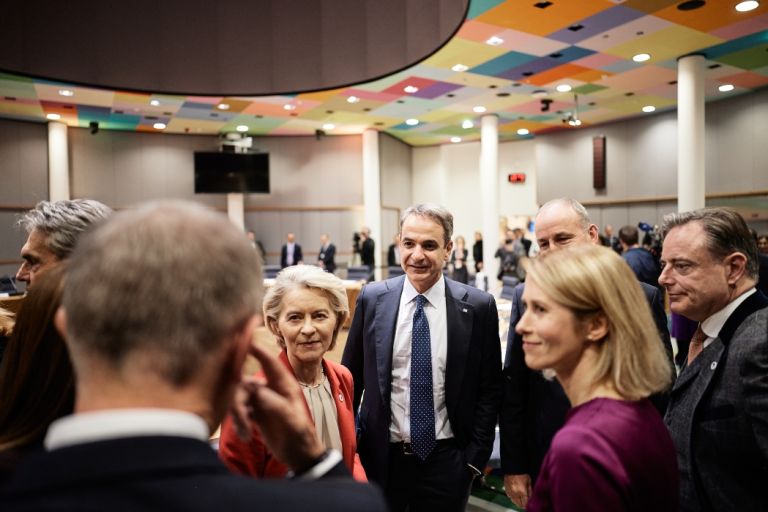
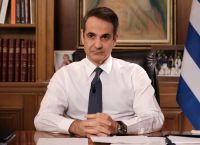
Πηγή Φωτογραφίας: (ΔΗΜΗΤΡΗΣ ΠΑΠΑΜΗΤΣΟΣ/ΓΡΑΦΕΙΟ ΤΥΠΟΥ ΠΡΩΘΥΠΟΥΡΓΟΥ/EUROKINISSI)//Mitsotakis’ Double Message After the EU Summit — Transatlantic Relations Grow More Complex



Kyriakos Mitsotakis signals that relations between the EU and the US may be slightly improved, but stresses that trust remains fragile and cannot be taken for granted.
1. “Complex” transatlantic relations — a deliberate choice of words
In his post-Summit remarks and during his Euronews interview, Mitsotakis underlined that EU–US relations are becoming increasingly “complex”. This was not accidental phrasing. Rather than declaring a return to normality, the Greek prime minister chose a term that reflects structural uncertainty and ongoing geopolitical friction, especially on trade, security, and institutional coordination.
The message from Athens is realism, not complacency.
2. Positive signals from Trump — but no illusions
Mitsotakis described as “positive” the recent comments by Donald Trump, particularly those suggesting de-escalation and a softer tone toward Europe. These remarks were seen as easing tensions that had emerged around sensitive issues, including trade and strategic disputes involving EU partners.
However, the Greek prime minister made it clear that rhetoric alone is not enough. Improved language does not automatically translate into stable policy, especially in an environment where sudden shifts remain possible.
Political Signals & Behind-the-Scenes Reading
The Peace Council proposal — cooperation with conditions
One of the more pointed interventions by Mitsotakis concerned the proposed Peace Council promoted by the US side. He noted that what has been announced so far goes beyond the UN framework, effectively creating a new international mechanism parallel to existing institutions.
Greece, he explained, could consider participation only under very specific conditions — for a clearly defined purpose and limited timeframe, such as humanitarian coordination on Gaza. Full integration into a new, loosely defined structure is not on the table.
This stance reflects Athens’ broader effort to avoid open-ended commitments that could dilute its diplomatic autonomy.
The European Dimension
Cautious optimism at EU level
Within the European Council, there is a shared sense that “things are slightly better” in transatlantic relations following recent signals from Washington. Yet this optimism remains measured, shaped by the understanding that geopolitical volatility has not disappeared.
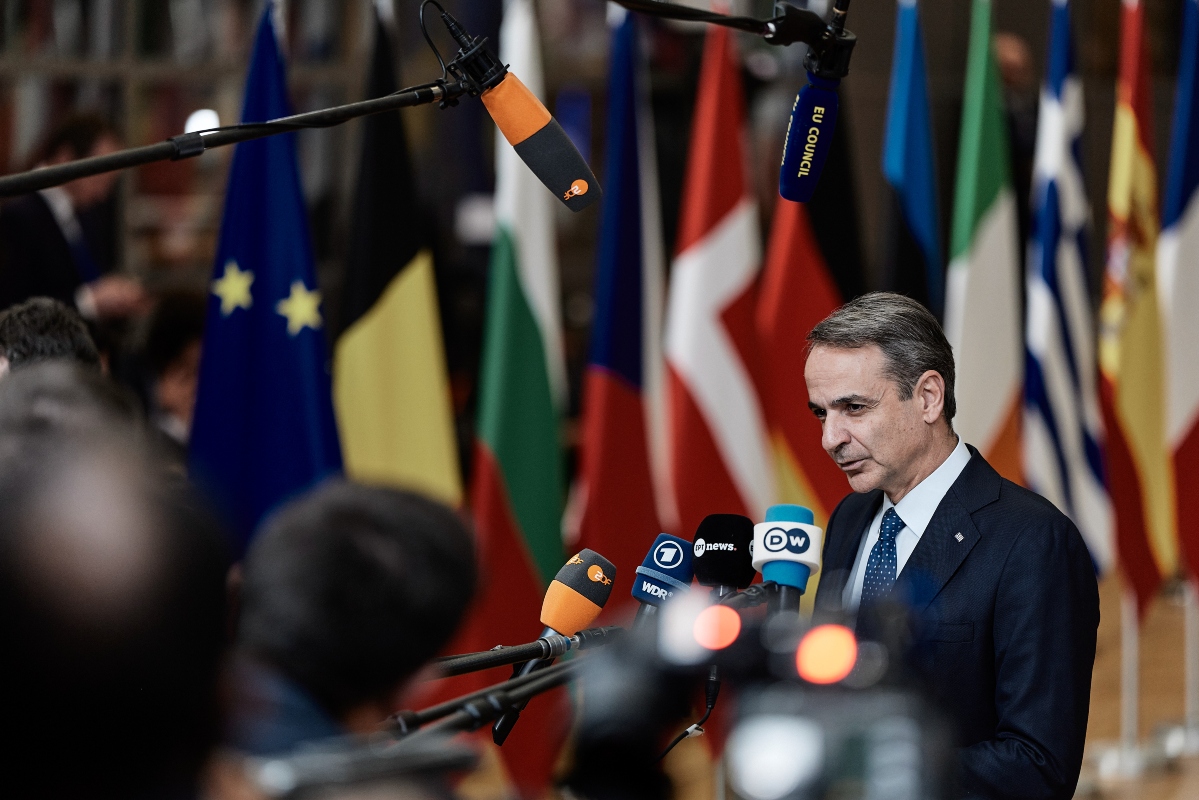
Mitsotakis aligned himself with this European consensus:
- support dialogue,
- keep channels open,
- but prepare for friction rather than assume stability.
Balancing realism and principles
Greece’s line can be summed up in three core pillars:
- Commitment to the EU and the transatlantic alliance, without unconditional alignment.
- Preference for institutional continuity, especially the central role of the UN.
- Strategic restraint, avoiding headline diplomacy while protecting national and European interests.
It is a policy of engagement — but not dependence.
Mitsotakis’ post-Summit message is deliberately twofold:
- Yes, there are signs of improvement in EU–US relations.
- But those relations remain complex, fragile, and politically conditional.
- Greece will cooperate, but only within clear rules, defined mandates, and trusted institutions.
In short, Athens welcomes better weather — but keeps its umbrella open.
Source: pagenews.gr
Διαβάστε όλες τις τελευταίες Ειδήσεις από την Ελλάδα και τον Κόσμο





Το σχόλιο σας