


Belharra, Defense Clause and Power Politics: Athens–Paris Lock In a Hard Alliance
 ΧΡΟΝΟΣ ΑΝΑΓΝΩΣΗΣ 4 '
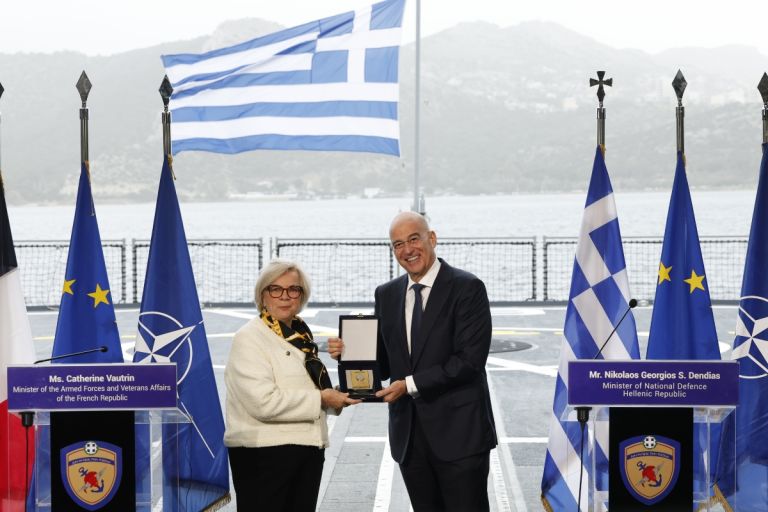
Πηγή Φωτογραφίας: eurokinissi//Belharra, Defense Clause and Power Politics: Athens–Paris Lock In a Hard Alliance



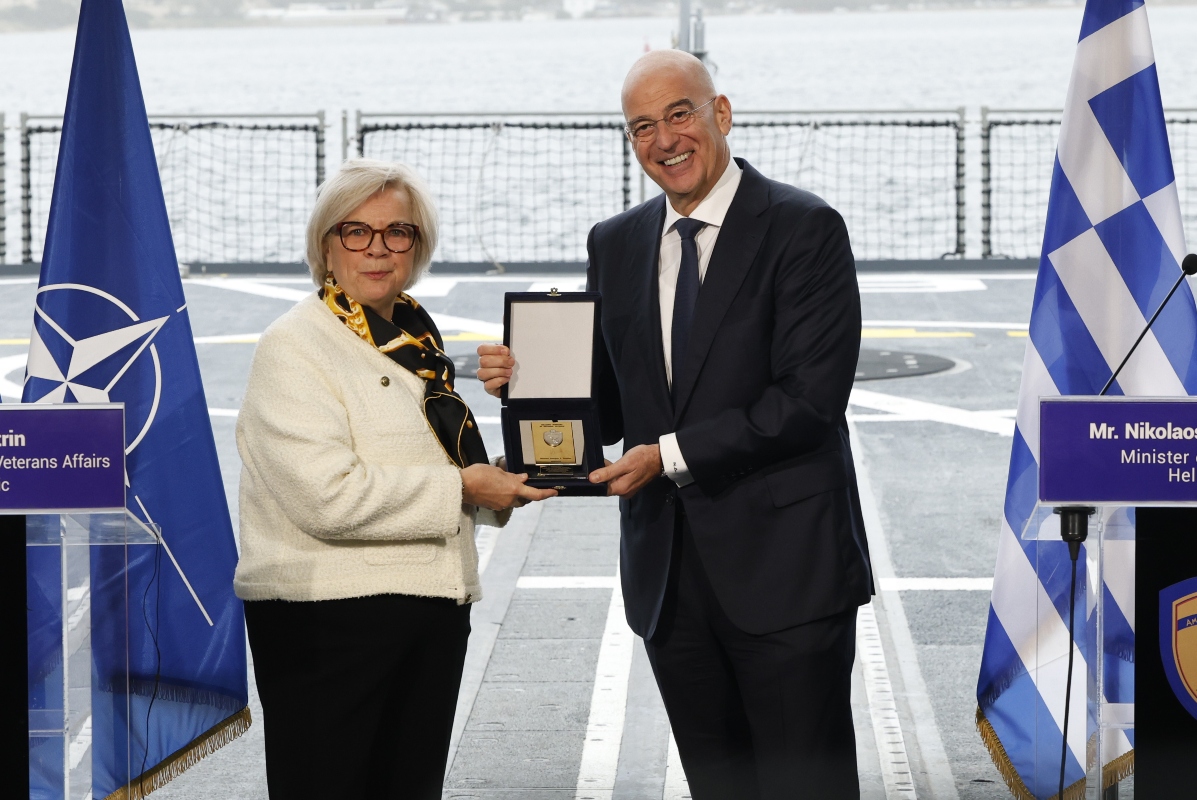
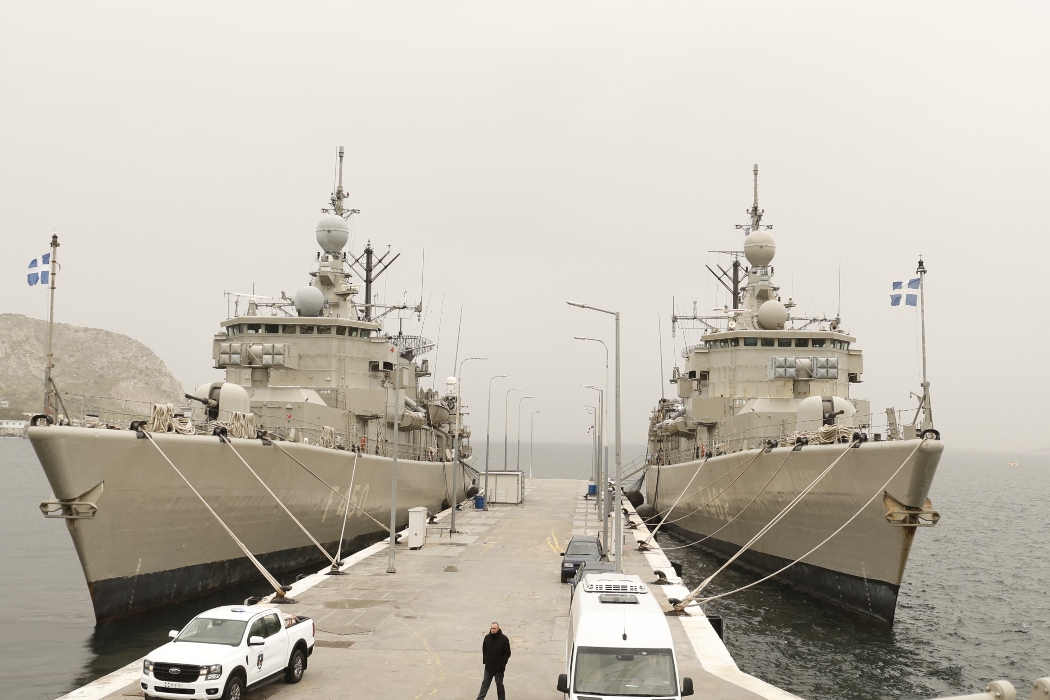
The setting was anything but accidental. Standing aboard the frigate “Kimon” at the Salamis Naval Base, Greek Defence Minister Nikos Dendias and French Minister of the Armed Forces Sébastien Lecornu (representing Paris’ defence establishment) delivered a message that went far beyond naval symbolism.
This was geopolitics in uniform.
The Belharra-class frigate, described by Dendias as “the most emblematic seal of the strategic partnership between Greece and France”, is not merely a weapons platform. It is a floating declaration of alignment, at a time when Europe’s security architecture is under strain and the transatlantic relationship is increasingly questioned.
Fast-tracking the defence pact: the clause that matters
The most politically loaded statement came without ambiguity. Greece, Dendias said, is accelerating the renewal of the Greek–French defence agreement, aiming to conclude it within the next one to two months.
This is not a symbolic memorandum. The agreement includes a mutual defence assistance clause — a rarity even within EU frameworks and a quiet challenge to the idea that only NATO guarantees hard security.
Politically, the timing is revealing:
- doubts are growing over long-term US commitment to Europe,
- NATO cohesion is under pressure,
- and the Eastern Mediterranean remains volatile.
Athens is clearly locking in guarantees where words may soon fall short.
Belharra as strategy, not procurement
Dendias was careful to frame the Belharra program not as arms accumulation, but as strategic depth. His reference to the fourth frigate was telling:
“The decision on the fourth Belharra secures strategic depth,” he said — language that resonates far beyond naval doctrine.
Behind the scenes, this signals:
- a long-term Greek bet on France as a core defence partner,
- reassurance to Paris that Athens is not a transactional buyer,
- and a clear deterrence message to regional rivals.
Greek armed forces already operate a substantial French arsenal, participate in eight joint defence programs, and cooperate closely in NATO and international missions.
France: from supplier to pillar
The French message was equally deliberate. Lecornu underlined that the Belharra frigate “highlights Greece’s naval power” and described the bilateral relationship as one of the most successful defence partnerships in Europe.
France increasingly views Greece as:
- a strategic anchor in the Eastern Mediterranean,
- a partner aligned on international law and the Law of the Sea,
- and a test case for Europe’s ambition to act independently when needed.
When the French minister stated that Paris and Athens will “jointly defend the interests of Greece, France and Europe”, it was clear: this partnership extends beyond bilateral concerns into a broader European security vision.
Europe’s unspoken dilemma
Perhaps the most politically charged line came from Dendias himself: “Europe must be able to guarantee its own security.”
At a moment when senior EU figures openly question the feasibility of a European army, the Greek–French defence pact functions as a de facto alternative: not supranational structures, but hard bilateral alliances backed by binding clauses and real capabilities.
Parapolitically, Greece is:
- aligning with the French vision of European strategic autonomy,
- avoiding direct confrontation with NATO,
- yet quietly preparing for a future where alliances of reliability matter more than abstract frameworks.
A visit with multiple audiences
The meeting aboard the Kimon was not ceremonial diplomacy. It was a calculated signal addressed simultaneously to:
- Ankara,
- Brussels,
- Washington,
- and the domestic political arena.
Greece is positioning itself as a security stakeholder, not a consumer — investing in deterrence, depth and alliances that carry real obligations.
In an era of strategic uncertainty, Athens and Paris are betting on something increasingly rare in international politics: commitment with consequences.
Διαβάστε όλες τις τελευταίες Ειδήσεις από την Ελλάδα και τον Κόσμο







Το σχόλιο σας