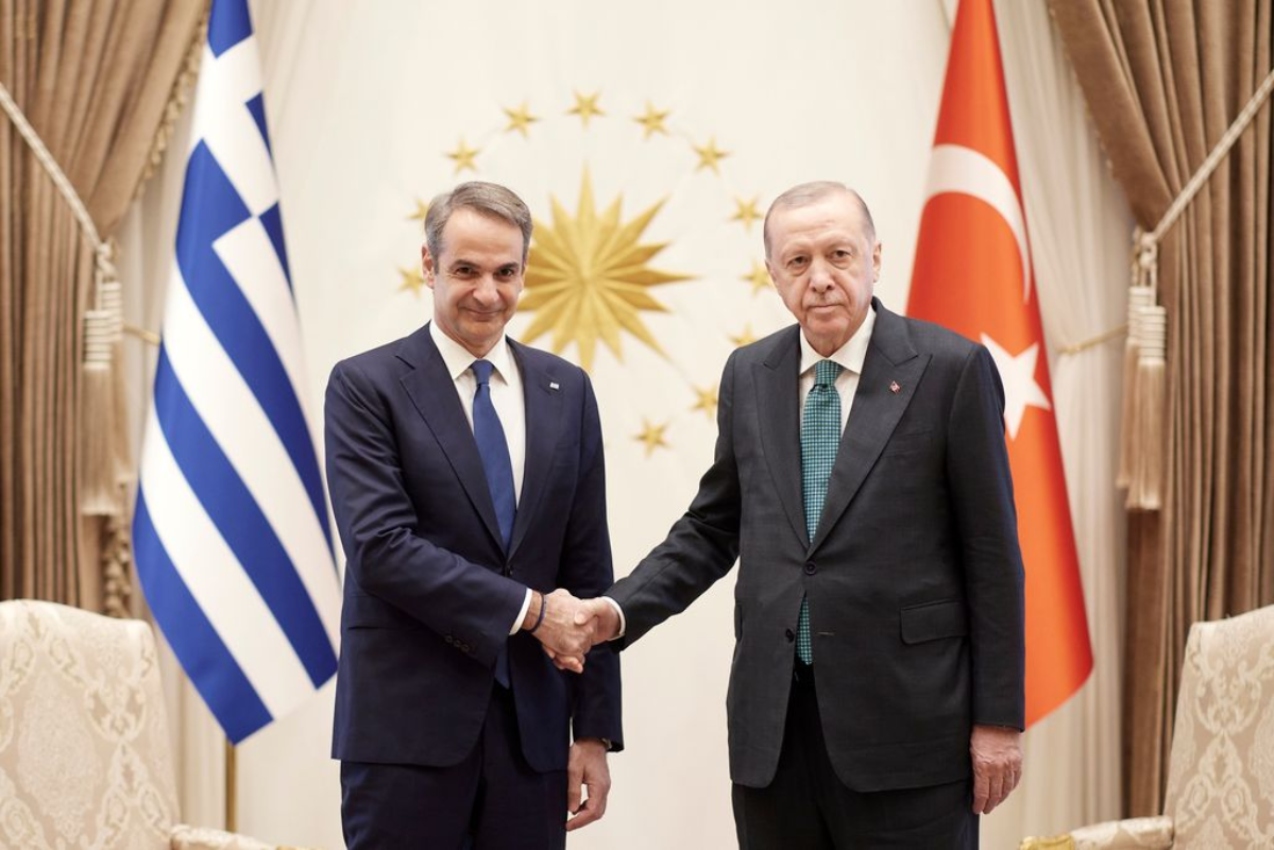
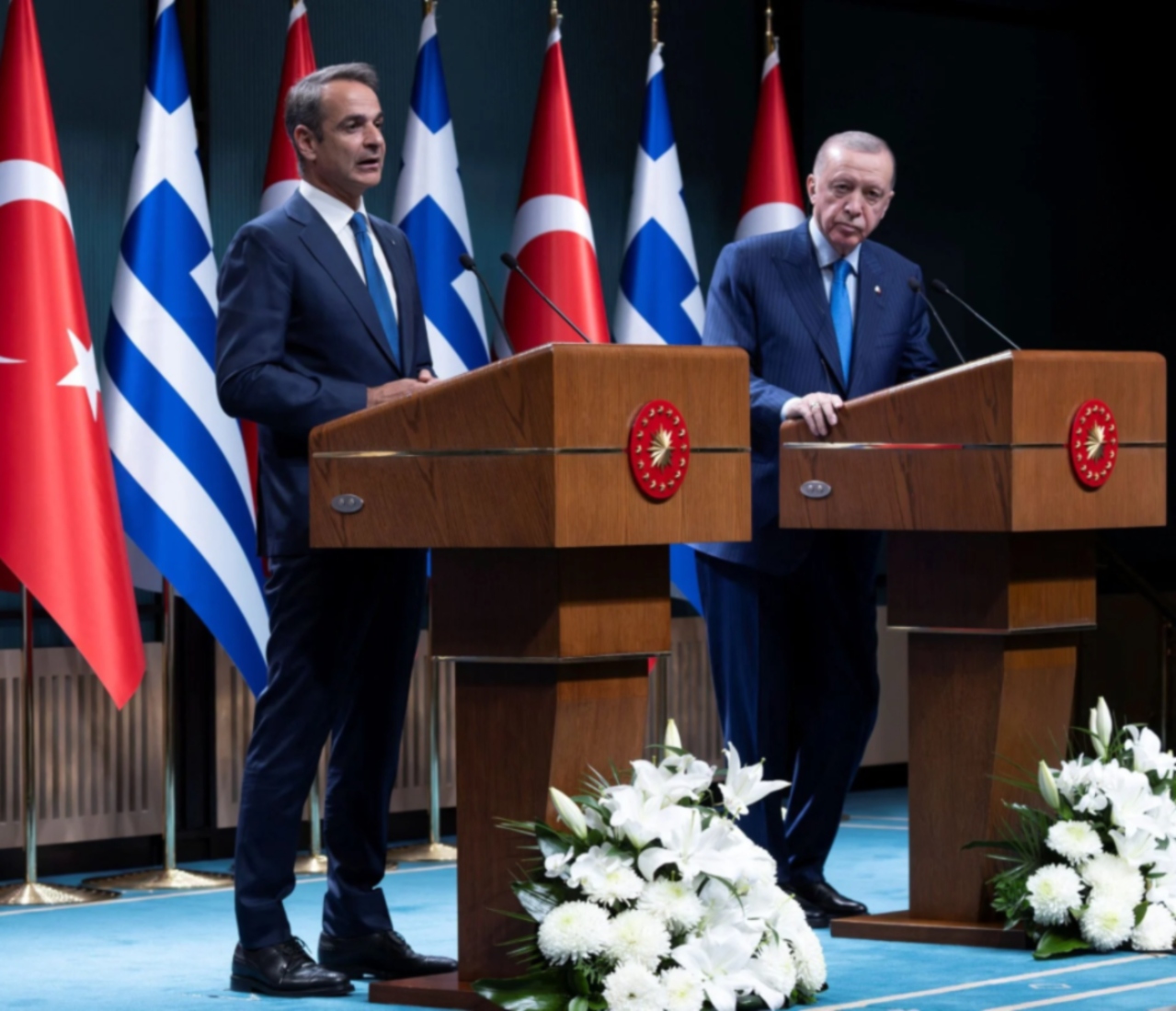
In a carefully balanced diplomatic atmosphere, Greek Prime Minister Kyriakos Mitsotakis and Turkish President Recep Tayyip Erdogan delivered joint statements emphasizing the continuation of dialogue and the preservation of stability in the Aegean and Eastern Mediterranean.
Athens’ message was clear: “When we disagree, we must not fall into crises and tensions,” Mitsotakis said, reiterating that the only dispute that could be referred to the International Court of Justice is the delimitation of maritime zones, strictly under the Law of the Sea.
Erdogan, for his part, stressed that “the issues are not unsolvable on the basis of international law,” arguing that progress has been recorded since 2023 and expressing hope that dialogue will continue on solid ground.
The Three Pillars—and the Red Lines
Mitsotakis outlined three pillars structuring Greek-Turkish engagement:
- Political dialogue
- A positive bilateral agenda
- Confidence-building measures
He pointed to improved cooperation on migration, noting that flows in the Eastern Aegean have reportedly dropped by 60%, and described the fast-track visa scheme for Turkish visitors to select Greek islands as a success.
However, he was unequivocal regarding minority issues: Greece recognizes a Muslim minority in Western Thrace, as defined by the Treaty of Lausanne—implicitly rejecting Ankara’s repeated use of the term “Turkish minority.”

Erdogan, meanwhile, explicitly referenced “freedoms of Muslims in Western Thrace,” and said he conveyed Turkey’s expectations regarding cooperation in combating terrorism and organized crime.
Seven Agreements—Strategic Signaling
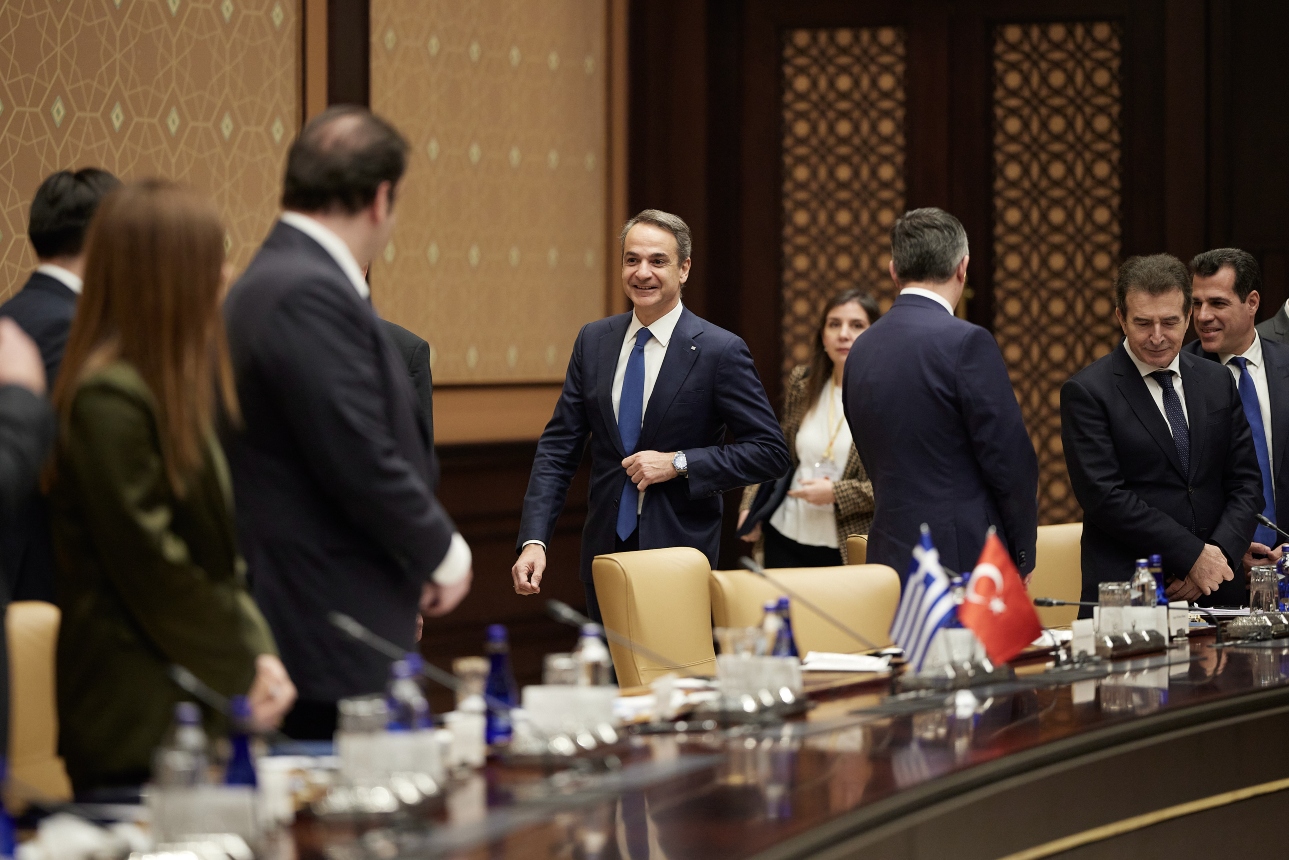
Within the framework of the 6th High-Level Cooperation Council, the two sides signed seven cooperation texts covering:
- Culture
- Economic and investment cooperation
- Research and technology
- Seismic preparedness
- Coordination between Foreign Ministries within the Black Sea Economic Cooperation framework
- Launch of a ferry connection between Thessaloniki and Izmir
The Thessaloniki–Izmir ferry route is seen not only as an economic initiative but also as a symbolic bridge of confidence between the two nations.
The Broader Geopolitical Message: Gaza, Ukraine, Europe
The leaders also addressed broader international developments.
Erdogan strongly criticized Israeli decisions that, in his view, weaken the Palestinian Authority and expand activity in the West Bank.
Mitsotakis reiterated Greece’s support for the two-state solution, making clear that Athens does not support the annexation of the West Bank.
On European security, Erdogan emphasized that Turkey’s participation in European defense initiatives “serves our common interest,” a statement widely interpreted as a signal to Brussels amid shifting security dynamics across the continent.
Mitsotakis also expressed hope for an end to the war in Ukraine, underlining Greece’s consistent support for international law and territorial integrity.

Dialogue Without Illusions
Despite the constructive tone, fundamental disagreements persist. Athens insists on the removal of every threat and the avoidance of unilateral actions, while Ankara continues to frame disputes within a broader agenda.
The essence of the meeting can be summarized in one sentence:
We continue talking—without abandoning our positions.
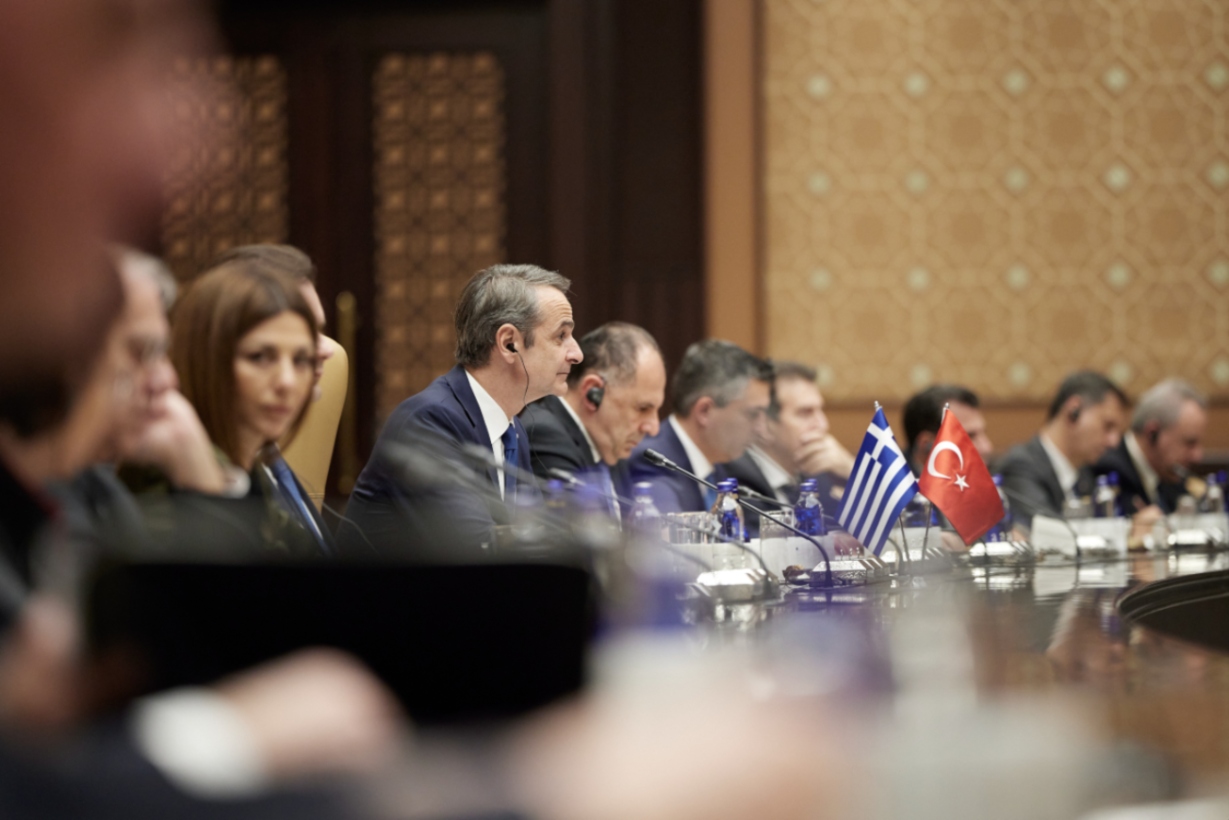

Stability in the Aegean now rests on a delicate balance: cooperation where common ground exists, firm boundaries where differences remain.
For now, that balance appears fragile—but operational.
Source: pagenews.gr