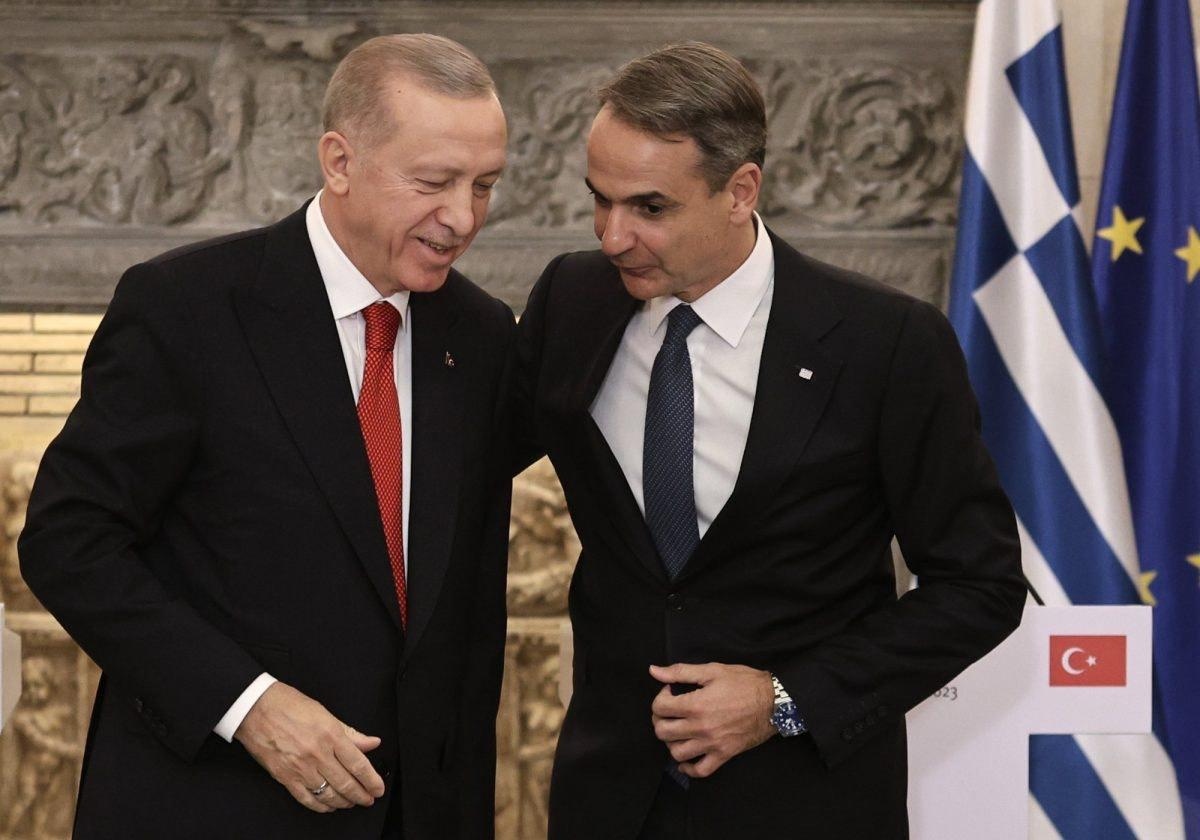
Today’s meeting between Greek Prime Minister Kyriakos Mitsotakis and Turkish President Recep Tayyip Erdoğan in Ankara, within the framework of the 6th High-Level Cooperation Council (HLCC), is not expected to resolve the heavyweight, long-standing disputes that burden Greek–Turkish relations. It does, however, aim to temporarily sidestep them by building a web of practical agreements designed to function as a geo-economic anchor of stability in the Eastern Mediterranean.
At a time of heightened geopolitical fluidity — with Ukraine, the Middle East, and global energy routes reshaping strategic maps — Athens and Ankara appear determined to capitalize on the improved climate of recent months without crossing entrenched red lines.
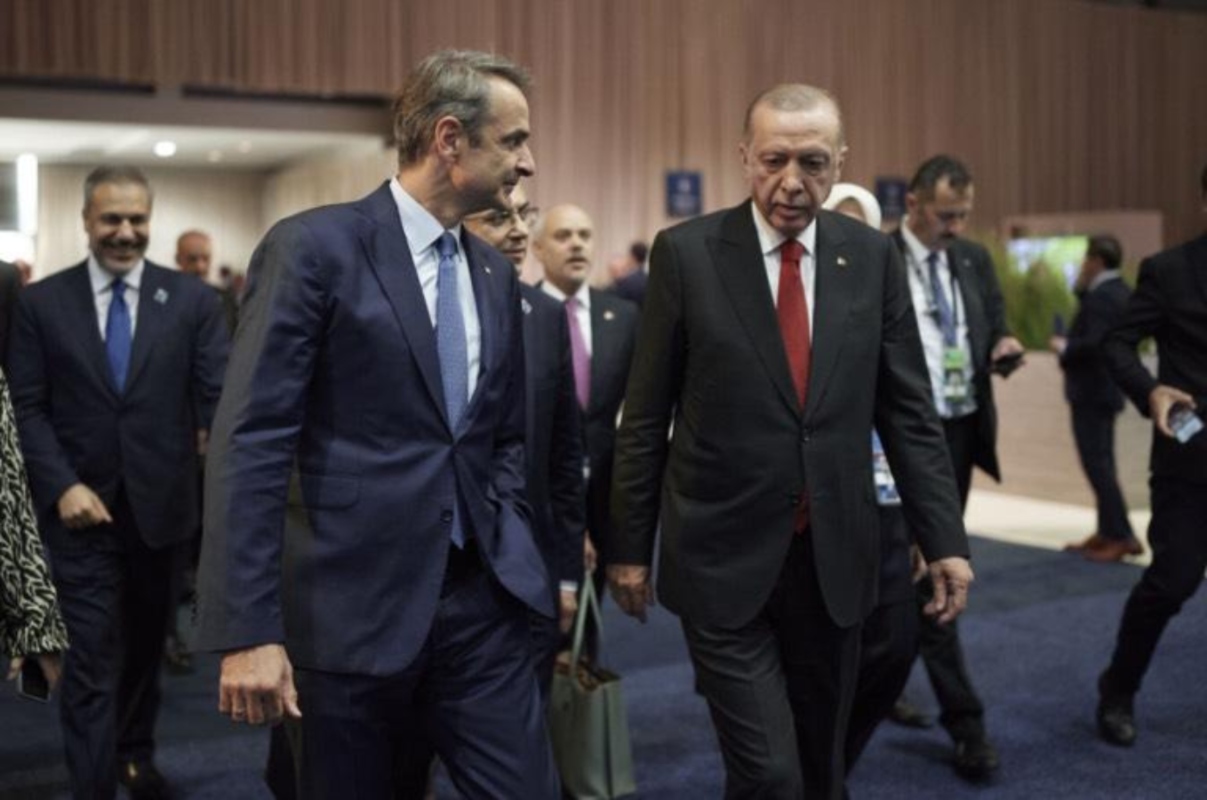

The Strategy of the “Positive Agenda”
Expectations for progress on major issues — continental shelf, Exclusive Economic Zones (EEZ), and the demilitarization of Aegean islands — remain limited. Both governments are entering a pre-election cycle toward 2027, constraining their political room for maneuver.
Instead, emphasis shifts toward:
- Economic cooperation and bilateral trade
- Migration management
- Energy connectivity and regional stability
- Civil protection cooperation
- Visa facilitation, minority rights, and day-to-day cross-border issues
The composition of the sizeable Greek delegation — spanning ministries from Economy and Development to Migration, Civil Protection, and Culture — signals intent to finalize agreements of low political intensity but high practical value.
Fidan’s Shadow and Political Signaling
Particular attention has been drawn to remarks by Turkish Foreign Minister Hakan Fidan, who unusually differentiated within the Greek government. He expressed confidence in Mitsotakis and Foreign Minister Giorgos Gerapetritis as willing and capable of advancing solutions, while indirectly criticizing Greek Defense Minister Nikos Dendias.
The move is interpreted as:
- A calibrated political signal toward Athens
- An attempt to reinforce perceived “moderate” interlocutors
- A test of internal political balances
Athens responded with restraint, avoiding escalation — a deliberate strategy to preserve diplomatic channels ahead of the summit.
Energy: The Quiet Strategic Lever
Energy remains the less visible but potentially decisive pillar of the talks. The Eastern Mediterranean is undergoing a structural reconfiguration of energy networks, as Europe seeks diversification away from Russian supplies and explores alternative transit corridors.
Enhanced cooperation could involve:
- Electricity interconnections
- LNG infrastructure and hubs
- Transit and distribution corridors
If managed strategically, energy collaboration could transform Greece and Turkey from regional competitors into complementary actors within a new geo-economic architecture.
Migration and Border Security
Athens considers sustained cooperation on migration flows a prerequisite for deeper economic engagement. The issue remains diplomatically sensitive and politically volatile, having previously served as leverage in bilateral tensions.
Joint initiatives in civil protection — particularly following devastating earthquakes and wildfires in both countries — are emerging as a new field of soft-power diplomacy and confidence-building.
The Broader Geopolitical Equation
The reactivation of the HLCC comes at a critical juncture:
- The United States seeks stability along NATO’s southeastern flank
- The European Union strengthens its energy and defense autonomy
- Turkey pursues recalibration with Western partners
- Greece consolidates its role as a regional energy and logistics hub
Whether the momentum generated today can be sustained will depend on the ability of the “positive agenda” to shield bilateral relations from renewed tensions in the Aegean and Eastern Mediterranean.
Today’s meeting does not promise historic breakthroughs. It offers something equally valuable: political time. And in a region where balances shift rapidly, time itself is strategic capital.
The central question is not whether Athens and Ankara can resolve their disputes immediately. It is whether they can manage them effectively enough to prevent them from derailing an emerging geo-economic convergence.
Source: pagenews.gr