
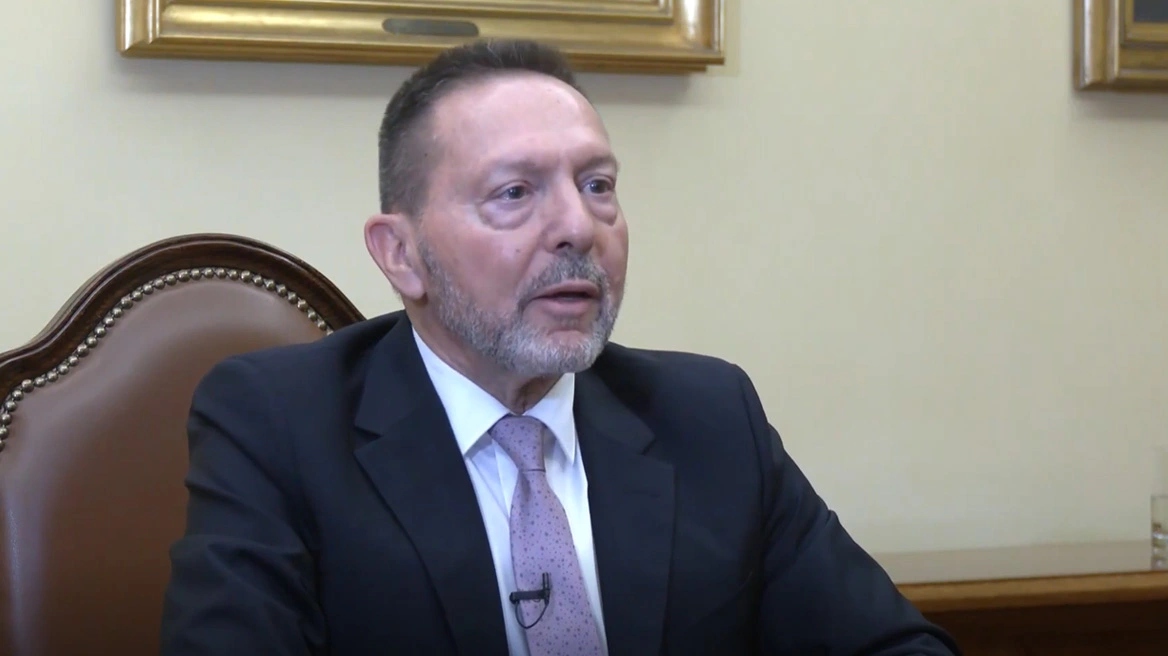
As Bulgaria prepares to enter the euro area, the governor of the Bank of Greece, Yannis Stournaras, has offered more than a historical review of Greece’s monetary journey. His assessment of the country’s two decades in the euro reads as both a technocratic diagnosis and a carefully calibrated political message — at home and across Europe.
The underlying theme is unmistakable: the euro does not eliminate risk; it amplifies policy mistakes.
The Five Lessons — and the Subtext
Stournaras distills Greece’s experience into five core lessons for any country entering a monetary union. Yet beneath the analytical tone lies a pointed reminder of past excesses — and future dangers.
First, meeting nominal convergence criteria is not enough. Greece entered the euro with the numbers aligned, but without deep structural readiness. Fiscal discipline without structural reform is unsustainable.
Second, the tight nexus between banks and sovereign debt can become explosive. Greece’s “doom loop” — where banks held large volumes of government bonds while the state relied on them for stability — magnified the crisis.
Third, the cost of a banking collapse is not merely financial. It is social, political and institutional.
Fourth, strict supervision, transparency and strong corporate governance are not technical luxuries but pillars of systemic resilience.
Fifth, a credible crisis-management and resolution framework is indispensable. Without it, shocks cascade across the system.
In essence, Stournaras describes what happens when a country joins a currency union without the fiscal flexibility of its own monetary policy — and without sufficient structural safeguards.

From Irrational Exuberance to Systemic Collapse
The early euro years (2000–2007) brought rapid growth, lower inflation and improved living standards in Greece. The elimination of currency risk and access to deep capital markets fueled credit expansion and investment.
But what followed was what he calls “irrational exuberance.” Bond spreads nearly vanished. Public spending expanded under electoral pressures. Wages rose faster than productivity.
The result: twin deficits — fiscal and current account — each approaching 15% of GDP.
When market access was lost, Greece entered official bailout programs, underwent painful fiscal consolidation and deep recession, and saw its banking sector radically restructured. From nearly twenty banks, the system consolidated into four systemic institutions after recapitalizations and liquidations.
The crisis forced institutional evolution within the European Union. The creation of the European Stability Mechanism and the establishment of Banking Union strengthened the euro’s architecture.
Greece paid dearly — but the Eurozone became more robust.
A Stronger Eurozone — But Still Incomplete
Today, Stournaras argues, Greece is growing above the euro area average, public debt ratios are declining, and the banking sector shows improved capital adequacy and liquidity.
Yet he stresses that the euro project remains unfinished. Key gaps persist:
- A common European deposit insurance scheme
- Full completion of Banking Union
- A Savings and Investments Union
- A common European safe asset, building on the precedent of NextGenerationEU
These proposals aim to deepen integration, reduce financial fragmentation and enhance the euro’s global role.
Political Signals Beneath the Economics
Stournaras’ intervention arrives at a politically sensitive moment. Greece has regained market credibility, but fiscal discipline remains essential.
His emphasis on reform and prudence serves as a reminder that electoral cycles must not dictate fiscal expansion — a subtle but clear message to policymakers.
For Europe, the message is equally direct: A monetary union without deeper fiscal and financial integration remains vulnerable.
The Margin for Error Is Thin
The governor’s speech functions simultaneously as institutional memory, economic reflection and forward-looking warning.
For Greece, two decades in the euro represent a journey from exuberance to collapse — and from collapse to cautious recovery.
For Bulgaria and future entrants, the message is unambiguous:
The euro does not substitute for reform, discipline or supervision. It makes them indispensable.
Source: pagenews.gr