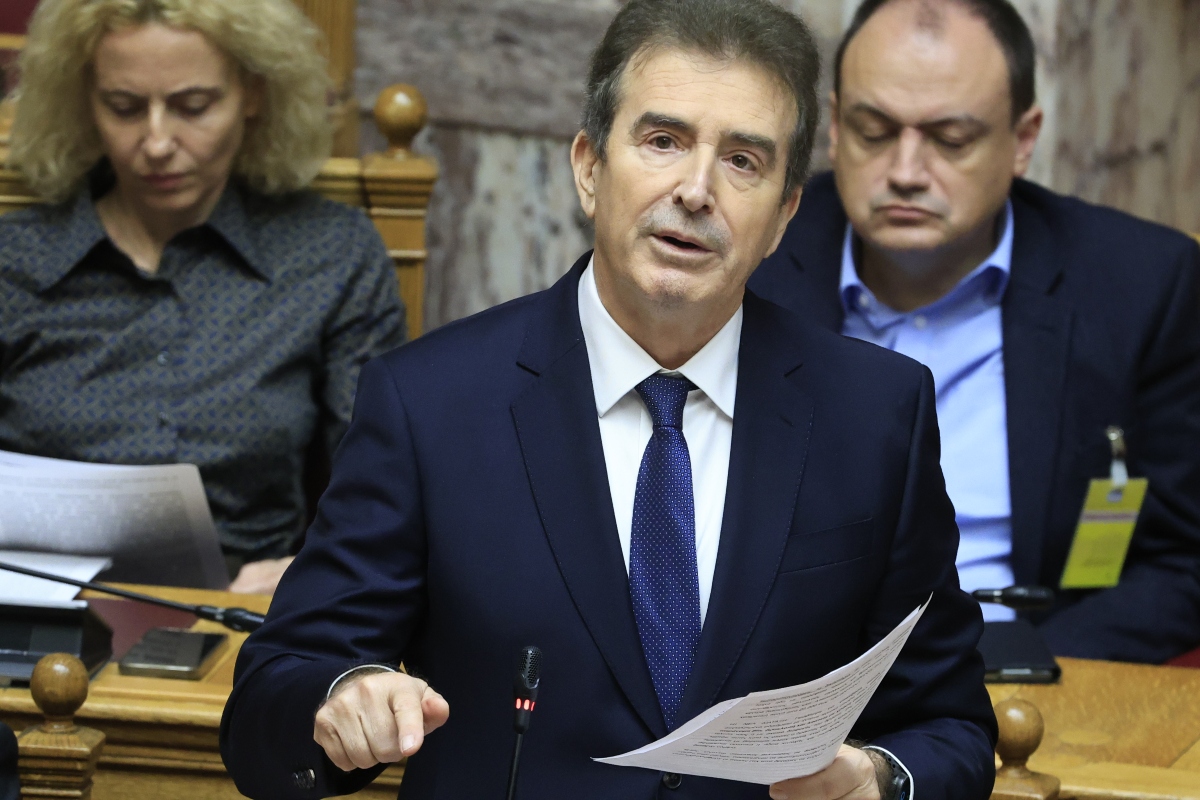
In a striking admission, Michalis Chrysochoidis, Greece’s Minister for Citizen Protection, acknowledged that the country’s prison system is facing a serious overcrowding crisis and unveiled a plan to construct eight new correctional facilities across the country.
According to the minister, the current situation stems from the tightening of criminal penalties in recent years, combined with aging infrastructure and limited expansion of prison capacity. The most recent prison facility to open—after nearly a decade in development—highlights how slowly the system has adapted to growing incarceration rates.
But beyond the headline announcement, the political undertones are impossible to ignore.
What’s Being Announced?
- Eight new prisons are planned in multiple regions, including the relocation of Korydallos Prison to Aspropyrgos.
- The flagship project in Aspropyrgos is projected for completion around 2030.
- The government also plans broader implementation of electronic monitoring (“ankle bracelets”) for certain offenders as a short-term relief measure.
On paper, the plan appears comprehensive. In practice, critics question whether building more prisons addresses the root causes—or merely manages the optics.


The Expanded Political Angle: Reform or Narrative Control?
Tough-on-Crime Policies: Cause and Cure?
Chrysochoidis himself linked overcrowding to stricter sentencing laws. Yet this raises a central contradiction: If harsher policies helped create the surge in inmate numbers, can new prison construction truly be framed as reform?
Opposition voices argue that the government is treating a policy-generated pressure with an infrastructure response—without revisiting the legislative framework that intensified incarceration rates.
Regional Politics in Play
The choice of prison locations—particularly in economically strained regions—has triggered whispers in political corridors.
Are these facilities purely strategic from a corrections standpoint? Or are they also development tools aimed at bolstering local political capital in areas facing unemployment and demographic decline?
Large public infrastructure projects often carry electoral weight. The timing of announcements rarely goes unnoticed in Athens’ political ecosystem.
Electronic Monitoring: Progressive Tool or Pre-Election Signal?
The expanded use of electronic bracelets is presented as a modern, European-style alternative to detention for minor offenses.
Supporters call it cost-effective and humane. Skeptics view it as a carefully calibrated communication move—appealing simultaneously to law-and-order voters and reform-oriented audiences.
The Bigger Question
The announcement by Michalis Chrysochoidis marks one of the most ambitious prison infrastructure plans in recent Greek history. Yet the broader debate remains unresolved:
Is Greece entering a genuine correctional reform era? Or is it witnessing a politically synchronized expansion—balancing security rhetoric, regional investment, and electoral strategy?
One thing is clear: the prison overcrowding issue has moved from administrative concern to frontline political battlefield.
Source: pagenews.gr