


Markets in Nervous Breakdown: Bank Plunge, Rally in Motor Oil & Helleniq
Πηγή Φωτογραφίας: freepik//Markets in Nervous Breakdown: Bank Plunge, Rally in Motor Oil & Helleniq



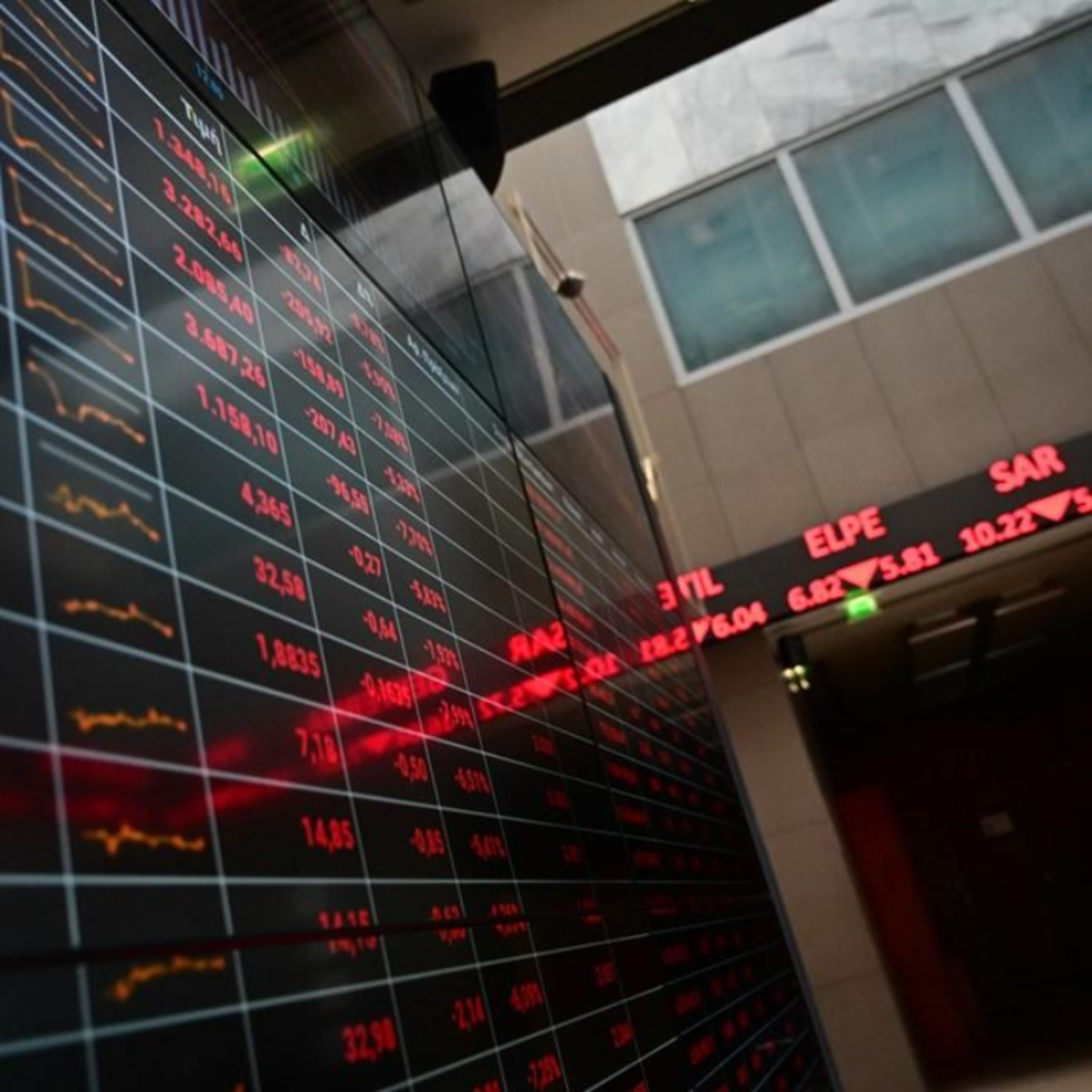
The Greek stock market entered a phase of acute volatility, reflecting broader global uncertainty and intensifying geopolitical risks. While banking stocks suffered sharp losses — with declines reaching up to 5% — energy giants such as Motor Oil and Helleniq Energy moved decisively in the opposite direction, capitalizing on rising crude prices and tightening energy markets.
This divergence reveals far more than daily market noise. It underscores a structural tension between financial fragility and energy leverage in a period defined by political risk and commodity volatility.
Banking Sector Under Pressure
Greek banks, traditionally viewed as high-beta proxies for country risk, bore the brunt of investor anxiety. International funds rotated toward safer assets, triggering aggressive sell-offs in financial stocks.
The banking downturn signals:
- Growing concerns over liquidity conditions in European markets
- Exposure to macroeconomic slowdown risks
- Sensitivity to bond yield fluctuations and external capital flows
Despite strong earnings reported in 2025, investors appear unwilling to maintain elevated exposure to financial institutions amid geopolitical escalation and energy-driven inflationary fears.
In times of uncertainty, banks often become the first casualties — not necessarily because of fundamentals, but because of perception and systemic exposure.
Energy Stocks Ride the Oil Wave
In sharp contrast, Motor Oil and Helleniq Energy gained ground, supported by strengthening international crude prices and widening refining margins.
Energy companies operate as partial hedges during geopolitical crises. When tensions rise in oil-producing regions, price spikes tend to improve revenue visibility for refiners and integrated energy groups.
The market message is clear: Risk off in finance — risk on in energy.
This sectoral divergence is not accidental. It reflects a strategic repositioning of capital toward tangible asset plays and commodity-linked resilience.
The Political-Economic Undercurrent
Beyond the numbers lies a deeper narrative.
Markets are not merely reacting to balance sheets. They are pricing in:
- Escalating geopolitical instability
- Fragile European growth dynamics
- The risk of renewed energy inflation
For Greece, the stock exchange once again acts as a pressure gauge of external dependency. The country remains highly sensitive to international capital flows and energy price fluctuations — a dual vulnerability that becomes evident during global shocks.
Athens today is not isolated. It is interconnected — and exposed.
This is more than a turbulent trading session. It is a snapshot of a market recalibrating under stress.
Banks fall as confidence wavers. Energy rises as scarcity premiums return.
And investors, navigating uncertainty, are making one thing clear: In volatile times, survival outweighs optimism.
If you would like, I can expand this into a longer geopolitical analysis or add a European comparative perspective.
Source: pagenews.gr
Διαβάστε όλες τις τελευταίες Ειδήσεις από την Ελλάδα και τον Κόσμο







Το σχόλιο σας