


Greek Govt Unveils Fiscal “Crisis Toolkit” to Combat Rising Energy Costs–EU Nuclear Option on Excise Tax Cuts
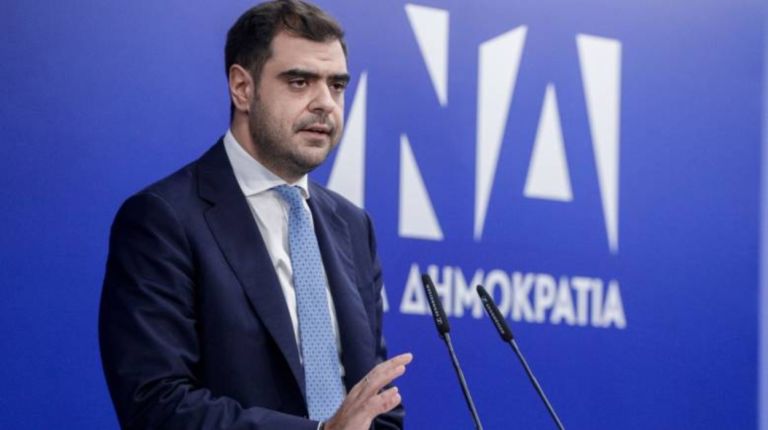
Πηγή Φωτογραφίας: eurokinissi//Greek Govt Unveils Fiscal “Crisis Toolkit” to Combat Rising Energy Costs – EU Nuclear Option on Excise Tax Cuts



In the face of surging global energy prices triggered by the ongoing U.S.–Israeli conflict and tensions in the Middle East, the Greek government has been actively shaping a two‑pronged economic strategy — blending national support measures with a push for coordinated European action to protect consumers and the wider economy. Senior government sources have described it as a crisis “toolbox” ready to be deployed if pressures on prices and inflation intensify.
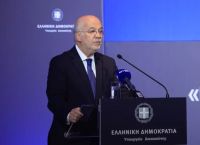
Amid rising concerns about inflationary spillovers into transport, industry and households, Prime Minister Kyriakos Mitsotakis stressed that Europe must be prepared with both short‑term interventions and mid‑ to long‑term policies to soften the blow of high energy costs. Speaking at the “Greek Energy: The New Era” conference, he argued that Brussels should have response measures ready that can be quickly adopted if the crisis persists.
Greece Takes Immediate Protective Steps
In response to the latest price surge, the government has already introduced temporary caps on profit margins for fuel at service stations and on dozens of essential supermarket items — a move aimed at curbing speculation and shielding consumers from sudden price jumps. Prime Minister Mitsotakis said such measures, while not addressing the root causes of price increases, are necessary to prevent undue profiteering during the energy shock.
Economists note that these steps are part of a broader European pattern, where governments are exploring tax adjustments and regulatory interventions as initial defences against sharply higher energy bills. In some EU countries, discussions include lowering energy levies, adjusting carbon costs, and even revisiting VAT and excise duties on fuels — though large fiscal packages similar to those seen during the 2022 energy crisis are now constrained by tighter budgets.
The Debate Over Excise Tax (Fuel Duties)
At the core of Greece’s domestic debate is the question of reducing the Special Consumption Tax (excise duty) on fuels — a tax that significantly contributes to retail prices at the pump. Greek government representatives have indicated that they are not fundamentally opposed to lowering the excise tax, but insist such a move should be aligned with European rules and ideally coordinated at EU level. They argue that unilateral cuts, without compensating revenue elsewhere, could undermine budgetary stability.
Behind this caution lies the structural reality that excise duties generate billions in annual revenue for the Greek state, making deep cuts politically and fiscally sensitive unless offset by EU‑wide agreements or emergency fiscal flexibility measures. European budget rules offer temporary “escape clauses” in exceptional circumstances — a point Athens is pressing at forthcoming EU summits to allow member states greater leeway in responding to energy shocks.
EU Coordination — A Central Theme
Greece’s push for common EU action goes beyond national tax policy. Kyriakos Pierrakakis, Greece’s Finance Minister and current chair of the Eurogroup, has publicly urged swift, coordinated European intervention to reduce the strain of energy costs on households and business. This includes joint measures on energy taxes, network charges and carbon pricing to relieve pressure on industries, as well as investment in clean energy and infrastructure to reduce long‑term dependence on volatile fossil fuel markets.
Meanwhile, Brussels officials are actively examining a menu of policy responses — from potential gas price caps to state aid schemes — while steering clear of policies that might conflict with ongoing climate goals. These measures are being drafted ahead of EU leaders’ discussions later this month, where relief options are likely to be debated.
Balancing Act: Protecting Consumers Without Breaking Budgets
For Athens, the calculus is delicate: protect vulnerable households from rapid price increases while preserving fiscal credibility in the eyes of European partners and markets. The government’s emphasis on “targeted and temporary” measures reflects this balancing act, aiming to avoid broad, permanent tax cuts that might strain public finances or deviate from agreed EU budgetary frameworks.
As the European Council approaches, Greek leaders continue to press the case for a dual strategy — national shields backed by cohesive, EU‑level economic firepower — to navigate both the present energy shock and future volatility in global markets.
Source: pagenews.gr
Διαβάστε όλες τις τελευταίες Ειδήσεις από την Ελλάδα και τον Κόσμο






Το σχόλιο σας