


Bloomberg: Greece on Verge of Developed‑Market Status After Capital Controls Collapse
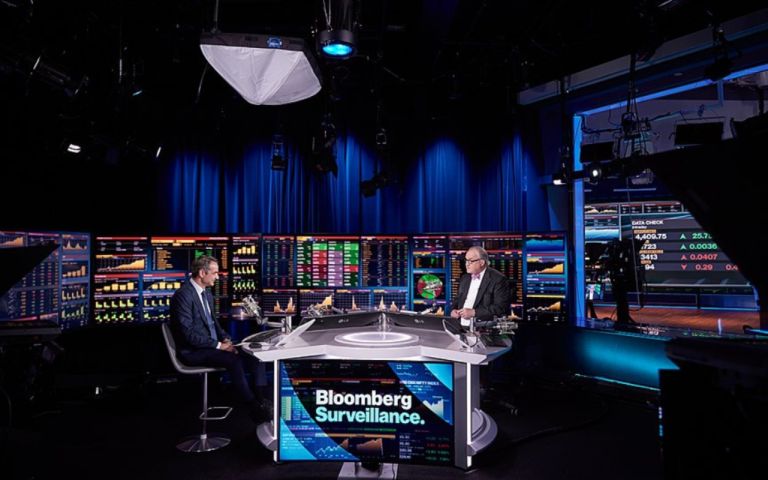
Πηγή Φωτογραφίας: freepik//Bloomberg: Greece on Verge of Developed‑Market Status After Capital Controls Collapse



For over a decade, Greece’s financial markets have embodied the dramatic arc of crisis and recovery. In 2015, at the height of the sovereign debt crisis, capital controls froze the Greek banking system and shuttered the Athens Stock Exchange for five weeks, sending panic through investors and wiping out 94 % of Greek bank equity values. Today, Greece is poised to reverse that narrative — with the Morgan Stanley Capital International (MSCI) index provider considering re‑classifying it from an emerging to a developed market by March 31. If finalized, the move will mark one of the most symbolic financial transformations in Europe’s post‑crisis era.
📢#MSEI strengthens its Equity Segment!
✅Market Makers successfully appointed 📅Liquidity enhancement from April 1, 2026
A big step towards better price discovery, improved liquidity & seamless trading experience.📊#StockMarket #Investing #SEBI #IndiaMarkets #unlistedshares pic.twitter.com/IEwp65u1Nu
— ISEC Capital (@iseccapital) March 24, 2026
From Crisis to Confidence
When Greece’s stock market was downgraded to emerging status in 2013, it became the first modern advanced economy to lose its developed market tag — a reflection of deep structural stress and capital flight. At the peak of the debt crisis, Greek equities lagged behind markets in countries like Egypt and Morocco, hampered by low liquidity, collapsing banks, and investor fear.
Greece’s GDP expansion “outpacing major economies” since 2019 and an NPL’s reduction rate “unsurpassed by the banking industry anywhere, according to data compiled by Bloomberg”.
Good news and more good news to come soon. https://t.co/BnqHrTJ6oY
— Prime Minister GR (@PrimeministerGR) March 23, 2023
A decade later, Greece’s financial landscape looks markedly different:
- Greek stock market capitalization now exceeds that of Portugal and Ireland.
- Average daily turnover on the Athens Stock Exchange (ASE) has climbed to around €370 million, up from roughly €84 million a decade ago.
- The ASE index has surged roughly 330 % from its pandemic lows, more than double the gain of MSCI’s developed markets index.
Economic recovery has followed, with Greece returning to investment‑grade sovereign bond status in 2023 after 13 years outside it and posting one of the faster GDP growth rates in Europe.
Why “Developed Market” Status Matters
Classifications by index providers like MSCI have real financial impact: approximately $18.3 trillion in assets are tied to MSCI indices, and inclusion in developed‑market benchmarks brings access to a vast set of institutional investors — pension funds, sovereign wealth funds, and ETFs — that are restricted from investing in emerging markets.
A transition to developed status would likely:
- Draw new global capital inflows into Greek equities.
- Increase demand for Greek stocks in international portfolios.
- Elevate the standing of Athens as a credible financial center in Europe and beyond.
However, not all effects are uniformly positive. Some investors warn of short‑term outflows from emerging‑market funds that currently overweight Greek stocks. That pattern played out when Israel moved to developed status in 2009, with initial selling by emerging‑market investors before net inflows followed over time.
Bloomberg: Από την κρίση στην ανάκαμψη – Η Ελλάδα στο δρόμο της επιστροφής στις ανεπτυγμένες αγορές https://t.co/BqW320eJGB pic.twitter.com/a6XUSbzKMT
— Reporter.gr (@reportergr) March 24, 2026
Market Voices: Growth and Caution
«Greece is growing faster than Europe, the banking sector is more consolidated, and Greek banks are profitable,» said Iason Kepaptsoglou, Head of Investor Relations at Alpha Bank. «You’re a very small fish — which isn’t ideal — but in a vast ocean.»
«In the medium to long term, this will be a positive development for Greece,» said Apostolos Zafolias, Head of Strategy & Investor Relations at Lamda Development, the company behind The Ellinikon — one of Europe’s largest urban regeneration projects. «It will bring access to a much larger and higher‑quality pool of capital.»
Still, some strategists express caution. Sunil Kul, Global Head of Emerging Markets Equity Strategy at Goldman Sachs, notes that smaller companies and banks may face pressure as the composition of investor flows changes post‑reclassification.
Banks: Recovery Amid New Risks
The Greek banking sector is now vastly different from 2015: better capitalized, more profitable, and narrower in number. But size remains a concern — even Greece’s largest lender, Eurobank, with a market cap near €12.4 billion, is smaller than many European rivals.
The MSCI upgrade could help attract longer‑term institutional holders, but also potentially force portfolio rebalancing among funds that operate strictly within developed market universes. Analysts estimate that passive outflows tied to index rebalancing could total around $300 million, a relatively modest figure compared with potential long‑term inflows.
Strategic Implications
The possible reclassification transcends pure market mechanics. It reflects a broader economic normalization for Greece — from the brink of sovereign default to a market with deepening liquidity and growing investor interest. The 2015 capital controls, once seen as a national trauma, are now a distant memory as Greece’s institutional frameworks, regulatory stability, and macroeconomic indicators align more closely with developed peers.
The Greek stock exchange’s acquisition by Euronext, which manages major European bourses, was hailed by the government as a milestone in integrating Athens into the broader European financial ecosystem.
Short‑Term Effects, Long‑Term Promise
Even if MSCI confirms the upgrade by March 31, some near‑term volatility is possible as emerging‑market funds adjust positions. The example of Israel’s transition underscores the initial pain that can come before broader gains: after its 2009 upgrade announcement, funds sold positions before net inflows materialized once the status took effect.
Moody’s upgrade of Greece to Baa3 marks the final step in restoring our investment grade by all major rating agencies, highlighting Greece’s significant progress. We remain fully committed to reforms that attract investment, create jobs, and drive sustainable growth.
— Prime Minister GR (@PrimeministerGR) March 15, 2025
Ultimately, the shift could redefine Greece’s investor profile — from a frontier case of crisis‑driven selloffs to a credible, globally‑recognized market destination.
Source: pagenews.gr
Διαβάστε όλες τις τελευταίες Ειδήσεις από την Ελλάδα και τον Κόσμο








Το σχόλιο σας