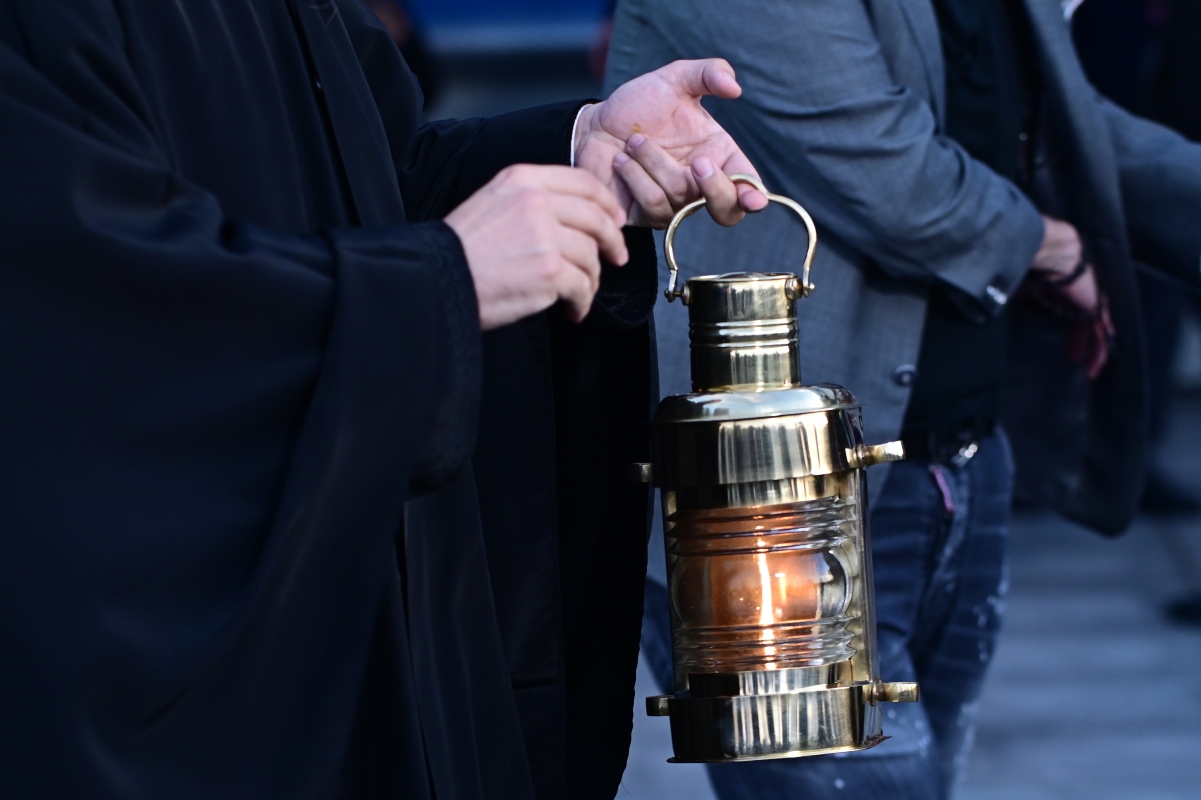
As tensions persist across the Middle East and conflict affects daily life in Jerusalem, questions have arisen about how Greece will receive the Holy Fire this year — a central symbol of Orthodox Easter traditionally brought from the Church of the Holy Sepulchre in Jerusalem to Greek churches and faithful. Officials in Athens are working to ensure the tradition continues unbroken, even amid uncertainty.
The Holy Fire (or Holy Light) is a deeply rooted Orthodox Christian ceremony held every year on Great Saturday at the Church of the Holy Sepulchre in Jerusalem. During the ritual, a flame believed to represent the resurrected Christ is lit and then distributed to Orthodox communities worldwide, including Greece’s capital, Athens.
Diplomatic contingency planning amid war
Greek authorities, led by the Ministry of Foreign Affairs, are closely monitoring developments in Jerusalem as the region remains affected by ongoing hostilities. According to government representatives, including government spokesperson Pavlos Marinakis, the ministry is in constant communication with relevant counterparts — including embassy officials and, where possible, Israeli authorities — to coordinate the transfer of the sacred flame.
“There is no need for panic or uncertainty among citizens and believers,” Marinakis stressed, indicating that whether by the traditional delegation or a much smaller mission due to security concerns, the Holy Fire will arrive in good time for the Easter celebrations. This reassurance is aimed at maintaining public confidence in both the tradition and the state’s capacity to uphold it.
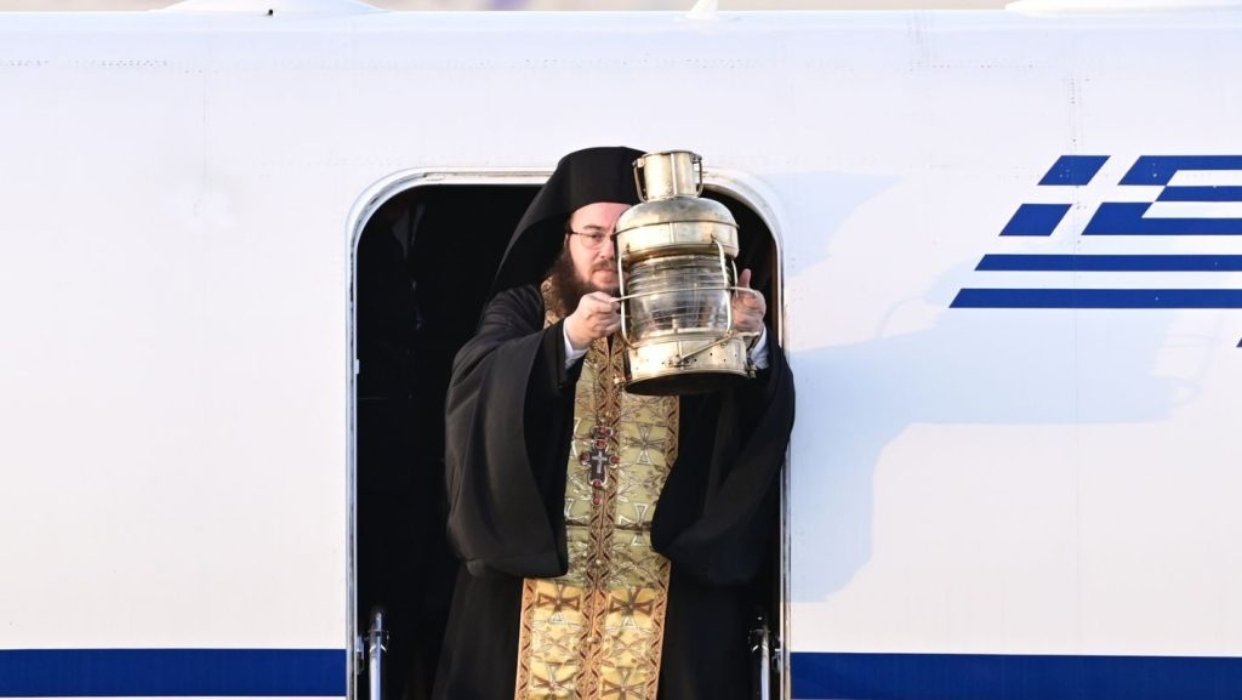
While details remain fluid, officials insist that “the Holy Light will reach Greece one way or another,” whether through a special charter flight or alternative arrangements tailored to evolving conditions.

Why this matters
For millions of Orthodox Christians, the arrival of the Holy Fire is more than a logistical event — it’s a profound expression of faith tied to the celebration of Christ’s resurrection. The annual ritual’s roots go back centuries and are widely observed across Eastern Orthodox countries each year, with delegates often flying the flame to national capitals for distribution.
Typically, special flights (often organized with airlines such as AEGEAN or previously with charter arrangements) carry the flame first to Athens and then to dioceses throughout Greece. Historically, even in challenging global circumstances — such as during the COVID‑19 pandemic — authorities found ways to bring the Holy Fire home, albeit with adjusted protocols.
This year’s planning reflects not only religious sensitivity but also diplomatic coordination — ensuring Greece’s participation in an ancient ritual continues without compromising the safety of clergy and delegations in a volatile region.
Balancing tradition and security
Officials have indicated that the priority is preserving both the spiritual significance of the Holy Fire and the practical safety of those tasked with its transport. Should the situation in Jerusalem’s Old City remain constrained — some reports describe parts of the area as under curfew with limited activity — Greece will proceed with alternatives designed to adapt to operational realities.
Within ecclesiastical circles, there has even been discussion — though described by observers as highly speculative — of the possibility of pauses in hostilities to facilitate religious rites during Easter week, underscoring the deep cultural and spiritual value attached to this event.
Looking ahead
As Greek Orthodox Easter approaches, Greek policymakers, diplomats and church officials are working in concert to ensure that tradition endures despite extraordinary regional conditions. The goal remains that, even if only a small delegation can travel, the flame will illuminate Greek communities as it has for generations — a potent symbol of hope that transcends geopolitical strife.
In times of uncertainty, the effort to uphold such practices often becomes as much about resilience and identity as about logistics — reminding believers that sacred observances can endure even when the world around them seems unstable.
Would you like a timeline of how Holy Fire has been brought to Greece over the decades, including past adjustments during crises?
Source: pagenews.gr