


Energy on Edge: Papastaurou Balances Stability and Political Pressure
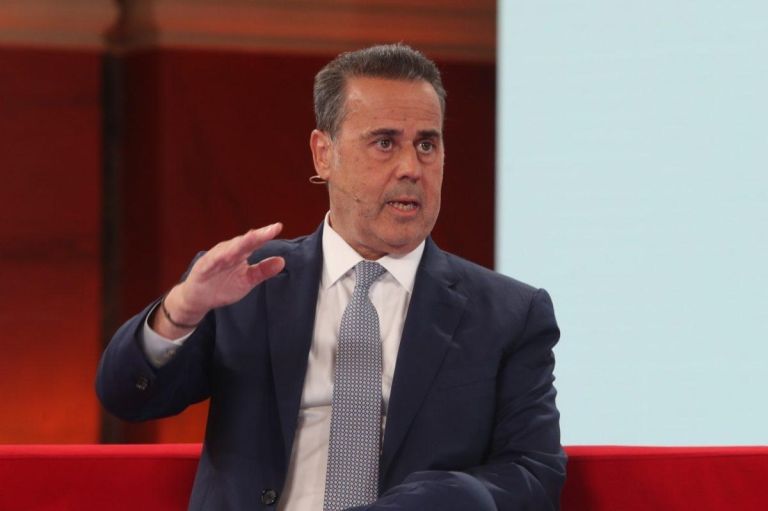
Πηγή Φωτογραφίας: eurokinissi//Energy on Edge: Papastaurou Balances Stability and Political Pressure



Greece remains at a crossroads as international energy shocks ripple into national policy. Environment and Energy Minister Stavros Papastaurou reassured audiences at the Power & Gas Forum that “for now, and in the coming months, energy supply is sufficient”, emphasizing that current stability comes despite ongoing uncertainty in the Gulf.
“Sufficient for now” — a cautious institutional signal
Papastaurou noted that while supply is stable, “no one can predict with certainty how the crisis will evolve”. His statement aims to reassure both markets and consumers while highlighting that energy security is neither guaranteed nor static.
Renewables and storage: strategic moves with political weight
The minister highlighted the growing role of renewable energy sources in Greece’s energy mix. He pointed out that energy prices would be far higher today if the country still relied heavily on lignite, stressing the value of the green transition.
Energy storage systems are also a key focus, with targets of 700 MW by the end of 2026 and 2.5 GW by 2027, supporting grid stability and reducing renewable curtailments. Meanwhile, a new Special Spatial Framework for RES will be unveiled in early May to streamline renewable investments.
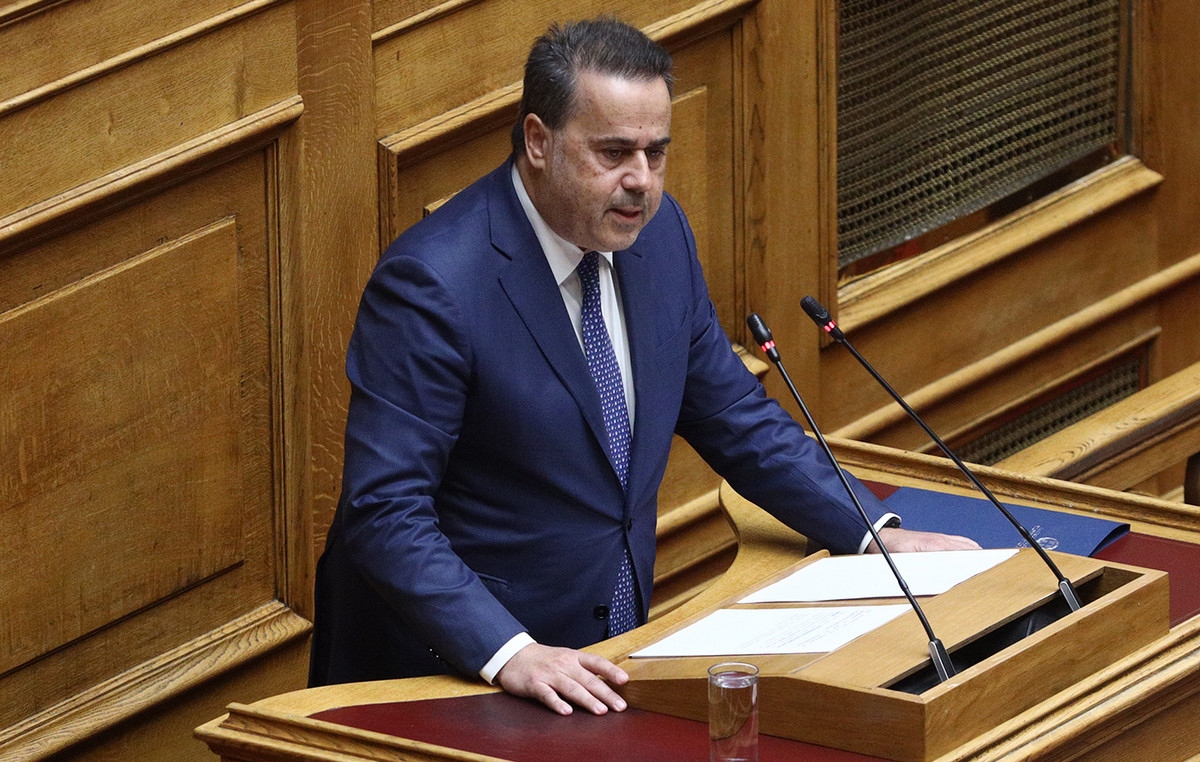
Electricity theft: a political and social challenge
Papastaurou also addressed the social and economic impact of electricity theft, which costs €450 million annually to law-abiding consumers. He highlighted that organized groups are exploiting loopholes, prompting measures such as AI-assisted monitoring and smart meters — expected to reach 3.5 million by 2027.
The issue is politically charged, reflecting inequality in cost distribution and becoming a lever for both government messaging and opposition critique.
Hydrocarbons and geopolitics: the bigger picture
The minister confirmed the Ionian Sea exploratory drilling scheduled for 2027, part of Greece’s broader strategy to secure energy autonomy. He reiterated the EU goal of banning Russian gas imports, including via the Turk Stream, which requires infrastructure upgrades along the vertical corridor and storage capacity in Ukraine as emergency reserves.
Balance and pressure
In a climate where energy is both a national and political issue, the government frames Papastaurou’s statements as:
- A signal of stability amid international uncertainty
- A promotion of renewables and tech solutions as development levers
- A response to domestic concerns about fairness and affordability
At the same time, opposition forces may exploit electricity theft and crisis management to question efficiency and timing, making energy policy a dual tool — both administrative and political.
Ultimately, energy security is Greece’s central challenge — a measure of governance and political capital alike.
Source: pagenews.gr
Διαβάστε όλες τις τελευταίες Ειδήσεις από την Ελλάδα και τον Κόσμο







Το σχόλιο σας