


“EU budget shock: Parliament threatens to delay €1.8 trillion deal until 2027”
 ΧΡΟΝΟΣ ΑΝΑΓΝΩΣΗΣ 3 '
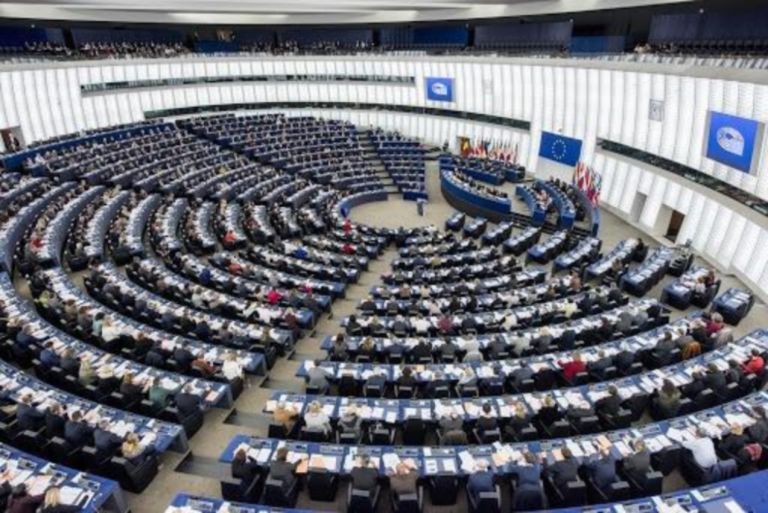
Πηγή Φωτογραφίας: AP Photo//“EU budget shock: Parliament threatens to delay €1.8 trillion deal until 2027”



REPORT – INTERNATIONAL POLITICS
Tensions are rising in Brussels as the European Parliament signals it may delay or even block negotiations on the European Union’s next long-term budget, a financial package worth up to €1.8 trillion covering the post-2027 period.
The warning adds a new layer of uncertainty to one of the EU’s most consequential and complex political processes: the Multiannual Financial Framework (MFF), which sets spending priorities across agriculture, cohesion policy, defence, climate transition, and competitiveness.
According to EU sources, Members of the European Parliament are increasingly dissatisfied with key elements of the European Commission’s proposal, particularly concerns over centralisation of funding mechanisms and a perceived reduction in the Parliament’s direct influence over budget allocation.
INSTITUTIONAL CONFLICT AT THE CORE
At the heart of the dispute is a broader institutional struggle over how power is distributed within the EU.
MEPs are demanding significant revisions to the proposed structure, arguing that the current design risks leading to a form of “renationalisation” of EU policies, especially in areas such as agriculture and cohesion funding.
Parliament officials have warned that without substantial changes, they will refuse to enter formal negotiations, a move that could significantly delay the approval process and disrupt the timeline for the next budget cycle.
Any final agreement must be approved by both the European Parliament and all 27 EU member states, making consensus essential and breakdowns potentially costly.
RISING POLITICAL PRESSURE
The proposed €1.8 trillion budget is one of the EU’s most ambitious financial plans to date, designed to strengthen Europe’s global competitiveness, expand defence capabilities, and accelerate the green transition.
However, divisions persist not only within the Parliament but also among member states, many of which are wary of the scale of centralisation and the redistribution of financial control.
The European Commission defends its proposal, arguing that the new framework is intended to be more flexible, efficient, and strategically aligned with global geopolitical challenges and economic pressures.
A CRITICAL MOMENT FOR THE EU
The confrontation highlights once again the fragile balance of power between EU institutions. The budget process has historically been one of the most politically sensitive negotiations in the Union, often exposing deep divisions over sovereignty, solidarity, and fiscal priorities.
Analysts warn that prolonged delays could disrupt funding cycles and create a ripple effect across multiple policy areas, potentially weakening the EU’s ability to respond to economic and geopolitical challenges.
The dispute over the EU’s €1.8 trillion budget is rapidly evolving into a major institutional standoff, with the European Parliament seeking to assert greater authority over the bloc’s long-term financial direction.
Source: pagenews.gr
Διαβάστε όλες τις τελευταίες Ειδήσεις από την Ελλάδα και τον Κόσμο








Το σχόλιο σας