
In what is already being described as a landmark moment for the Greek economy and European energy markets, Public Power Corporation (PPC/ΔΕΗ) completed the largest capital increase ever recorded in the history of the Greek stock market, raising €4.25 billion amid investor demand that exploded to nearly €18 billion.
The scale of the oversubscription stunned even seasoned market observers. Within minutes of the book-building process opening, the offering had already been fully covered, ultimately attracting demand roughly 4.5 times above the base offering — and close to 10 times over excluding the participation of the Greek state and major shareholder CVC.
The message from global markets was unmistakable: PPC is no longer viewed as a traditional Balkan utility. It is increasingly being priced as a regional energy, infrastructure, and AI-driven technology platform with pan-European ambitions.
The Stassis Transformation
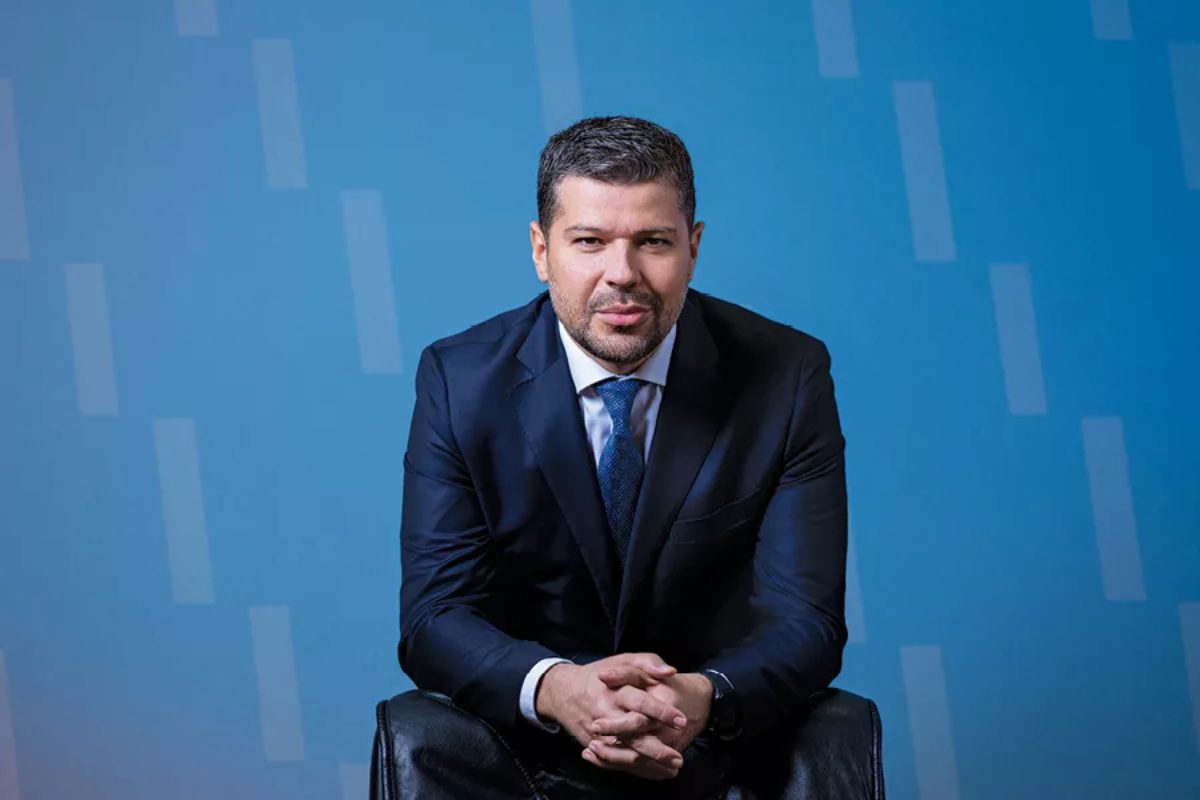
Under CEO Georgios Stassis, PPC has undergone one of the most aggressive corporate transformations seen in Southern Europe over the last five years.
Back in 2019, the company’s market capitalization had collapsed to roughly €390 million, burdened by debt, political intervention, aging lignite plants, and chronic structural weaknesses.
Today, after the completion of the capital raise, PPC’s valuation is expected to approach €11.5 billion, placing it among the dominant heavyweights of the Athens Stock Exchange.
What changed was not merely balance-sheet management. The company rewrote its strategic identity.

Instead of operating as a domestic electricity supplier dependent on fossil fuels, PPC repositioned itself around:
- renewable energy,
- regional expansion,
- energy storage,
- digital infrastructure,
- and artificial intelligence.
The new strategic plan for 2026–2030 now envisions investments totaling €24 billion across Greece and Southeastern Europe.
Global Investment Titans Enter the Game
Perhaps the most politically and financially significant element of the transaction was the caliber of investors who entered — or strengthened — their positions in PPC.
The new shareholder structure now includes some of the most powerful institutional names in global finance:
- BlackRock
- Vanguard
- Capital Group
- Qatar Investment Authority
- Wellington Management
- Norges Bank Investment Management
- DWS Group
- Pictet Group
- CVC Capital Partners
Their participation is interpreted by analysts as a powerful vote of confidence not only in PPC itself, but in Greece’s broader macroeconomic and geopolitical trajectory.


The entry of long-term institutional capital also dramatically increases the likelihood of PPC securing a stronger position in major global indices such as MSCI, potentially triggering additional inflows from passive investment funds and ETFs.
The €24 Billion Bet
The capital raise is designed to finance one of the most ambitious infrastructure and energy expansion programs currently underway in Europe.
PPC plans to:
- double installed capacity to 24.3 GW by 2030,
- massively expand renewable energy production,
- develop battery storage systems,
- build new natural gas flexibility units,
- and accelerate cross-border energy operations.
The company’s international footprint is also expanding rapidly.
Beyond Greece, PPC is scaling operations in:
- Romania
- Italy
- Bulgaria
- Croatia
while preparing entry into:
- Poland
- Hungary
- Slovakia
By 2030, nearly 45% of PPC’s installed generation capacity is expected to be located outside Greece — a dramatic shift for what was once a domestically focused state utility.
PPC’s AI Gamble: The Mega Data Center Project
The most eye-catching pillar of the new strategy is PPC’s planned 300 MW Mega Data Center in Western Macedonia — a project tightly linked to Europe’s growing AI infrastructure race.
The facility will be developed near the former lignite operations of the Agios Dimitrios Power Station and is expected to support hyperscale cloud computing and artificial intelligence workloads.
According to company planning, PPC is already engaged in confidential discussions with major hyperscalers regarding participation in the project.
The first phase is expected to begin in 2026, with expansion potential eventually reaching 1 GW, positioning Western Macedonia as a possible emerging European digital-energy hub.
The project also serves a symbolic role: transforming Greece’s former coal heartland into a center for next-generation energy and computing infrastructure.
Financial Targets That Redefined Market Expectations
PPC’s business plan projects a dramatic acceleration in profitability:
- EBITDA rising from roughly €2 billion in 2025 to €4.6 billion by 2030
- Net profits climbing toward €1.5 billion
- Dividend growth from €0.4 to €1.4 per share
The company also intends to preserve investment-grade balance-sheet discipline, maintaining leverage below 3.5x despite the scale of planned expansion.
The financing model itself reflects the new confidence surrounding the group:
- 54% funded via operating cash flows,
- 31% through debt,
- and only 15% via the capital increase itself.
A New Era for Greece’s Corporate Ambitions
Beyond the numbers, the transaction carries broader symbolic weight for Greece.
For years, Greek corporations were associated internationally with crisis management, deleveraging, and defensive restructuring.
PPC’s successful €4.25 billion raise signals a different narrative: a Greek company now capable of attracting global institutional capital at a scale comparable to major European infrastructure groups.
The company is no longer presenting itself merely as Greece’s national electricity provider.
It is positioning itself as a strategic European player at the intersection of:
- energy security,
- green transition,
- digital infrastructure,
- and artificial intelligence.
And for international investors, the scale of demand suggests many are willing to bet that PPC’s transformation story is only beginning.
Source: pagenews.gr