Bakoyannis Calls 2015 Referendum “Ultimate Act of Political Irresponsibility”
The New Democracy MP labels the vote a “parody,” describes her party’s participation as a historic mistake, and argues for stricter constitutional safeguards governing future referendums.
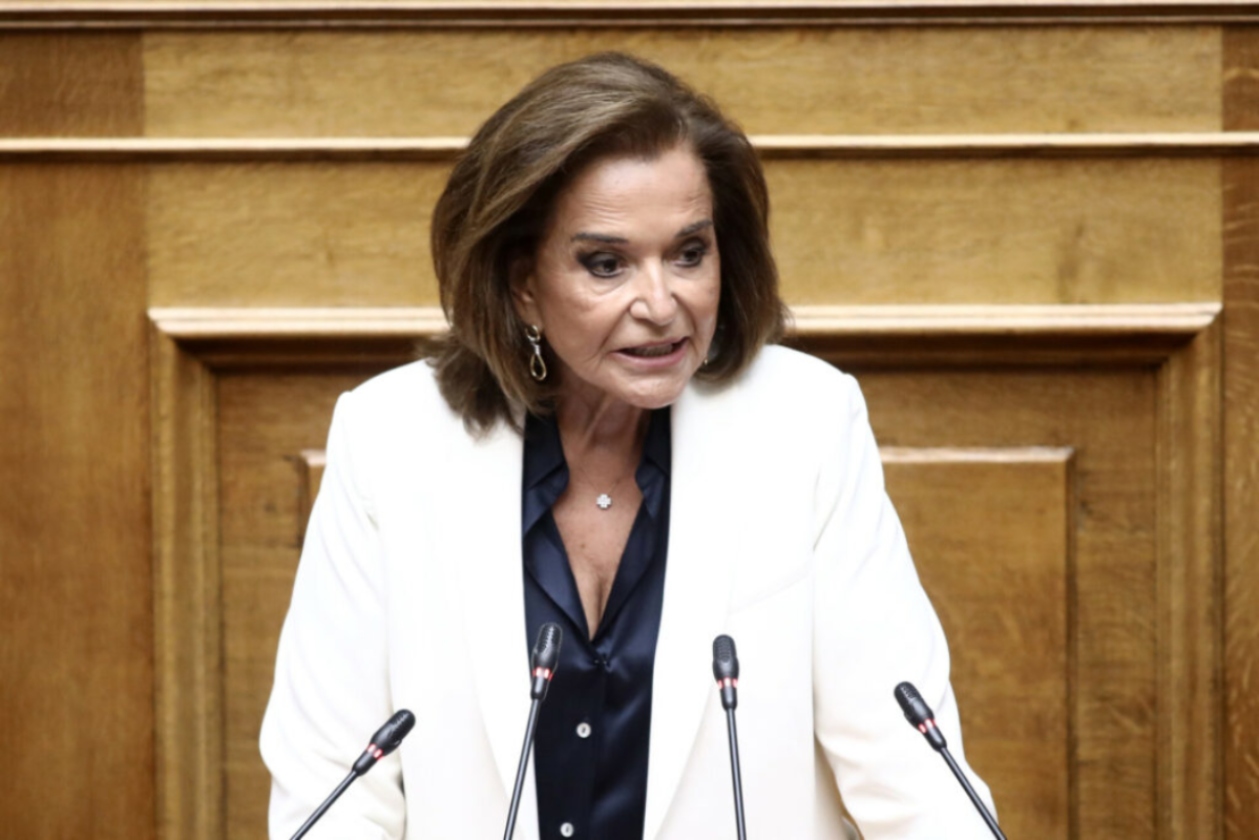
New Democracy MP Dora Bakoyannis delivered a strongly worded intervention during the parliamentary debate on Greece’s constitutional revision process, using the occasion to launch a fierce critique of the 2015 referendum and to defend stricter constitutional safeguards governing future referendums.
Speaking before the Constitutional Revision Committee, Bakoyannis described the referendum called by the SYRIZA–ANEL government as “the ultimate act of irresponsibility by a Greek politician, at least during the first quarter of the 21st century.”
Her remarks came as lawmakers examined proposed amendments to Article 44 of the Constitution, which regulates the conditions under which national referendums may be held.
A “Traumatic and Destructive Experience”
According to Bakoyannis, Greece would not need to revisit the constitutional framework governing referendums had it not experienced what she described as the damaging consequences of the July 2015 vote.
She argued that citizens were asked to make a decision on a highly complex issue within an extremely limited timeframe, based on documents that many voters could neither fully access nor adequately understand.
The veteran politician also maintained that the referendum concerned fiscal matters, an area she argued falls outside the constitutional scope of such consultations.
“It was a referendum parody,” she said, describing the process as one of the most problematic episodes of Greece’s post-crisis political history.


Indirect Criticism of New Democracy’s Past Leadership
Perhaps the most politically significant aspect of her intervention was her reference to what she called New Democracy’s own “historic mistake.”
Bakoyannis argued that the party’s decision to participate in the referendum campaign, despite its objections, effectively granted legitimacy to a process it considered flawed.
Although she did not mention names, her comments were widely interpreted as indirect criticism of the party leadership at the time, headed by former Prime Minister Antonis Samaras.
The remarks reopened an old debate within the center-right camp over whether New Democracy should have boycotted the referendum rather than participate in it.
Stricter Constitutional Safeguards
Bakoyannis insisted that the proposed constitutional amendments are not intended to weaken direct democracy but rather to protect the integrity of future referendums.
Under the proposed framework, referendums would be required to meet stricter standards, including:
- Clear and understandable questions.
- Adequate time for public debate.
- Stronger procedural safeguards.
- Protection against political manipulation.
According to the New Democracy lawmaker, these measures are necessary to preserve both democratic legitimacy and political stability.
Reservations About a Six-Year Presidential Term
During her intervention, Bakoyannis also expressed reservations regarding proposals to extend the term of the President of the Republic to six years.
She argued that the current model—allowing up to two five-year terms—has functioned effectively and has contributed to institutional continuity and stability over time.
Her comments suggested that while she supports constitutional modernization, she does not believe every proposed reform is necessarily an improvement.
Beyond the Referendum
Bakoyannis presented the broader constitutional revision package as an effort to modernize key aspects of Greece’s political and institutional framework.
Among the issues she highlighted were:
- Regulation of emerging challenges such as artificial intelligence.
- Responses to climate change.
- Reform of ministerial accountability rules.
- The establishment of non-state universities.
Yet the central message of her speech remained firmly rooted in the lessons of 2015.
A decade later, the referendum continues to divide political opinion and shape constitutional debates in Greece. For New Democracy, it remains a symbol of political adventurism and institutional recklessness. For many on the left, it is still viewed as an expression of popular sovereignty during a critical moment in the country’s negotiations with international creditors.
For Bakoyannis, however, the verdict is clear: the referendum stands as a painful lesson from which the Greek political system must learn in order to prevent similar crises in the future.
Source: pagenews.gr