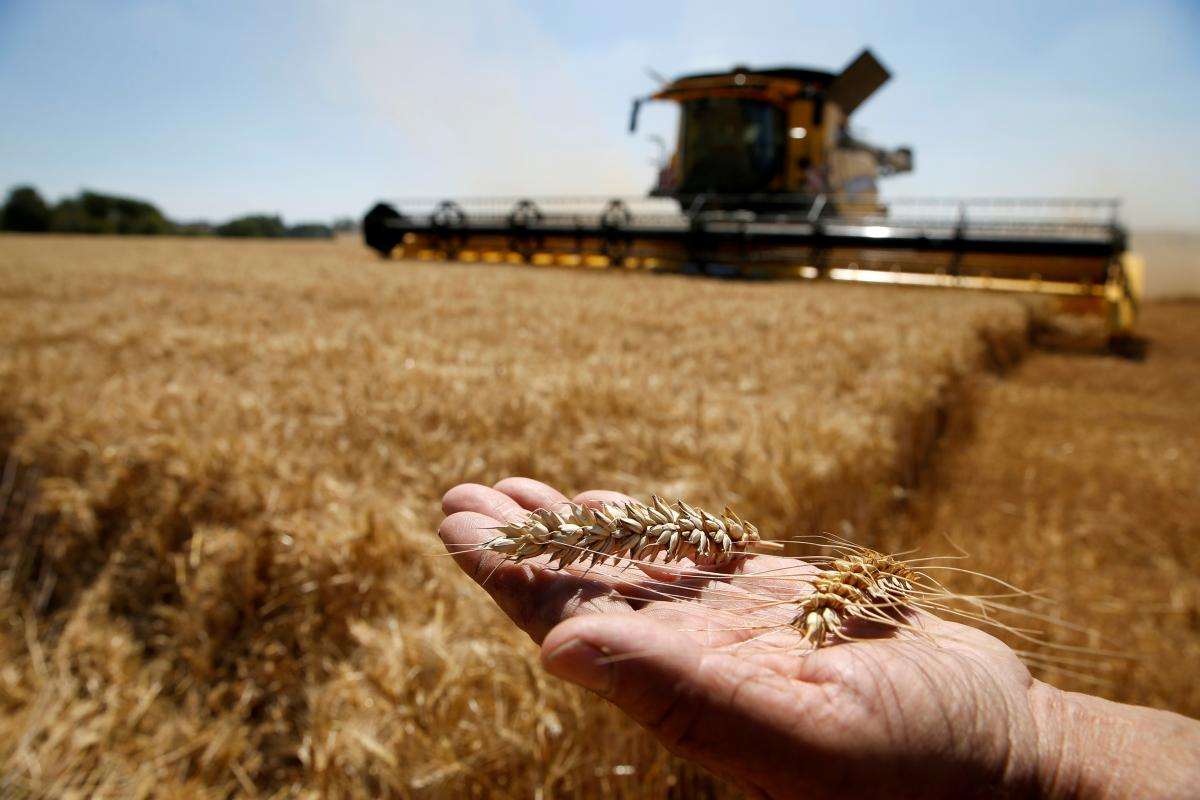
The world still needs it.
The problem is getting it out.
That increasingly difficult journey — from Ukrainian farms to buyers in Africa, the Middle East and Asia — now runs through three separate obstacles: Russian military pressure in the Black Sea, logistical constraints on the Danube, and political resistance inside the European Union.
Together, they are creating something more dangerous than a temporary export disruption.
They are turning Ukrainian grain back into a geopolitical weapon.
Russia Has Found the Weak Link: The Ships
Ukraine normally depends overwhelmingly on maritime routes for agricultural exports.
That makes Odesa and the wider Black Sea port network critical not only to Ukrainian agriculture, but to the country’s wartime economy.
Russia understands that vulnerability.


The latest escalation has therefore created a particularly effective form of pressure: Moscow does not necessarily have to impose a conventional naval blockade.
It can impose a blockade through risk.
A Russian missile strike in July hit the Golden Leo, a vessel carrying Ukrainian corn after leaving port, killing 10 people aboard. The ship later sank.
The strategic message to the shipping industry was unmistakable.
Entering Ukrainian waters is no longer merely a commercial calculation.
It can be a life-or-death decision.
And shipping companies have responded accordingly.
The Ports Are Open. The Ships Aren’t Coming.
That is the paradox at the heart of the crisis.
Ukraine’s ports around Odesa may technically remain operational, but if shipowners, insurers and crews consider the risk unacceptable, their legal status becomes almost irrelevant.
As Ukrainian Agriculture Minister Taras Vysotskyi put it:“Ship owners and crews are just afraid. They are not ready to send the ships at all.”
This is what makes the current Russian pressure strategically effective.
Moscow does not have to sink every merchant vessel.
It only has to persuade enough captains, insurers and shipping companies that the next ship could be theirs.
Once that happens, fear begins doing the work of a blockade.
Ukraine’s Grain Is Starting to Pile Up
The consequences are already visible.
Ukraine exported only 463,000 metric tons of grain during the first nine days of August, according to Vysotskyi — roughly one-third of its normal pace.
That creates an increasingly serious problem as the next harvest approaches.
Grain that cannot leave the country does not disappear.
It goes into storage.
Warehouses fill.
Prices received by farmers come under pressure.


Cash flow deteriorates.
And producers eventually face difficulty financing the next planting cycle.
A maritime-security crisis therefore becomes an agricultural-finance crisis.
And from there, potentially, a broader economic one.
Kyiv Wants €220 Million From Brussels
Ukraine has asked the European Commission for €220 million in emergency assistance.
The proposed non-repayable support would help subsidize bank financing for small and medium-sized farms, allowing producers to hold grain rather than being forced to sell at distressed prices.
That could provide breathing room.
But €220 million can buy time.
It cannot buy a functioning Black Sea.
Eventually, the grain still has to move.
And that sends Kyiv back toward Europe.
Europe Remembers the Tractors
This is where the military problem becomes a political one.
When Russia disrupted Ukraine’s maritime exports earlier in the war, the EU developed alternative Solidarity Lanes, allowing Ukrainian agricultural products to move through neighboring European countries.
They were economically important.
Politically, however, they became explosive.
Large quantities of Ukrainian agricultural goods entered Eastern Europe, and farmers in countries including Poland argued that products supposedly intended for transit were remaining on local markets.
Prices came under pressure.
Protests followed.
Border crossings were blockaded.
Tractors filled streets.
And Ukrainian agricultural trade became one of the few issues capable of seriously damaging relations between Kyiv and some of its strongest wartime supporters.
That memory has not disappeared.


Poland’s Position: Transit Yes, Imports No
Poland illustrates the contradiction perfectly.
Warsaw remains strategically committed to Ukraine’s survival.
But it is equally determined to protect Polish farmers.
Agriculture Minister Stefan Krajewski has made clear that Poland intends to maintain its embargo on Ukrainian grain imports.
At the same time, Warsaw is discussing ways to allow additional Ukrainian agricultural products to travel through Poland to third countries.
The Polish Foreign Ministry has stressed that negotiations concern transit, not renewed access to the domestic Polish market.
On paper, that appears to offer a compromise:
Ukraine gets a corridor. Poland keeps its embargo.
In practice, there is another problem.
Trust.
“I Absolutely Don’t Believe It”
Some Polish farmers simply do not believe that Ukrainian grain designated for transit will actually leave Poland.
Gustaw Jędrejek, head of the Lublin Chamber of Agriculture and one of the figures involved in previous border protests, has alleged that some shipments are electronically recorded as having reached another destination while the physical grain remains inside Poland.
The Polish government has consistently rejected such allegations.
But politically, perceptions matter.
Asked whether he trusted assurances that additional Ukrainian grain would merely pass through the country, Jędrejek’s answer was unequivocal:
“I absolutely don’t believe it.”
That sentence captures one of Kyiv’s biggest problems.
The obstacle is no longer simply infrastructure.
It is a trust deficit.
Kyiv Says the 2023 Scenario Cannot Simply Repeat
Ukraine insists circumstances have changed.
EU quotas now limit Ukrainian wheat sales into the bloc to around 1.3 million tons annually, according to Vysotskyi.
His argument is therefore that another uncontrolled surge into EU markets is legally far harder than it was during the earlier phase of the war.
Kyiv says it is not demanding unrestricted access to Poland’s domestic grain market.


It wants transit.
Corridors.
Access to ports and third-country buyers.
Vysotskyi has also acknowledged the political reality:“There should be consensus inside the EU, with EU farmers.”
That may be diplomatically correct.
Achieving that consensus is another matter.
Then There Is the Danube
Romania offers another route.
Ukrainian agricultural exports can travel along the Danube toward Constanța, one of the most important Black Sea ports available to Kyiv outside Ukraine itself.
But this summer has introduced an obstacle that neither Brussels nor Moscow controls:
water levels.
Drought and low levels on the Danube are restricting the amount of cargo vessels can carry efficiently.
That means Ukraine is being squeezed simultaneously by three different forces:
Russian attacks at sea.
European political resistance on land.
Nature on the river.
It is an unusually complete logistical trap.
Trucks Cannot Replace Bulk Carriers
Even where overland routes remain available, economics becomes the next problem.
According to Vysotskyi, moving grain by road and rail can add roughly $50 to $70 per ton to transport costs.
For high-value goods, such a premium might be manageable.
For grain, it can destroy the economics of the transaction.
Wheat and corn are bulk commodities traded on thin margins.
That is precisely why maritime transport matters so much.
A large bulk carrier can move enormous volumes at costs that trucks and trains cannot easily match.
When grain prices surged after Russia’s full-scale invasion in 2022, exporters could absorb some of that additional logistical expense.
At current prices, Vysotskyi says, they cannot.
His description is simple:“It’s nonprofitable.”
Russia’s Most Effective Weapon Here May Be the Risk Premium
This reveals the deeper strategic logic.
Russia does not necessarily need to physically stop every Ukrainian export.
If it can make Ukrainian shipping:
more dangerous,
more expensive to insure,
less predictable,
and commercially unattractive,
then the economic effect begins to resemble a blockade anyway.
The damage spreads outward.
Ukrainian farmers receive less.
Kyiv loses export revenues.
Storage fills.
The next planting season becomes harder to finance.
European governments face pressure to provide alternative routes and financial assistance.
And global grain markets begin pricing in another layer of uncertainty.
One missile can therefore create economic consequences far beyond the vessel it hits.


Moscow Strikes the Black Sea — But Europe Absorbs Part of the Political Shock
This may be the most important geopolitical dimension of the story.
Russian pressure begins around Odesa.
But some of its consequences materialize hundreds of kilometers west.
In Poland, it creates pressure from farmers.
In Romania, it strains transport infrastructure.
In Brussels, it creates demands for additional financial support.
Across Eastern Europe, it revives arguments about whether solidarity with Ukraine is damaging domestic agriculture.
And that is strategically useful for Moscow.
Russia does not need every European government to abandon Kyiv.
It only needs the cost of supporting Ukraine to become increasingly visible to European voters.
The World Has Seen This Movie Before
The disruption of Ukrainian and Russian agricultural exports after the 2022 invasion helped push global food prices sharply higher.
The countries most exposed were not necessarily in Europe.
Many were in North Africa, the Middle East and lower-income parts of Asia, where imported grain is critical and food consumes a much larger proportion of household income.
Vysotskyi is now warning that continued disruption could produce another global price increase of 25% to 30%.
That should be treated as a warning from the Ukrainian government rather than a settled forecast.
But the mechanism behind the concern is real.
A prolonged interruption of exports from a major agricultural producer can travel rapidly through commodity markets.
And food inflation has political consequences.
Europe’s Uncomfortable Choice
This leaves the European Union facing a dilemma it has largely managed to postpone.
Europe says Ukraine’s economic survival is a strategic European interest.
But what happens when supporting that survival imposes visible costs on politically powerful groups inside the EU?
It is relatively easy to endorse solidarity corridors in Brussels.
It becomes harder when a farmer in eastern Poland believes the trucks crossing his region threaten the value of his own harvest.
Both positions can exist simultaneously:
Ukraine’s survival can be vital to Polish national security.
And Ukrainian agricultural competition can still be perceived as a threat by Polish farmers.
That contradiction is exactly what makes the grain dispute so politically dangerous.
Brussels Needs a Corridor Farmers Can Trust
The solution therefore cannot simply be: “open the borders.”
Europe needs a system capable of moving Ukrainian agricultural exports through EU territory while convincingly demonstrating that those goods are not being diverted into protected domestic markets.
That could require tighter electronic tracking, sealed transit arrangements, dedicated rail capacity, logistics subsidies and stronger connections to export terminals.
But the technical mechanisms are arguably the easier part.
The difficult commodity is trust.
Without it, every additional Ukrainian grain shipment risks becoming another domestic political battle.
Grain Is Becoming a Geopolitical Weapon Again
Ukraine’s predicament can ultimately be reduced to a brutal equation.


It has the grain.
Global markets have buyers.
But between Ukrainian farms and those buyers now stand:
Russian missiles, a shallow Danube and angry European farmers.
That is why this is no longer merely an agricultural story.
It is a story about war, trade, European politics and the vulnerability of global food supply chains.
Russia’s objective does not have to be the total destruction of Ukrainian agriculture.
It can achieve significant strategic effects simply by making Ukraine’s exports harder and more expensive — while forcing European governments to absorb part of the economic and political cost.
The battlefield therefore stretches far beyond Donbas.


It runs through Odesa’s ports, Ukraine’s grain silos, the Danube, Poland’s border crossings — and ultimately into the price of food thousands of kilometers away.