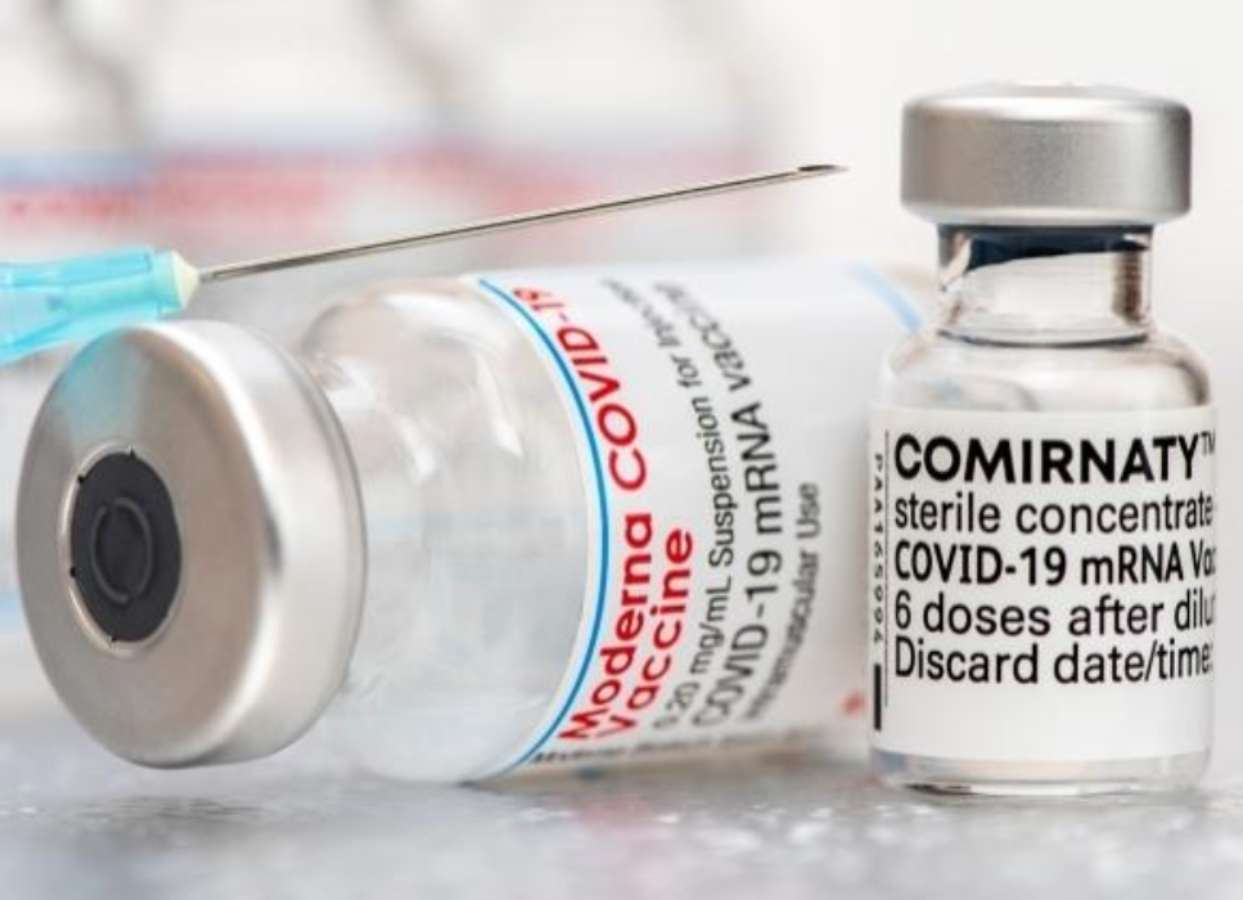
Moderna is attempting to write the second — and potentially far more consequential — chapter of the mRNA revolution. After transforming vaccine development during the Covid-19 pandemic, the US biotech company is betting heavily on personalised cancer vaccines designed to train a patient’s immune system to recognise and attack the unique molecular signature of their own tumour.
At the centre of that strategy is intismeran autogene, also known as mRNA-4157, an investigational personalised neoantigen therapy being developed with Merck.
The programme has emerged as one of the most closely watched projects in biotechnology, with late-stage development targeting melanoma as well as several other cancers.
A cancer vaccine made for one patient
This is fundamentally different from a conventional preventive vaccine.
The treatment is designed for people who have already developed cancer. Scientists analyse genetic characteristics of an individual patient’s tumour, identify mutations capable of producing distinctive neoantigens and then manufacture an mRNA treatment specifically tailored to those targets.
In simple terms, the vaccine attempts to give the immune system a personalised “wanted poster” of the cancer cells.
Once trained, immune cells may be better equipped to identify and destroy malignant cells carrying those particular mutations — including cells that could later cause the cancer to return.
For melanoma, Moderna’s treatment is being developed in combination with Merck’s Keytruda (pembrolizumab), one of the world’s most important cancer immunotherapies.
The objective is particularly significant: reducing the risk that melanoma returns following surgery.


Why Wall Street suddenly took notice
The financial markets have already demonstrated how transformative investors believe successful Phase 3 development could become.
Positive clinical developments around Moderna’s cancer programme triggered a spectacular rally in the company’s shares, reflecting expectations that personalised mRNA therapies could ultimately create an entirely new pharmaceutical market.
The potential implications extend well beyond a single drug.
If successfully approved and commercialised, Moderna could establish one of the first major platforms capable of producing individualised cancer medicines at industrial scale.
Analysts cited by the Financial Times have pointed to the possibility of a US regulatory approval as early as 2027, although the timing ultimately depends on clinical results and regulatory review.
Why scientists see a potential “game changer”
Melanoma may only be the beginning.
Moderna is investigating its personalised cancer technology across multiple tumour types, including:
- melanoma;
- non-small-cell lung cancer;
- kidney cancer;
- bladder cancer;
- and other solid tumours.
That is what makes the programme strategically important.
Success would provide evidence not merely that one cancer vaccine works, but that the underlying mRNA platform can potentially be adapted repeatedly to different tumours and different patients.
University of Florida paediatric oncologist Elias Sayour described the melanoma development as a potential “game changer”, according to the Financial Times.
The scientific proposition is powerful: instead of manufacturing one identical medicine for millions of patients, pharmaceutical companies could increasingly manufacture treatments based on the biological characteristics of one individual patient.


Moderna desperately needs a second act
There is another reason the stakes are enormous.
For Moderna, cancer is not simply another research programme. It could determine what the company becomes after Covid.
The pandemic transformed Moderna virtually overnight into one of the world’s most recognisable biotechnology companies. But the subsequent collapse in demand for Covid vaccines produced an equally dramatic deterioration in revenues.
According to figures reported by the FT, Moderna’s revenues fell sharply:
- 2023: $6.8 billion
- 2024: $3.2 billion
- 2025: $1.9 billion
A commercially successful cancer franchise could therefore accomplish something critical: transform Moderna from a company still heavily associated with the pandemic into a diversified biotechnology group centred on mRNA medicines and oncology.
And the market it is pursuing is enormous.
Global spending on cancer medicines increased approximately 75% between 2020 and 2024, reaching about $252 billion, according to figures cited by the FT.
It could rise to approximately $441 billion by 2029.
For Moderna, even capturing a relatively small share of such a market could radically change its financial trajectory.


The important caveat
The excitement needs to be separated from what has actually been demonstrated.
A personalised mRNA cancer vaccine should not be described as a universal “cure for cancer”.
Cancer encompasses many biologically different diseases, and the Moderna-Merck programme is being evaluated in defined tumour types and clinical settings.
There are also major questions surrounding manufacturing.
Unlike traditional mass-produced medicines, personalised cancer vaccines require analysis of an individual tumour followed by production of a treatment specifically for that patient.
That creates difficult questions involving:
- manufacturing speed;
- production capacity;
- cost;
- hospital infrastructure;
- reimbursement by healthcare systems;
- and whether personalised treatments can eventually be produced economically for very large patient populations.
Those issues will become increasingly important if clinical trials continue to produce encouraging results.


Then comes politics
The story has also acquired an unusual political dimension in the United States.
The Trump administration has moved to restrict federal support for certain mRNA research programmes, while political opposition to mRNA technology remains alive in parts of the US following controversies originating during the pandemic.
That creates a striking contradiction.
At precisely the moment when sections of American politics remain deeply suspicious of mRNA, biotechnology companies are attempting to demonstrate that the same technological platform could become an important weapon against one of humanity’s biggest killers.
From Covid to cancer
The implications could eventually extend far beyond Moderna.
The Covid pandemic demonstrated that mRNA could be designed and manufactured extraordinarily quickly compared with many conventional vaccine technologies.
Cancer could provide the next test: can that flexibility be transformed into genuinely personalised medicine?
If late-stage trials confirm the early promise, regulators approve the treatment and manufacturing can be scaled economically, oncology could move another significant step away from the traditional model of treating patients primarily according to where a tumour develops.
Instead, treatments could increasingly be designed around the genetic fingerprint of the tumour itself.
That would represent a profound change for medicine — and potentially an extraordinary second act for Moderna.
The technology that made the company famous because of a pandemic may ultimately leave an even bigger legacy.
Not in Covid — but in the fight against cancer.
Source: pagenews.gr