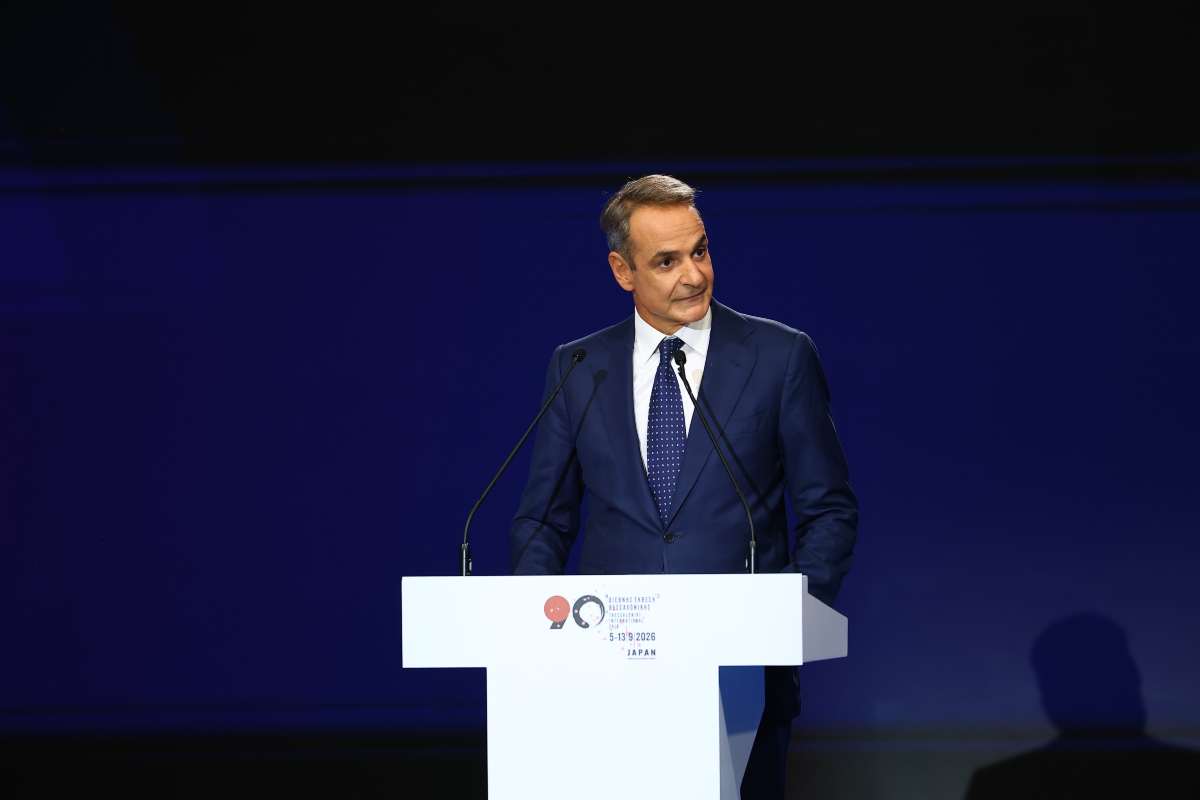
Prime Minister Kyriakos Mitsotakis used his keynote address at the 90th Thessaloniki International Fair (TIF) to unveil a broad new economic package designed to translate Greece’s fiscal progress into higher disposable income for households and businesses.
Under what he described as a “Progress and Prosperity Agreement,” Mitsotakis announced a four-year calendar of measures spanning taxation, housing, pensions, agriculture, family policy, public-sector support and energy.
The most politically striking pledge was a target to cut electricity prices by 30% over the next three years, with the first intervention beginning in January through a 50% reduction in Public Service Obligation charges on household power bills.
A minute of silence for the two pilots killed at Tanagra
The speech opened on a sombre note following the fatal crash of an F-4 Phantom at Tanagra.
“The tragic event at Tanagra overshadows tonight’s event as well. Our thoughts are with the families of the pilots we lost,” Mitsotakis said, adding that the state would stand by the victims’ relatives and the two underage children of one of the pilots.
“Growth must return to society as a dividend”
The prime minister framed the package around one central political principle: economic growth must now become more tangible in people’s everyday lives.
“Our central objective is for the benefits of growth to return to society as a dividend, without ever, ever putting at risk the fiscal stability that we worked so hard to achieve,” Mitsotakis said.
He described the measures as part of a four-year, costed policy calendar, extending the government’s economic horizon well beyond the 2027 budget cycle and toward 2030.


Self-employed: Tax presumptions eased for 155,000 professionals
Mitsotakis announced changes to Greece’s presumptive taxation regime for self-employed professionals.
For compliant taxpayers, criteria linked to turnover and the number of employees will be removed, according to the prime minister.
The government estimates that more than 155,000 professionals will benefit.
The move is intended to soften one of the most politically sensitive elements of the tax system for the self-employed while maintaining the government’s broader campaign against tax evasion.
Businesses: Advance tax payment to fall gradually from 80% to 50%
For companies, the government announced a phased reduction in the advance tax payment.
The process will begin in 2027 and continue by five percentage points per year, eventually taking the rate from 80% to 50%.
The gradual implementation is important: the 80% rate will not fall to 50% immediately, but through successive annual reductions.
The objective is to free up liquidity for businesses without creating a sudden fiscal shock.
Farmers: Zero income tax up to €20,000
One of the strongest tax interventions is aimed at professional farmers.
Mitsotakis announced zero income tax for earnings of up to €20,000.
Under the example provided in his speech, a farmer earning €20,000 annually would move from a tax bill of €1,183 to zero.
For income of €30,000, the tax burden would fall from €5,083 to €2,183, leaving the producer with an additional €2,900 per year.
The measure is expected initially to cover around 50,000 farmers.
Livestock sector: “The herds that were lost will be rebuilt”
For livestock farmers, Mitsotakis pledged a broader recovery plan following recent animal-disease losses.
“The herds that were lost will be rebuilt as quickly as possible,” he said.
The government will also seek European funding and develop a longer-term framework aimed at strengthening the sector’s resilience against future animal-health crises.
Pensioners: Annual benefit rises to €400
Mitsotakis also announced an increase in the permanent annual payment to pensioners.
The November benefit will rise from €300 to €400 net, while eligibility will be expanded to everyone over the age of 65, according to the announcement.
That means the intervention changes both the value of the payment and the number of beneficiaries.

€500 Christmas payment for 720,000 public-sector workers
Around 720,000 public employees are set to receive a €500 Christmas payment.
The measure comes after the government rejected a full restoration of a 13th salary for public workers on fiscal-cost grounds.
Instead, Athens is opting for a smaller targeted payment as part of the new support package.
“My Home 3”: Another €2 billion for first-home buyers
Housing was another major pillar of the TIF package.
Mitsotakis announced a new €2 billion “My Home 3” programme, aimed at helping more young couples purchase their first property.
The government’s objective is to bring the cumulative number of households assisted through the housing schemes to around 40,000 young couples.
The programme will sit alongside existing measures including rent rebates, incentives to renovate vacant properties and other policies designed to increase housing supply.
Zero tax for 87,000 families with three children
The government is also expanding support for families with children.
Mitsotakis announced zero income tax for 87,000 three-child families with annual income of up to €20,000.
Under the government’s example, an employee with three children and annual income of €20,000 who would currently pay €620 in tax would see that liability fall to zero.
For a self-employed person earning €15,000, the annual benefit could reach as much as €1,350.
The new “locked savings pot” for children
Perhaps the most novel policy unveiled in Thessaloniki is a new state-supported savings account for children.
Parents will be able to open the account during the first two years after a child’s birth.
For annual parental contributions of up to €1,200, the state will match the amount euro for euro.
That means:
- Every €100 saved by the parents would be matched by another €100 from the state.
- The funds would remain locked until the child turns 18.
- The account is designed to create a financial base for education, housing or the start of adult life.
“We are creating a locked savings pot for the new generation,” Mitsotakis said.
According to the example presented by the prime minister, parents contributing €100 a month could leave their child with more than €60,000 by the age of 18, based on the government’s projected structure.
Electricity: The 30% target becomes the energy headline
The most consequential medium-term promise concerns energy.
Mitsotakis set a target of reducing electricity prices by 30% within three years.
The first concrete step will come in January through a 50% cut in Public Service Obligation charges on more than six million residential electricity connections.
The government hopes the intervention will provide immediate relief while broader changes to the energy system lower structural costs over time.
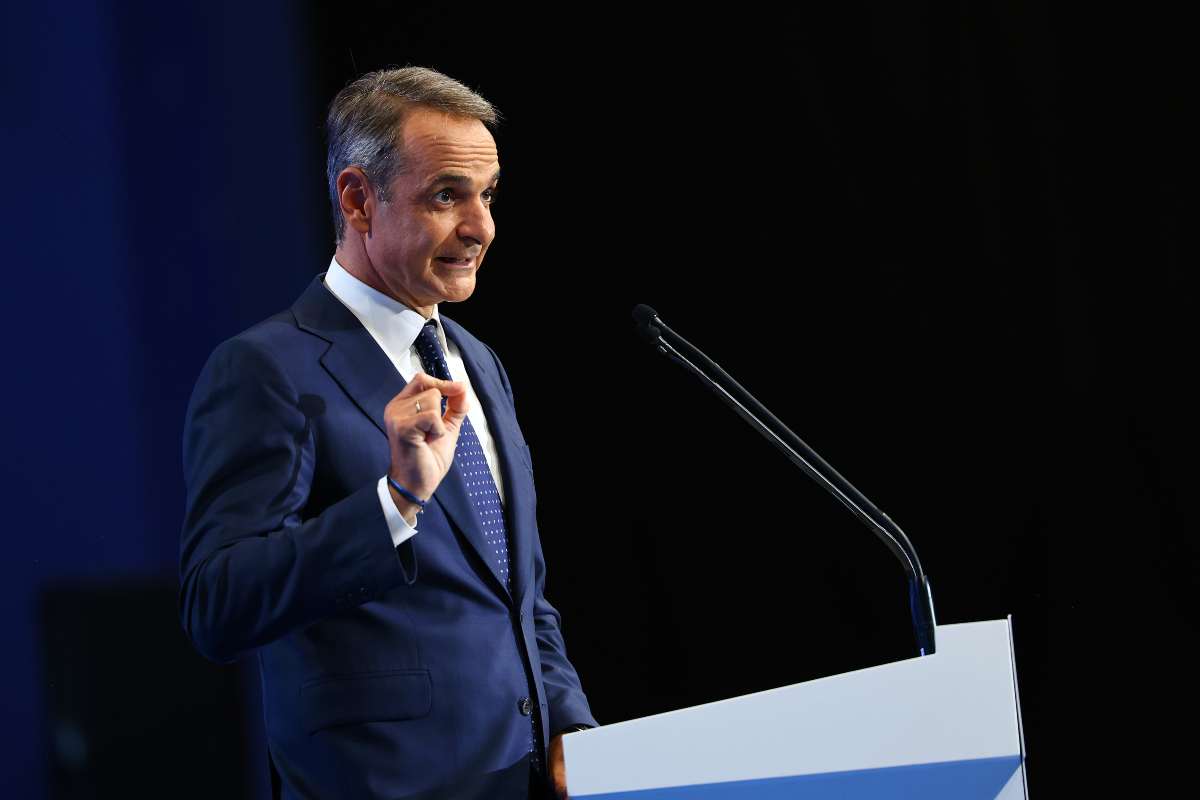
Mitsotakis highlights PPC’s fixed tariff
The prime minister also referred to PPC’s new fixed-price electricity tariff of 11.5 euro cents per kilowatt-hour, arguing that households now have the option to lock in a predictable price for the coming year.
He linked this to the financial turnaround of PPC, saying the utility is now in a position to play a stronger role in supporting consumers.
The political message is clear: the government wants to move from emergency subsidies toward lower and more predictable structural energy costs.
Subsidised heat pumps and solar water heaters for 100,000 households
A large new energy-efficiency programme will also subsidise the purchase of:
- heat pumps;
- solar water heaters.
The programme will initially target 100,000 beneficiaries.
This element of the package is designed to lower household energy consumption permanently rather than simply compensate consumers for high bills after the fact.
From annual TIF giveaways to a four-year economic contract
This year’s TIF speech differs from the traditional model of announcing measures mainly for the next budget year.
Mitsotakis is effectively constructing a four-year economic and political roadmap through 2030, linking the package directly to the government’s next electoral horizon.
The measures target several politically critical constituencies:
- employees and public-sector workers;
- pensioners;
- self-employed professionals and businesses;
- farmers and livestock producers;
- families with children;
- younger households trying to purchase their first home.
The political calculation: Make macroeconomic success visible in the household budget
For the government, the central challenge is now straightforward.
Athens argues that Greece has restored fiscal credibility, reduced debt and created room for permanent interventions.
But voters will not judge the TIF package primarily through debt ratios or fiscal targets.
They will judge it by whether:
their electricity bill falls,
their taxes are lower,
their pension support increases,
they can afford a home,
and their monthly disposable income improves.
That is why Mitsotakis’ central political bet at the 90th TIF is larger than any individual tax cut or benefit.
It is the promise that Greece’s economic progress will finally become visible in the personal finances of ordinary citizens.
And that is where the “Progress and Prosperity Agreement” will ultimately be tested.
Source: pagenews.gr