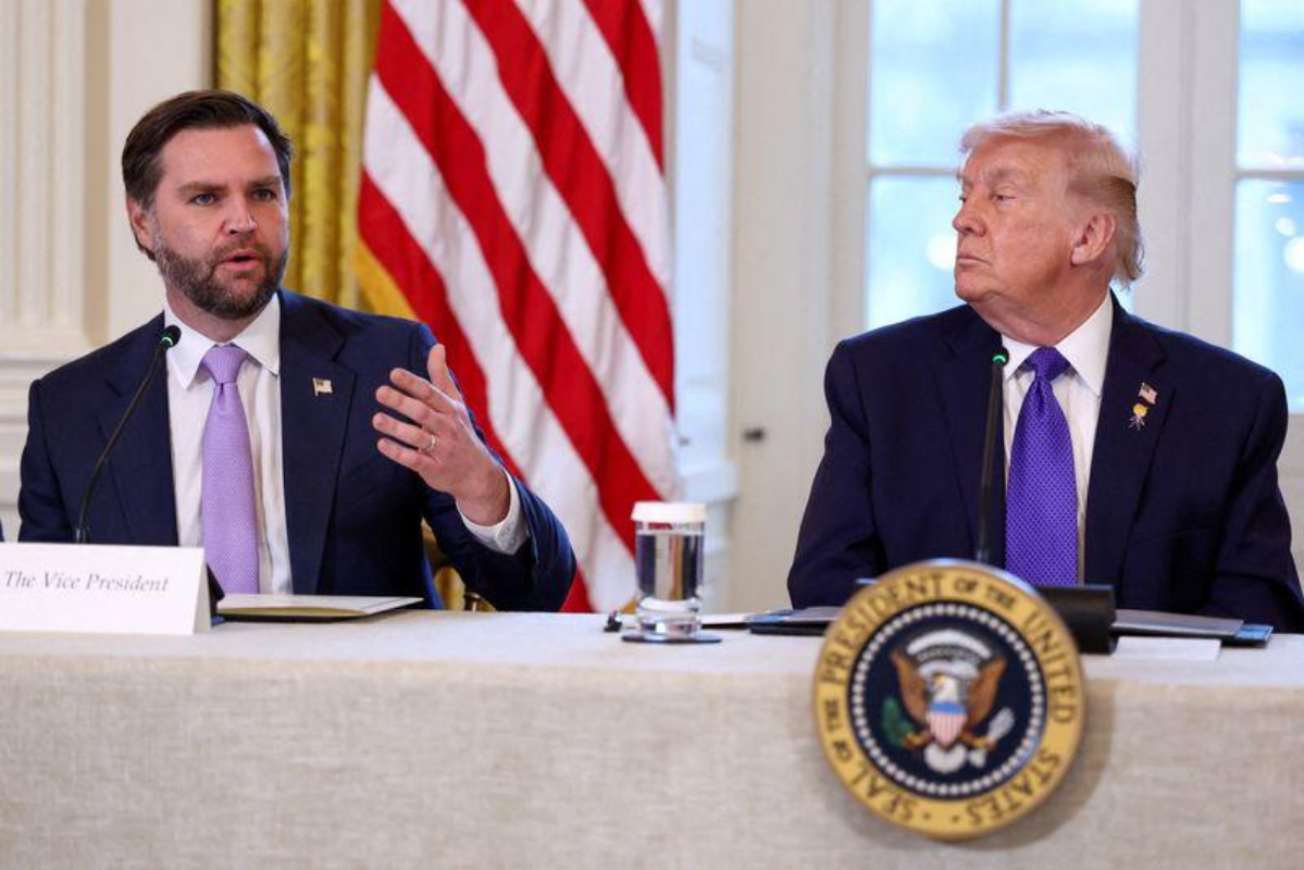
JD Vance faces one of the most consequential decisions of his political career: whether to seek the US presidency in 2028 as the heir to Donald Trump’s political movement or attempt to establish a distinct identity at a time when Republicans are reassessing their direction following the midterm elections.
The decision extends far beyond personal ambition. It touches on the future of the MAGA movement, the influence of powerful technology billionaires within the Republican Party and the broader question of who will define American conservatism after Trump leaves the White House.
According to Axios, citing two people familiar with his plans, the vice president is not expected to make a final decision before 2027, with a public announcement potentially delayed until late spring.
That timetable was established before the November 3 midterm elections, meaning the delay should not automatically be interpreted as a retreat following Republican electoral setbacks.
Nevertheless, the political environment surrounding Vance has changed significantly.
Republican Losses Complicate the Succession Debate
The Republican Party’s midterm losses have intensified questions about its future electoral strategy and the direction of the conservative movement.
One faction remains committed to preserving Trump’s political agenda, including his approach to immigration, trade and America’s role in the world.
Others are questioning whether the party needs to adjust its message and priorities to reconnect with voters who have moved away from Republican candidates.
Vance occupies a particularly complicated position in this debate.
As vice president, he benefits from national visibility, access to the party’s organizational infrastructure and direct involvement in the administration’s policy agenda.
Yet those advantages come with a political cost: he is closely associated with the government’s record and will face questions about its performance.
Can Vance present himself as an agent of political renewal without openly challenging the president whose movement elevated him?
That question may become central to any future campaign.
Musk, Thiel and Sacks: The Billionaire Network Behind Vance
One of Vance’s most significant political assets is his extensive network of relationships with influential figures in the technology and investment sectors.
Peter Thiel, David Sacks and Elon Musk are among the prominent names associated with his broader political network.
Their importance extends beyond potential campaign contributions.
These relationships reflect the growing intersection between Silicon Valley, conservative politics and debates over artificial intelligence, economic deregulation, technological competition and American geopolitical power.
Vance’s fundraising responsibilities within the Republican National Committee have also helped him establish connections with major donors and influential party figures.
His campaigning during the midterm elections expanded his relationships with Republican officials, activists and local political organizations.
Together, these connections provide an organizational foundation that could be mobilized for a presidential campaign.
However, there is an important distinction between maintaining relationships with wealthy political donors and securing their financial support for a future presidential bid.
There is no confirmation that Musk, Thiel or Sacks have committed to financing a Vance presidential campaign in 2028.
Iran Exposes Divisions Within the MAGA Movement
The war in Iran has emerged as another politically sensitive issue for the vice president.
According to Axios, some Republicans interpreted Vance’s criticism of the conflict following the midterm elections as an attempt to create political distance from Trump’s decision-making.
That interpretation does not establish the existence of a formal disagreement between the president and vice president.
It does, however, highlight a broader ideological debate within American conservatism.
One side continues to emphasize military strength and the willingness to use American power abroad.
Another, associated with the more intervention-skeptical wing of the MAGA movement, questions the costs and strategic consequences of prolonged overseas military commitments.
Vance has previously been identified with this more cautious approach to foreign intervention.
The Iran conflict therefore presents a potentially important test of how he might define his foreign policy priorities in a post-Trump political environment.
The central question is whether Vance can maintain continuity with Trump’s broader America First agenda while articulating a different approach to military intervention.


The Trump Factor: Why an Early Announcement Carries Risks
Donald Trump remains the most important political figure in Vance’s calculations.
According to people close to the vice president cited by Axios, announcing a presidential campaign too early could create tensions with Trump by shifting attention away from the administration’s priorities and toward the question of succession.
That concern reflects the unusual dynamics of the Republican Party under Trump’s leadership.
The president remains the central reference point for much of the MAGA movement, and discussions about the political era after his presidency carry considerable sensitivity while he is still in office.
For Vance, the challenge is to prepare for a possible presidential campaign without appearing to compete prematurely with the sitting president.
An early declaration could accelerate internal rivalries, encourage competing Republican figures to organize their own campaigns and complicate the vice president’s relationship with the White House.
Delaying a decision, by contrast, allows Vance to maintain his current political position while evaluating the party’s evolving landscape.
Usha Vance and the Family Dimension
Beyond the strategic calculations, Vance is also discussing the possibility of a presidential campaign with his wife, Usha Vance, and their family.
The arrival of their fourth child adds a personal dimension to a decision that would place the family under the intense scrutiny of another national election campaign.
According to the Axios report, the vice president’s closest political advisers are encouraging him to pursue the Republican nomination and believe he will ultimately decide to run.
Their expectations, however, should not be confused with a final decision.
For now, Vance continues to weigh the political and personal consequences of entering the 2028 race.
The Bigger Question: Who Will Lead MAGA After Trump?
The debate surrounding Vance is ultimately about more than the political future of one vice president.
It concerns the identity of the Republican Party after Donald Trump’s second presidency.
Will the party continue to organize itself around the same combination of immigration restrictions, economic nationalism, cultural conservatism and confrontation with the traditional political establishment?
Or will emerging Republican leaders seek to adapt that agenda to changing electoral conditions and new economic and geopolitical challenges?
Vance stands at the intersection of these questions.
His political profile combines loyalty to Trump’s movement with connections to technology entrepreneurs, a focus on working-class economic concerns and skepticism toward certain forms of American military intervention.
These characteristics could shape the platform of a future presidential campaign, although they do not resolve the broader disagreements within the Republican coalition.
The year 2027 is emerging as a key milestone in Vance’s political timetable.
Until then, his relationship with Trump, his role in Republican Party affairs and his positions on economic and foreign policy issues will provide indications of the direction he may take.
The question is no longer simply whether JD Vance will seek the White House in 2028.
It is what kind of Republican Party — and what vision of America — he would seek to represent after Donald Trump.
Source: pagenews.gr