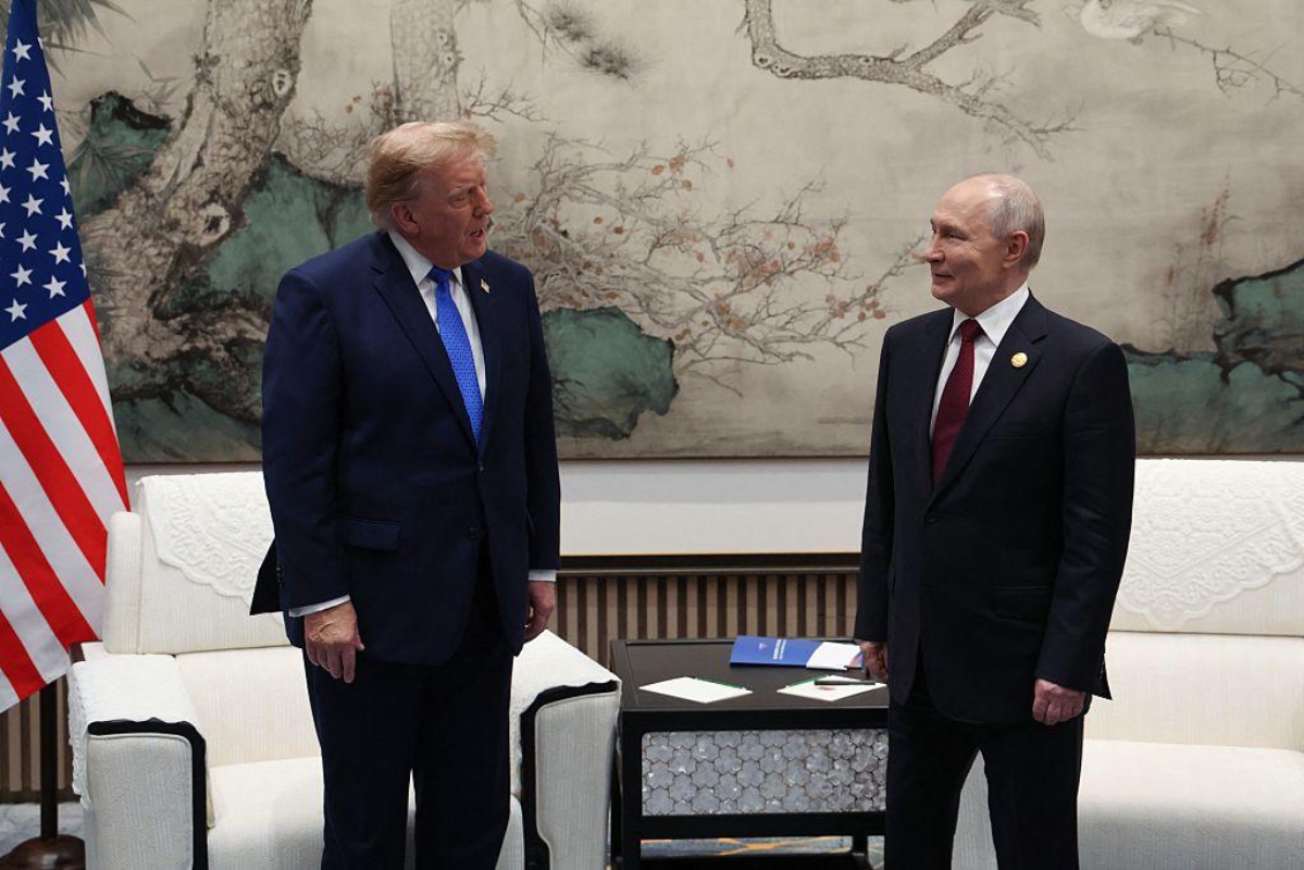
Donald Trump’s administration has put its plans for major business agreements with Russia on hold, abandoning for now an attempt to use economic incentives to persuade the Kremlin to end its war in Ukraine.
According to the Financial Times, citing five officials familiar with the negotiations, Moscow’s limited response to Washington’s economic proposals has prompted the US administration to reconsider its approach.
Trump’s special envoys, Steve Witkoff and Jared Kushner, reportedly informed European officials that commercial partnerships were no longer a central component of Washington’s negotiating strategy.
Oil, Titanium and Nord Stream: The Deals Put on Ice
The Trump administration had previously explored a broad range of potential commercial agreements with Russia, including:
- American investment in Russia’s oil industry.
- Cooperation in titanium production.
- Commercial partnerships in civil aviation.
- The potential restoration of Russian natural gas supplies to Europe.
- Possible American investment in the Nord Stream pipelines.
Reuters previously reported that senior American and Russian representatives had discussed potential US investment in the pipelines that once connected Russia and Germany.
The underlying objective was to create economic incentives for a broader post-war normalisation of relations between Washington and Moscow.
Putin’s Territorial Demands Remain the Main Obstacle
Despite initial Russian interest in potential commercial partnerships, the discussions failed to produce meaningful concessions on Vladimir Putin’s territorial demands.
Moscow’s negotiating position has remained focused on control over Ukrainian territory and the conditions under which Russia would accept a settlement.
The Kremlin’s position has weakened Washington’s ability to use prospective economic cooperation as leverage in the peace negotiations.
For the Trump administration, the challenge is increasingly diplomatic rather than commercial.
Washington Returns to the Land-for-Peace Equation
American diplomatic efforts are now reportedly shifting back towards territorial arrangements and security guarantees for Ukraine.
The Donbas remains at the centre of negotiations, with Moscow demanding additional territorial concessions and Kyiv rejecting conditions it considers incompatible with Ukrainian sovereignty.
Among the proposals under discussion are security guarantees modelled on NATO’s Article 5 collective defence commitment, without necessarily granting Ukraine formal membership of the alliance.
These proposals, however, remain subject to negotiations and do not constitute an agreed peace settlement.


European Energy Markets Face Renewed Uncertainty
The suspension of US-Russian business discussions also carries significant implications for European energy markets.
Potential American participation in Russian energy infrastructure had raised questions about the future of European sanctions, natural gas supplies and the continent’s long-term energy relationship with Moscow.
The decision to shelve commercial negotiations does not automatically rule out future energy agreements or changes to existing sanctions.
It does, however, expose the gap between Washington’s economic proposals and Moscow’s political and territorial demands.
European governments must also consider how any future US-Russian rapprochement could affect their own energy security and strategic interests.
The January 2027 Deadline
The change in Washington’s approach comes as the Trump administration reportedly seeks to secure a diplomatic breakthrough in early 2027.
Yet the fundamental obstacles remain unresolved: territorial control, security guarantees, sanctions and the conditions for a potential ceasefire.
For months, the prospect of lucrative commercial agreements formed part of Washington’s attempt to encourage Russian cooperation.
That approach is now taking a back seat.
The possibility of a future US-Russian economic rapprochement has not disappeared entirely. But for now, the prospects of peace depend less on investment opportunities than on whether Moscow and Kyiv can bridge their differences over territory, sovereignty and security.
Source: pagenews.gr