


Charitsis vs Sakellaridis: Two Factions in the New Left – Solitude or Broader Alliance?
 ΧΡΟΝΟΣ ΑΝΑΓΝΩΣΗΣ 3 '
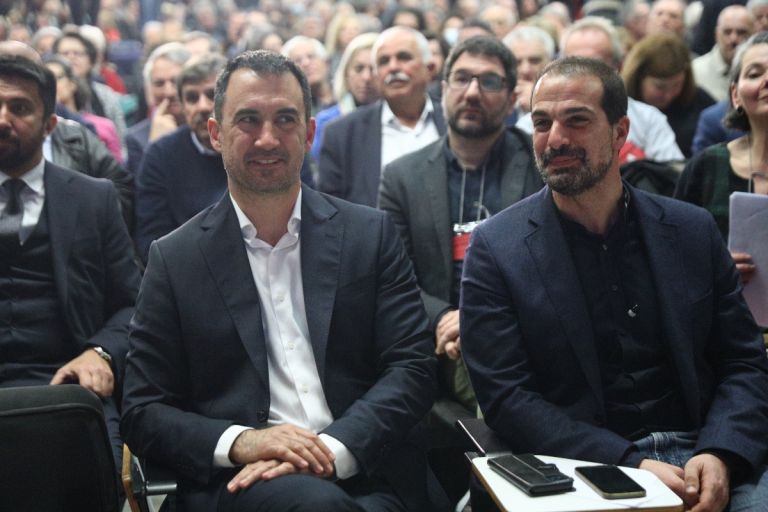
Πηγή Φωτογραφίας: (ΓΙΑΝΝΗΣ ΠΑΝΑΓΟΠΟΥΛΟΣ / EUROKINISSI)//Charitsis vs Sakellaridis: Two Factions in the New Left – Solitude or Broader Alliance?



The New Left has chosen the path of solitude following the proceedings of its Central Committee, where President Alexis Charitsis’ proposal to hold a referendum and consider potential alliances with other progressive parties was rejected. The president’s proposal received 38 votes, while the decision to hold the continuous congress was approved with 80 votes, and the proposal for an extraordinary congress received just 4 votes.
Two Factions within the Central Committee
The first faction, around Alexis Charitsis, promotes a broad coalition of progressive forces, combining the radical Left, left-wing social democracy, and environmental politics. As stated in their document:
“The New Left can and must work toward the formation of a progressive front and a joint electoral ticket with all forces, without exclusion, that identify with the Left, left-wing social democracy, and political ecology.”
Key members include Sia Anagnostopoulou, Efi Achtsioglou, Maria Vamboureli, Husein Zeibek, Nasos Hliopoulos, Kostis Karpozilos, Nikos Bistis, Dimitris Tzanakopoulos, Meropi Tzoufi, Ozgur Ferhat, and Theano Fotiou.
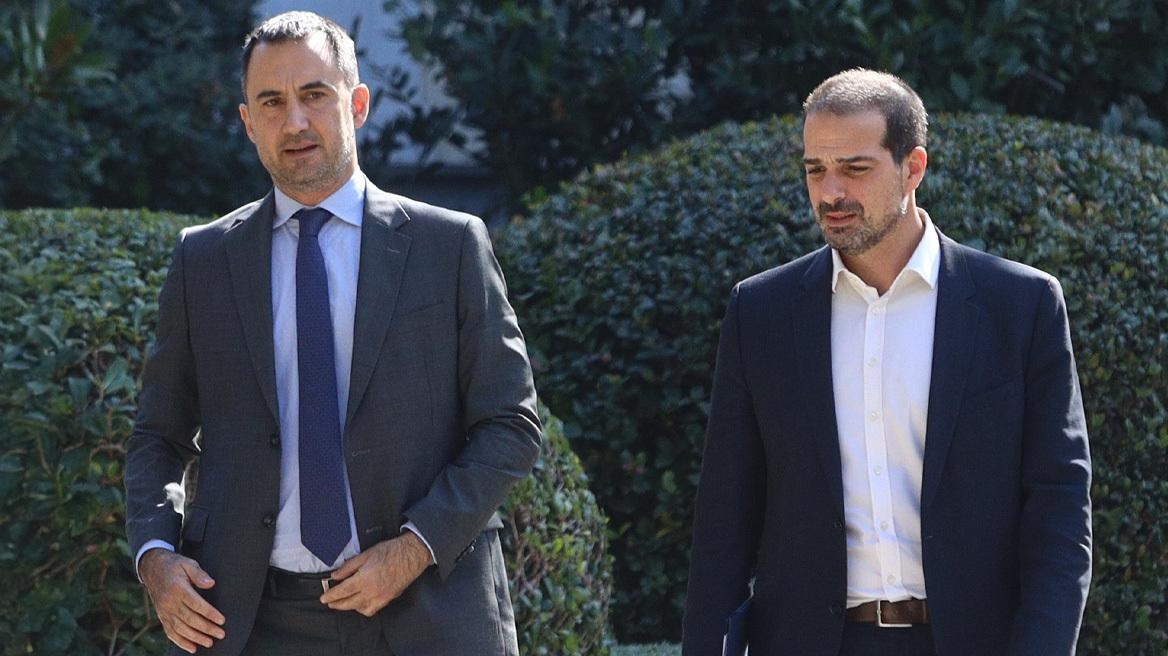
The second faction, around Gabriel Sakellaridis, advocates a more independent path, critiquing the SYRIZA example and largely rejecting alliances outside the radical Left, such as with MeRA25. Their statement reads:
“Alexis Tsipras’s resignation formally closes a historic cycle, deepening SYRIZA’s identity crisis, dispersing its forces, and intensifying strategic deadlocks.”
Members of this faction include Eleftheria Aggeli, Evi Apostolaki, Maria Giannakaki, Efi Kalamara, Petros Kalkandis, Vasiliki Katrivanou, Katerina Knitou, Makrina Viola Kosti, Panos Lamprou, Charin Matsouka, Gabriel Sakellaridis, Panos Skourletis, Euclid Tsakalotos, and Giannis Tsilikas.
Analysis and Outlook
The internal dispute indicates that Charitsis’s minority faction signals that for more than half the members, the split with former allies is considered definitive. Meanwhile, Sakellaridis’s faction appears to favor maintaining independence, avoiding alliances beyond the radical Left.
The events of 2023 have left visible wounds: the Charitsis group seeks unity and broad coalition, inspired by the French model, while the Sakellaridis group emphasizes that any collaboration outside the core Left constitutes a step backward.
Is a split possible? Analysts say technically yes, but there is little current appetite for rupture. Nevertheless, rapid political developments could create an internal need for different paths, even if there is no present desire for division.
The January Congress is expected to be orderly, but with inevitable conflicts, as the two factions must navigate strategic deadlocks, the identity crisis, and the political priorities of the New Left ahead of upcoming elections.
Διαβάστε όλες τις τελευταίες Ειδήσεις από την Ελλάδα και τον Κόσμο







Το σχόλιο σας