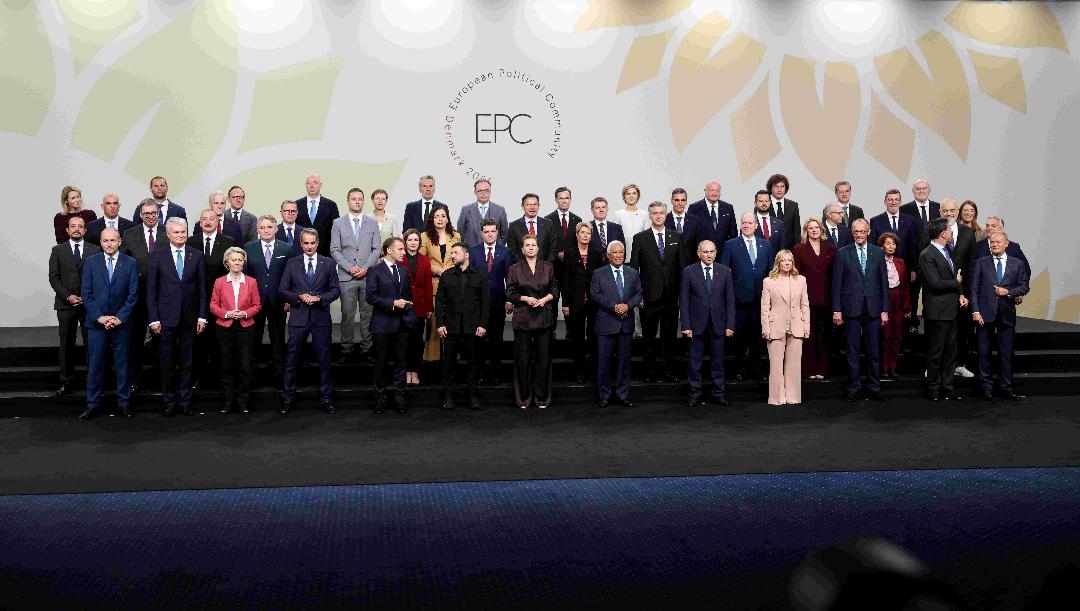
The European Union is heading into a decisive and potentially explosive summit as the question of financing Ukraine exposes sharp divisions among member states. Cyprus insists the meeting will not end without a solution, while Belgium’s continued refusal to approve the use of frozen Russian assets keeps €210 billion locked and the EU dangerously close to paralysis.
A defining moment for European unity
The deadlock over Ukraine’s funding has become impossible to hide ahead of the European Council meeting. Leaders face a stark choice: use frozen Russian assets or issue joint EU debt.
Cyprus, which will assume the rotating EU Council presidency on January 1, is sending a clear signal that delay is no longer an option. Deputy Minister for European Affairs Marilena Raouna stressed that leaders are ready to remain in Brussels for as long as it takes to reach a decision.

The €210 billion question and the fear of precedent
At the heart of the dispute is the European Commission’s plan to use €210 billion in frozen Russian assets to guarantee a loan for Kyiv, covering budget needs and reconstruction after Russia’s invasion.
Belgium, which hosts most of the assets through Euroclear, continues to block the plan, citing legal uncertainty and fears of Russian retaliation. Italy, Malta, Bulgaria and the Czech Republic have backed Brussels’ request to explore alternative funding routes, including joint borrowing.
The real battle is not just about money, but about whether the EU dares to cross a legal and political red line.
Delays, doubts and institutional strain
Diplomats warn that negotiations could drag on for days, possibly into the weekend. Allowing Ukraine to run out of funds is considered politically unacceptable — yet institutionally possible if consensus collapses.
The Commission has offered additional legal safeguards to reassure Belgium, including guarantees covering potential Russian claims and a push for all EU states to terminate bilateral investment treaties with Moscow. Belgium remains unconvinced.

A hard “no” and visible cracks
“There will be no agreement before the summit,” an EU diplomat admitted privately. Belgium fears it would be left alone to face legal and financial consequences if Russia seeks to reclaim the assets.
France publicly supports the Commission’s plan, but behind the scenes maintains a neutral stance between using Russian assets and issuing eurobonds — a position that underscores the growing ambiguity among major capitals.
Germany versus the “frugals”
Germany insists there is no realistic alternative to using Russian assets, arguing that joint debt would require unanimity — and could be blocked by Hungary’s Viktor Orbán.
“If we fail, the EU’s ability to act will be severely damaged for years,” warned Chancellor Friedrich Merz. Critics, however, counter that Berlin’s stance reflects a deeper ideological resistance among ‘frugal’ states to any form of common debt.
“The narrative says Hungary is the obstacle. In reality, the obstacle is the countries that reject eurobonds,” an EU diplomat said.
What is really at stake
This summit is about far more than Ukraine’s budget. It is a test of whether the European Union can act strategically in times of crisis, or whether fear, legal caution and internal divisions will continue to paralyze decision-making.
Failure to reach an agreement would send a stark message — not only to Kyiv, but to the world:that Europe struggles to deliver on its own commitments. And that cost may prove far greater than €210 billion.
Source: pagenews.gr