Greece on the Edge: 44% of Gas Supply Threatened as Russia Weighs Full Cutoff
 ΧΡΟΝΟΣ ΑΝΑΓΝΩΣΗΣ 3 '
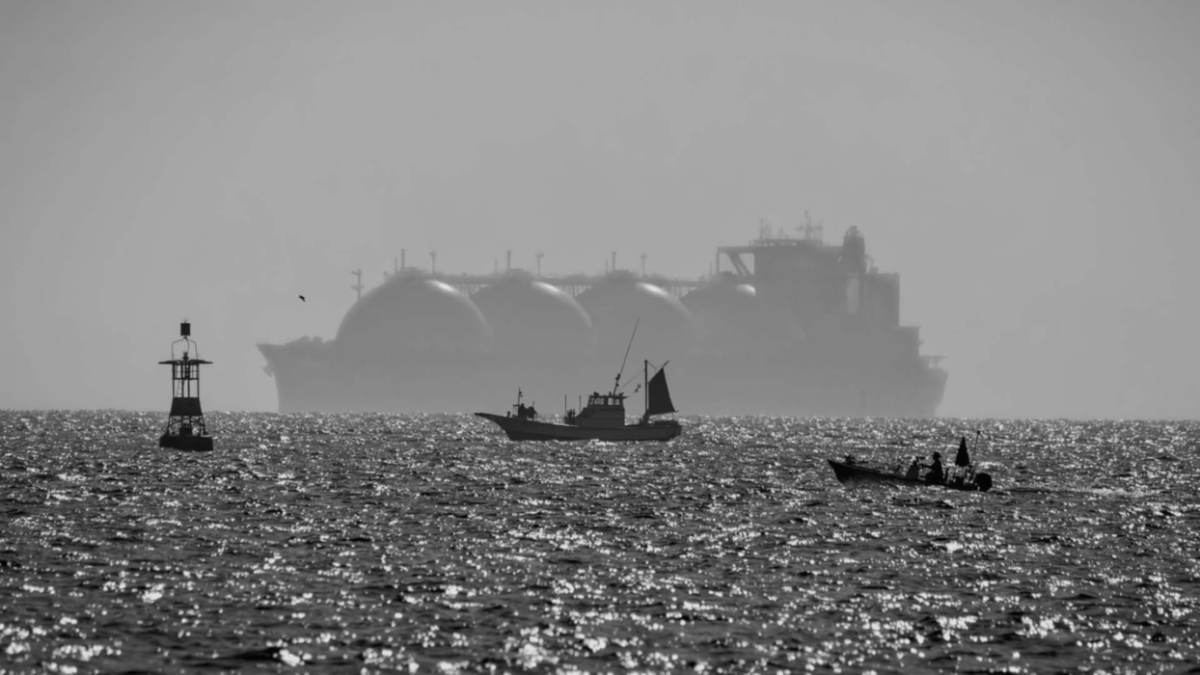
Πηγή Φωτογραφίας: freepik//Greece on the Edge: 44% of Gas Supply Threatened as Russia Weighs Full Cutoff



In a period where Europe’s energy balance is severely shaken by the Middle East conflict, Greece’s energy security is under direct threat. The country relies on approximately 44.6% of its natural gas from Russia, delivered via the Sidirokastro station and the TurkStream pipeline — a dependency that could become catastrophic if Moscow implements a full supply cutoff.
Russia has repeatedly indicated that it may halt gas exports to Europe, at a time when energy prices are already spiking due to the Iran conflict and disruptions in the Persian Gulf. Both President Vladimir Putin and Deputy Prime Minister Alexander Novak stated that Russia will soon discuss a full or partial gas cutoff, linking the potential move to EU policies banning Russian natural gas and LNG imports.
Although Russia has reduced its share of EU pipeline gas imports from ~40% in 2021 to ~6% in 2025, it remains the second-largest LNG supplier to European countries.
Global Energy Storm
Simultaneously with Russian threats, the global gas market is experiencing severe turbulence:
- European gas prices have surged over 30% due to the Middle East conflict, impacting economies and inflation.
- LNG production from Qatar — which supplied roughly 15% of European LNG imports — has halted, intensifying competition for cargoes.
- If the Strait of Hormuz remains blocked due to conflict, even traditionally secure energy flows will struggle to reach Europe.
Analysts warn that these developments could trigger a new energy crisis comparable or even worse than that of 2022.
Greece in the Spotlight
Greece, with total natural gas consumption of ~78.75 TWh in 2025, increased demand by 14% compared to 2024, while LNG imports from Revithoussa covered 38% of demand, up 63.3% from 2024.
However, the primary source of 44.6% of the country’s gas could be cut off if Russia acts on its threats — a dangerous scenario requiring immediate strategic responses:
- Accelerate alternative sources, e.g., LNG imports from the US or Azerbaijan.
- Develop European and interconnection infrastructures, strengthening domestic supply security.
- Increase storage capacity to mitigate potential supply disruptions.
The EU has already initiated measures for a gradual phase-out of Russian gas imports by 2027, while promoting alternative supply diversification.
With the global energy balance destabilized — due to the Middle East conflict, halted Qatari LNG, and new Russian threats — Greece must urgently secure alternatives for nearly half of its gas supply.
Failure to act could result in energy shortages, skyrocketing costs, and broader economic and social consequences amid ongoing geopolitical instability.
Sources & References:
- WorldEnergyNews
- Reuters
- Bruegel
Διαβάστε όλες τις τελευταίες Ειδήσεις από την Ελλάδα και τον Κόσμο