


Greece: Energy Hub or High-Stakes Geopolitical Gamble?
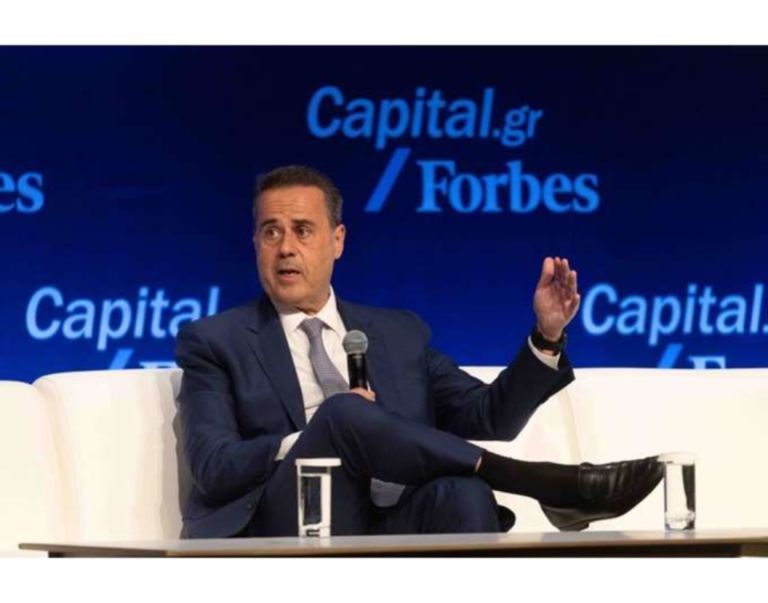
Πηγή Φωτογραφίας: eurokinissi//Greece: Energy Hub or High-Stakes Geopolitical Gamble?



Environment and Energy Minister Stavros Papastavrou’s intervention at the 1st Defense & Geopolitics Forum by Capital and Forbes was far from a routine policy statement. It was a strategic declaration — and a clear message to both Brussels and Washington that Greece seeks a pivotal role in reshaping Europe’s energy map.
“Europe realized that you cannot support Ukraine while simultaneously financing the aggressor by purchasing its energy resources,” the minister stressed, framing the moral and geopolitical context of the EU’s decoupling from Russian natural gas.
Yet the real substance lies in the Vertical Gas Corridor, a multi-country infrastructure project designed to channel alternative supplies toward Central and Eastern Europe.
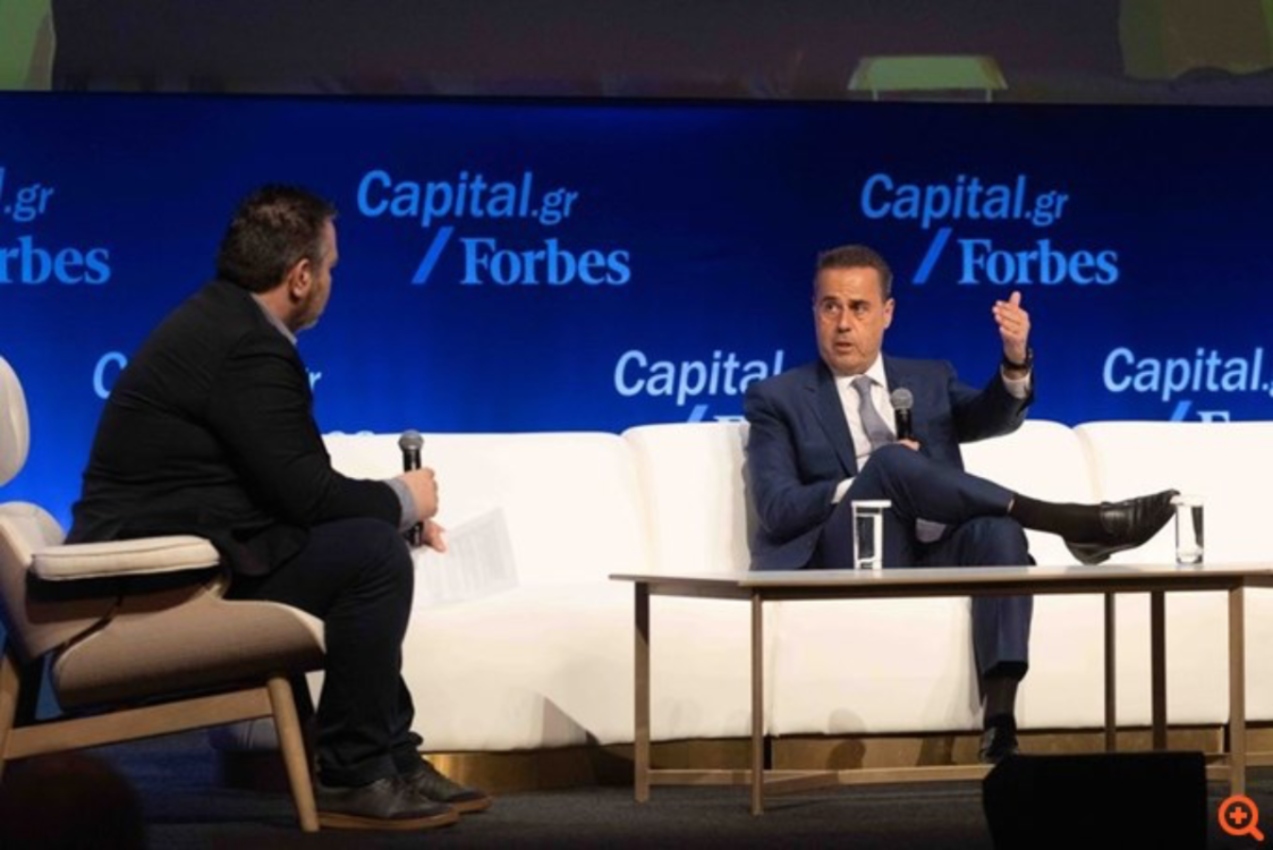
Vertical Corridor: Energy Infrastructure or Political Alliance?
The Vertical Corridor is more than a technical network of interconnections. As Papastavrou noted, it is a “field of strategic convergence between Europe and America.”
Against the backdrop of Europe’s gradual disengagement from Russian gas, Greece is positioning itself as a pillar of regional energy security. The ambition is twofold:
- To enhance its geopolitical leverage.
- To strengthen its bargaining power within the European Union.
However, the minister indirectly acknowledged the friction within Europe. “We cannot agree at EU level on disengagement from Russian gas and then impose regulatory obstacles on the very methods that enable that disengagement,” he said, hinting at bureaucratic inertia and conflicting national interests.
Behind the scenes, diplomatic sources admit that several member states maintain quiet energy dependencies, complicating collective decisions.
Hydrocarbons Return: Ionian Drilling with an American Stamp
Particular attention was drawn to Papastavrou’s announcement that signatures for four offshore blocks are imminent, while Exxon Mobil — alongside HelleniQ Energy and Energean — is set to proceed with exploratory drilling in the Ionian Sea in 2027.
The timing is significant.
At a time when Europe speaks the language of green transition, Greece is cautiously reintroducing hydrocarbon exploration into the policy debate, signaling pragmatic energy realism. Government officials argue that:
- The transition requires intermediate solutions.
- Natural gas remains a bridge fuel.
- Domestic production strengthens national security.
Environmental groups, however, warn of mixed messaging that could undermine decarbonization commitments.
The Energy Mix: Impressive Shifts, Lingering Questions
According to the minister, lignite’s share in the energy mix dropped to just 9% in 2025, while renewables surpassed 50%.
The transformation is substantial. But beyond the percentages lie critical questions:
- How resilient is the system with high renewable penetration?
- What is the real cost for households and businesses?
- How dependent does Greece remain on imported natural gas?
Energy transition is not merely environmental policy — it is cost-of-living policy and social stability policy.
A Broader Trade Corridor: From India to the Mediterranean
Papastavrou also referenced a broader commercial corridor stretching from India, through Saudi Arabia, into the Mediterranean and onward to Europe.
Within this framework, the Greece–Cyprus–Israel electricity interconnection is presented as a strategic vector of this wider trade and energy architecture.
Athens is clearly seeking to anchor itself within the Eastern Mediterranean–Middle East–Europe axis, reinforcing its image as a stable Western partner in a volatile region.
The Political Undercurrent: Energy as Power
Energy strategy carries weight not only internationally but domestically.
- The presence of U.S. energy giants strengthens the government’s pro-Western profile.
- Infrastructure projects cultivate regional alliances and development expectations.
- At the same time, public pressure over energy prices remains intense.
Energy policy is thus evolving into a core instrument of political influence and economic leverage.
Greece aspires to become a strategic energy hub at the intersection of European and American interests. But this is not merely an infrastructure project — it is a geopolitical balancing act.
The question is not whether Greece can assume a key role. The question is whether it can do so without becoming a frontline arena in broader power rivalries.
And that is a challenge that extends far beyond pipelines and power grids.
Source: pagenews.gr
Διαβάστε όλες τις τελευταίες Ειδήσεις από την Ελλάδα και τον Κόσμο








Το σχόλιο σας