


Greek–Turkish $5 Billion Gamble: Pierrakakis–Şimşek Economic Reset in Motion
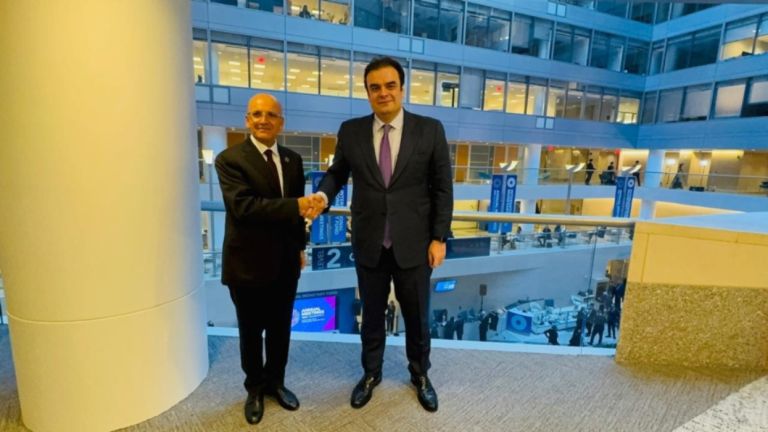
Πηγή Φωτογραφίας: AP Photo//Greek–Turkish $5 Billion Gamble: Pierrakakis–Şimşek Economic Reset in Motion



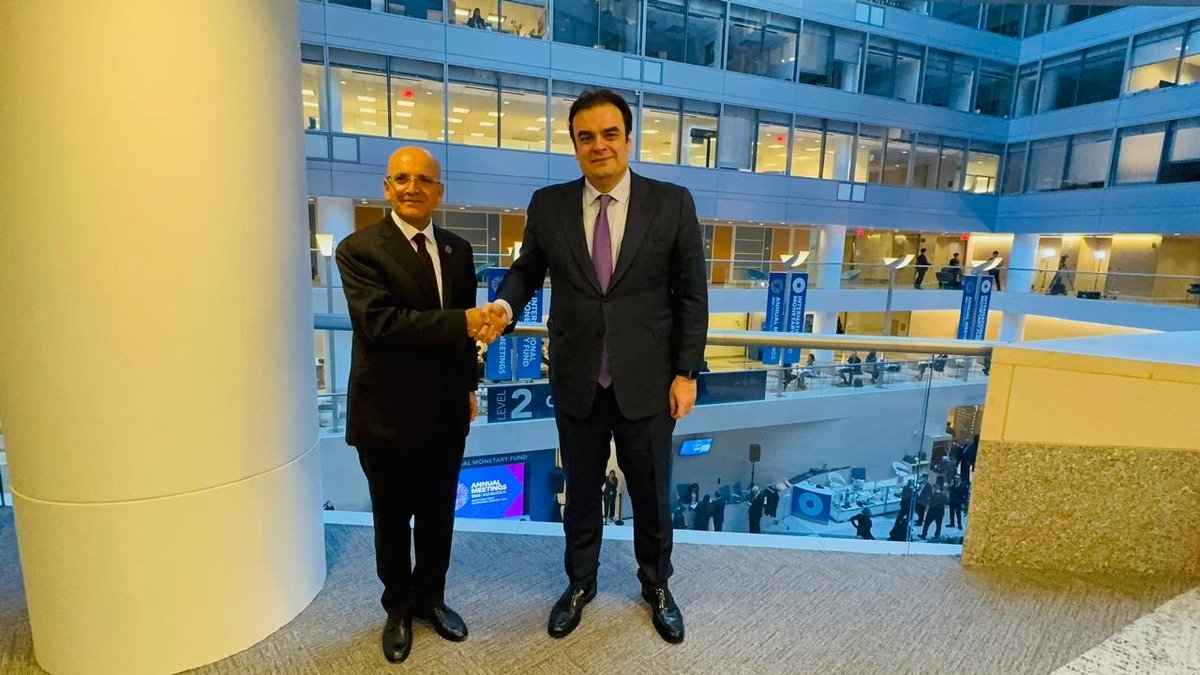
In a region marked by fragile geopolitical balances, the meeting between Greek Finance Minister Kyriakos Pierrakakis and Turkey’s Treasury and Finance Minister Mehmet Şimşek was far more than a routine diplomatic exchange. It signals the consolidation of a structured economic dialogue quietly built over recent months between Athens and Ankara — one now entering a more concrete phase.
The talks come in the framework of the High-Level Cooperation Council and follow the ministers’ first encounter in Washington in October 2025. The message from the Greek side is clear: the economy can function as a stabilizing pillar in bilateral relations.
The $5 Billion Baseline — And Untapped Potential
Current bilateral trade between Greece and Turkey stands at roughly €5 billion annually. Government officials privately acknowledge that while significant, the figure falls short of what could be achieved under a more predictable and stable relationship.
Key discussion points reportedly included:
- Strengthening connectivity (customs, logistics, transport infrastructure)
- Facilitating cross-border trade flows
- Reducing regulatory and administrative barriers
- Expanding export capacity
These may sound technical, but for businesses on both sides of the Aegean, such adjustments can substantially lower transaction costs and unlock new commercial opportunities.
Green Transition and Digital Economy: A New Convergence Zone
Beyond trade, the agenda increasingly centers on investment flows and joint projects in high-value sectors:
- Cooperation in innovation and technology
- Investment in the green transition and energy modernization
- Expansion of the digital economy
For Greece, which is actively repositioning its economic model toward higher value-added sectors and international capital inflows, cooperation with a major neighboring market like Turkey carries significant geo-economic implications.
Political Subtext: Economics as Strategic Insurance
At a political level, the deepening economic channel is widely interpreted as an attempt to build mutual economic interests that can act as a buffer during periods of tension.
The logic is pragmatic: the greater the investment flows and commercial interdependence, the higher the cost of escalation. Economic ties do not resolve geopolitical disputes, but they create layers of interdependence that can moderate risk.
Still, Greek officials are aware of the delicate balance. Any economic progress must coexist with firm positioning on national issues, to avoid domestic political friction or perceptions of strategic concession.
The Real Test for Athens
The Pierrakakis–Şimşek meeting does not produce immediate headline-grabbing deals. What it does produce is continuity and structure.
The central question is whether this evolving dialogue will translate into:
- Tangible investment agreements
- Measurable growth in trade volume
- Concrete joint projects in strategic sectors
—or remain at the level of diplomatic signaling.
For now, the economic track appears to be emerging as a functional bridge in a historically volatile relationship. Whether that bridge will deliver measurable benefits for Greek businesses — and withstand political pressure — will become clearer in the months ahead.
Source: pagenews.gr
Διαβάστε όλες τις τελευταίες Ειδήσεις από την Ελλάδα και τον Κόσμο




Το σχόλιο σας