


Stournaras’ Double Warning: Greek Economy Hurt by Global Shocks — Elections Could Worsen Risks
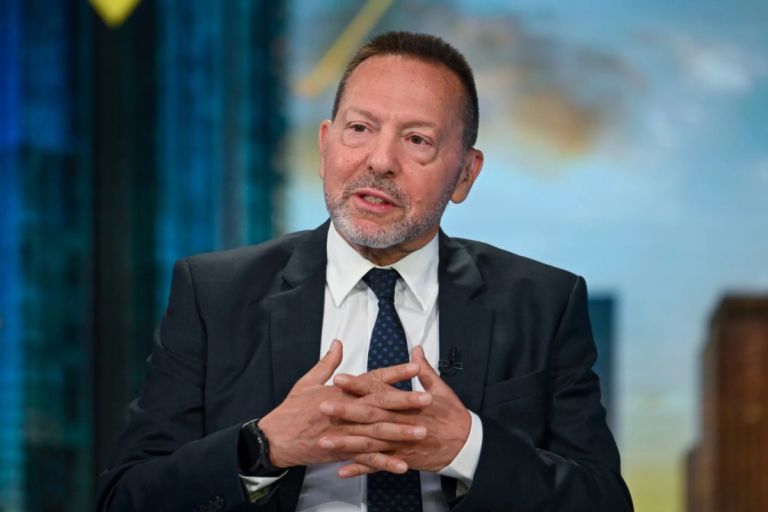
Πηγή Φωτογραφίας: eurokinissi//Stournaras’ Double Warning: Greek Economy Hurt by Global Shocks — Elections Could Worsen Risks



Yannis Stournaras, Governor of the Bank of Greece and influential member of the European Central Bank’s Governing Council, delivered a stark assessment of the Greek economy’s prospects in his annual report and public addresses, highlighting deepening risks from global shocks and domestic uncertainty. His remarks are drawing attention for linking economic resilience directly to political stability — a message that reverberates amid speculation about early elections.
Economy Slowing, Inflation Rising
According to official projections accompanying Stournaras’s report, Greece’s real GDP growth is expected to decelerate to around 1.9% in 2026, down from stronger recent outturns. This slowdown reflects weaker private consumption growth and a negative external sector contribution, partially driven by ongoing disruptions in global energy markets and international supply chains stemming from the war in the Middle East.
At the same time, headline inflation — after easing earlier — is predicted to reaccelerate to about 3.1%, above the euro‑area average, reflecting renewed upward pressures in energy costs. Stournaras noted that this combination of slower growth and persistent inflationary pressures heightens the risk of stagflation‑like dynamics for both Greece and the wider eurozone.
Political Stability as an Economic Factor
In perhaps the most politically resonant part of his remarks, Stournaras stressed that in an environment of elevated uncertainty due to global conflicts and macroeconomic volatility, political stability is essential for economic resilience.
“In times of heightened uncertainty, political stability is a decisive factor for economic resilience,” Stournaras said, emphasizing that a predictable institutional framework helps preserve macroeconomic balance and manage external shocks effectively.
Economists and analysts interpret this emphasis as not merely technical but also political — coming at a time when speculation about potential early elections is mounting. While Stournaras did not explicitly mention electoral timing, his focus on stability as foundational to economic performance is widely seen as cautionary toward political disruptions.

Eurozone Context and Monetary Policy Uncertainty
As a member of the ECB’s policy council, Stournaras also addressed broader monetary policy challenges facing the euro area. He noted that the future stance of euro‑zone monetary policy will hinge on the magnitude and persistence of energy price shocks. If energy pressures prove transitory, only limited policy adjustment may be needed; but if they embed more deeply — potentially affecting inflation expectations and wages — a tighter policy response would be warranted to prevent inflation from becoming entrenched.
Moreover, in remarks at a recent financial forum, he underlined the importance of a swift ECB response should inflation expectations begin to drift — warning that weaker growth and higher, persistent inflation could materialize if geopolitical tensions drag on.
Underlying Risks and Structural Pressures
Stournaras’s assessment makes clear that the Greek economy is confronting multiple layers of risk:
- External shocks: Geopolitical instability, especially the conflict in the Middle East, continues to impact energy prices and supply chains, feeding into inflation and disrupting global growth.
- Slowing growth: The projected deceleration in GDP growth underscores how external pressures can spill over into domestic demand and competitiveness.
- Inflation expectations: Rising energy costs could impact medium‑term inflation expectations and wage formation, complicating monetary policy choices.
The governor also flagged that strong fiscal buffers, including a healthy primary surplus and declining public debt trajectory, have thus far bolstered Greece’s macroeconomic position, but are not immune to protracted global upheavals.
Stability and Reform as Policy Priorities
Stournaras did not merely highlight risks; he underlined the conditions under which those risks can be mitigated. He called for preserving political will behind credible reform policies, which he argues are key to transforming crises into opportunities and building a more sustainable, outward‑looking and competitive economy.
This perspective aligns with broader ECB concerns about balancing inflation control with growth support in a fragile macroeconomic setting, and it resonates with policymakers seeking to reassure both markets and citizens that Greece’s economic trajectory remains anchored in structural governance and policy continuity.
An Economy at a Crossroads
Yannis Stournaras’s reports and statements paint a picture of an economy that is both more resilient than in past crises and significantly exposed to external and internal vulnerabilities. The twin challenges of slower economic expansion and rebounding inflation, layered upon geo‑economic risk, create a terrain where political stability is not just desirable, but a necessary condition for preserving economic confidence and advancing growth. The Bank of Greece’s governor, by emphasizing this link, sends a clear message to policymakers and the public alike: in 2026, economic resilience and political predictability are deeply interconnected.
Source: pagenews.gr
Διαβάστε όλες τις τελευταίες Ειδήσεις από την Ελλάδα και τον Κόσμο







Το σχόλιο σας