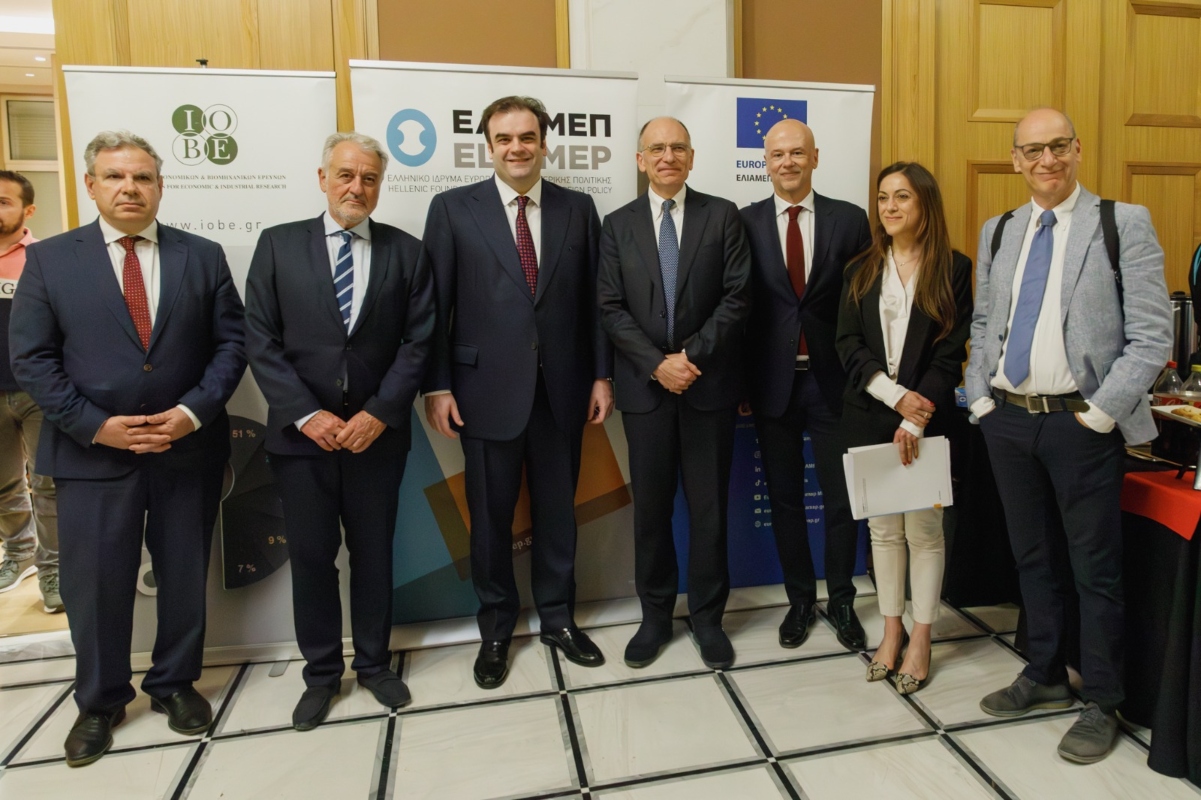
In a strongly worded intervention on the future of Europe’s economy, Greek Minister of National Economy and Finance Kyriakos Pierrakakis argued that the European Union must urgently move toward deeper economic integration, including larger cross-border banks, unified capital markets, and the creation of pan-European corporate “champions” capable of competing globally.
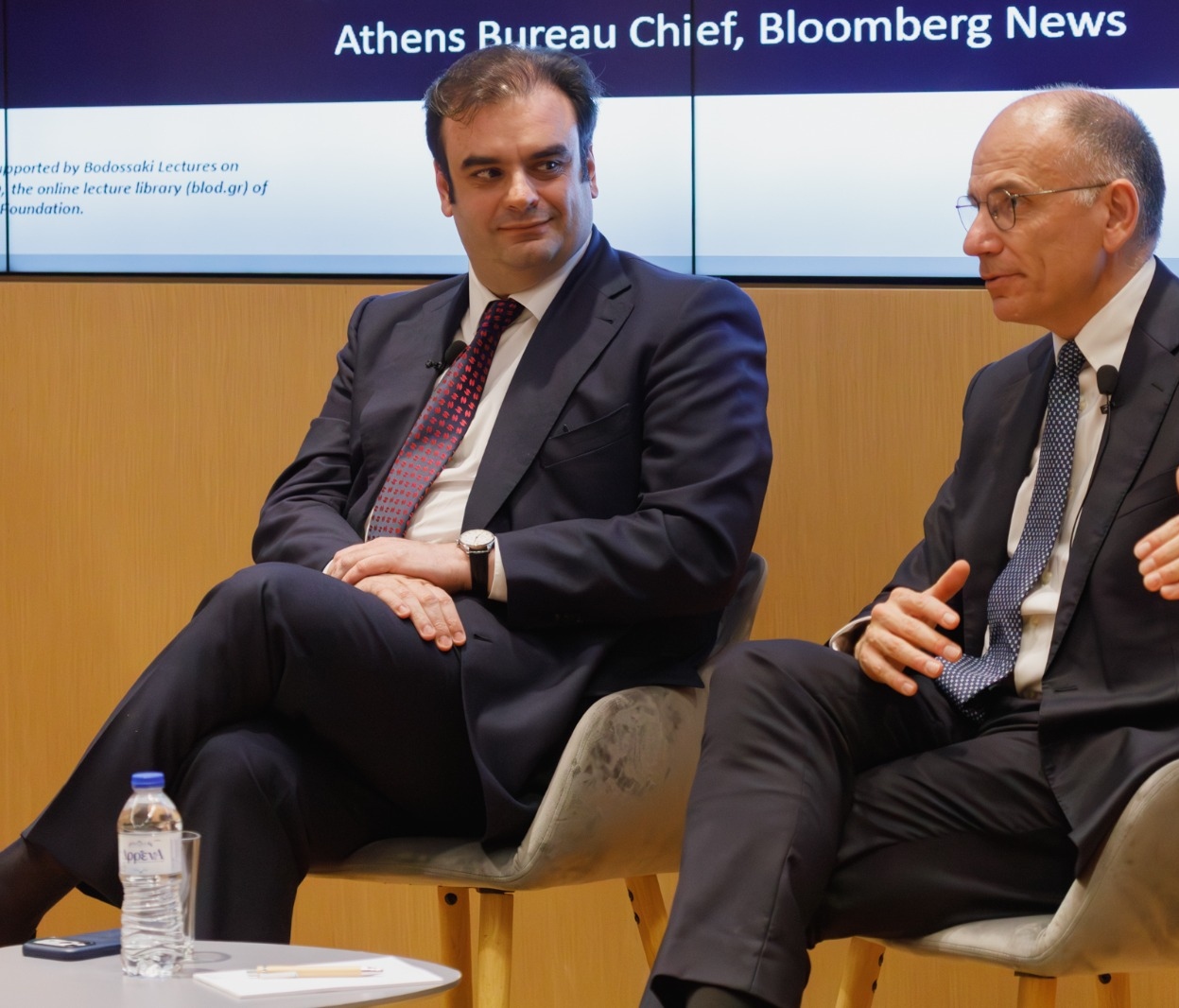
He made the remarks during a public discussion with former Italian Prime Minister Enrico Letta at an event focused on European competitiveness and the 40th anniversary of the Single European Act, organized by leading economic and policy institutions including Hellenic Foundation for European and Foreign Policy and the Foundation for Economic and Industrial Research.
The discussion centered on one core question: whether Europe can still compete with the United States and China without fundamentally changing its economic structure.
“Europe is already late” — warning on missed integration
Pierrakakis acknowledged that Europe has significantly delayed key reforms in banking and capital markets, particularly the completion of the Banking Union and the Capital Markets Union.
He stressed that Europe is now trying to catch up on reforms that were already being discussed more than a decade ago.
He described the potential upside of completing these reforms as a kind of“obvious dividend”— referring to the economic gains Europe has lost by failing to act earlier on obvious structural inefficiencies.

Capital markets, banking union, and scale
A central theme of his intervention was scale.
Pierrakakis argued that Europe cannot compete globally while remaining fragmented into 27 separate financial systems. He called for:
- deeper banking consolidation
- unified capital markets and stock exchanges
- cross-border mergers and acquisitions
- removal of internal barriers to financial integration
“You cannot achieve the necessary scale if you continue to have 27 different versions of national champions,”he said.
He also pointed to declining cross-border financial integration since 2008, and to the underinvestment of European banks in technology compared to their US and Chinese counterparts.
“European champions” as a strategic necessity
The minister directly supported the idea of creating larger European firms capable of competing globally, arguing that scale is now a defining factor in economic power.
He highlighted Greece’s recent openness to cross-border consolidation, including:
- increased participation of UniCredit in Alpha Bank
- cooperation between Euronext and the Athens Stock Exchange
These, he suggested, are early examples of the kind of integration Europe needs across all sectors.

Technology: Europe is already in “Plan B”
Beyond banking and capital markets, Pierrakakis warned that Europe is already lagging behind in technology and must adopt a coordinated strategy for what he called “technological sovereignty.”
However, he stressed that full autonomy is unrealistic in all sectors. Instead, Europe should:
- focus investment on areas where it can lead globally
- avoid asymmetric dependence on US or Chinese technology
- support scaling of existing European tech companies
He cited successful European models such as Airbus and the satellite navigation system Galileo as examples of what coordinated European industrial policy can achieve.
Letta: Europe is losing because of scale
Enrico Letta reinforced the argument, warning that Europe is “losing ground due to lack of scale.”
He argued that Europe remains dependent on:
- US technology and finance
- Chinese manufacturing
- external energy and supply chains
“Independence today means the ability to achieve scale,”Letta said, stressing that Europe must unify fragmented financial systems and move faster on integration.
He also expressed cautious optimism, noting that momentum is building politically for reforms such as the Savings and Investment Union and digital euro initiatives.
A race against time for Europe’s economic model
The discussion ultimately framed Europe’s challenge as structural rather than cyclical.
Both speakers emphasized that Europe still has strengths — but risks long-term decline if it fails to act on fragmentation.
The core message was clear:
Europe’s future competitiveness will depend not on isolated national strengths, but on whether it can finally operate as a single economic system with real scale.