Erdogan moves to legalize “Blue Homeland”: Turkey targets Aegean and “gray zones”
 ΧΡΟΝΟΣ ΑΝΑΓΝΩΣΗΣ 5 '
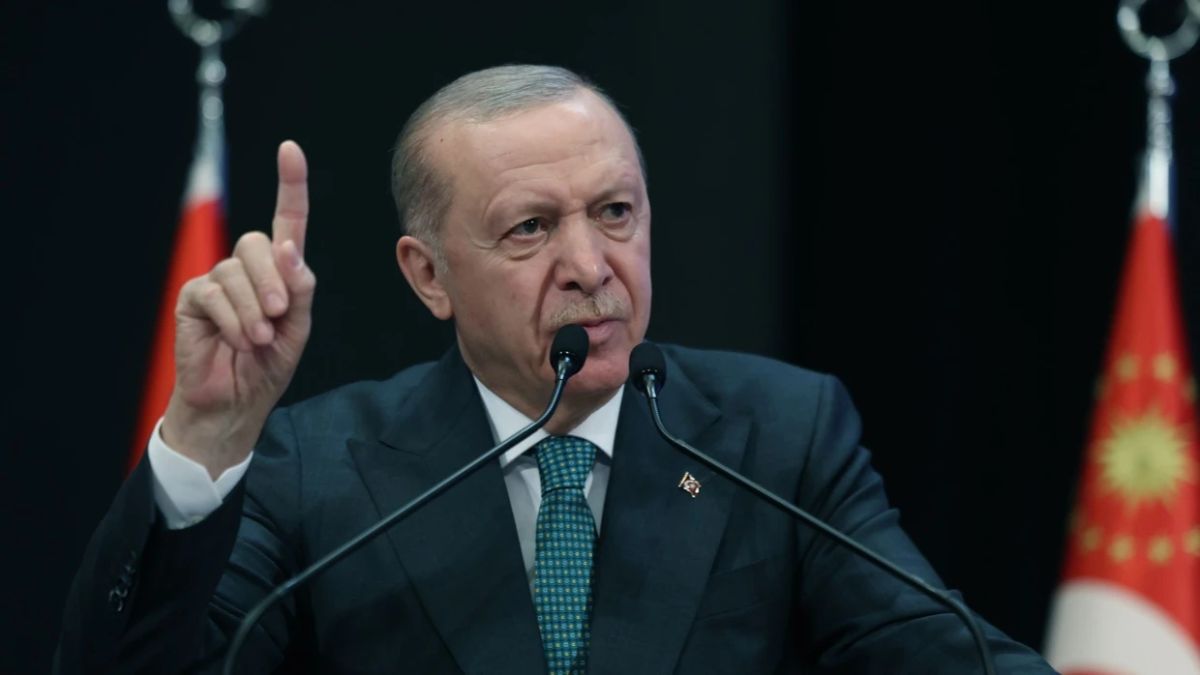
Πηγή Φωτογραφίας: AP Photo//Erdogan moves to legalize “Blue Homeland”: Turkey targets Aegean and “gray zones”



Turkey is preparing to institutionalize its controversial “Blue Homeland” doctrine through a comprehensive new law that could dramatically escalate geopolitical tensions with Greece and reshape the maritime balance in the Eastern Mediterranean.
According to Turkish government sources cited by pro-government media, the ruling AKP is finalizing a standalone legislative package aimed at “protecting Turkey’s sovereign rights and interests in the Black Sea, the Mediterranean and the Aegean.” The bill is expected to be submitted to parliament shortly after the Islamic holiday of Kurban Bayramı at the end of May.
The proposed legislation would effectively codify Ankara’s maritime claims into domestic Turkish law for the first time, consolidating issues related to Exclusive Economic Zones (EEZs), continental shelf claims and disputed maritime areas under one unified legal framework.
From geopolitical doctrine to state law
The significance of the initiative extends far beyond technical maritime regulations.
For years, the “Blue Homeland” doctrine functioned primarily as a strategic and military concept promoted by Turkish naval circles and nationalist policymakers. Now, President Recep Tayyip Erdoğan appears determined to elevate it into formal state doctrine with direct legal consequences.

According to Turkish sources:
“The boundaries of the Exclusive Economic Zone and continental shelf will be normalized through a foundational law.”
In practice, this means Turkey intends to establish a domestic legal basis for its expansive maritime claims across the Aegean and Eastern Mediterranean — including areas disputed by Greece and Cyprus.
The draft law reportedly also addresses the legal status of islands, islets and rocky formations referred to by Ankara as “gray zones,” a highly sensitive issue that has fueled repeated tensions between Greece and Turkey since the 1990s.
“Gray zones” return to the center of the dispute
Perhaps the most alarming aspect for Athens is that the legislation reportedly seeks to define and regulate disputed geographical formations in the Aegean under what Turkish officials describe as the principles of international maritime law.
Critics argue this represents an attempt by Ankara to unilaterally reinterpret international law through domestic legislation.
The strategic objective appears clear: Turkey wants to convert long-standing geopolitical claims into permanent state-backed legal positions.
Turkish sources also indicate that the drafting process involved:
- the Turkish Foreign Ministry,
- the Turkish Armed Forces,
- and the Naval Forces Command.
This military involvement underscores the security dimension behind the initiative and suggests the law may eventually support future naval deployments, research missions and energy exploration activities in contested waters.
A message to Greece, NATO and the EU
Analysts view the timing of the move as highly significant.
Turkey is acting amid:
- rising instability in the Middle East,
- growing competition over Eastern Mediterranean energy routes,
- and broader geopolitical fragmentation affecting NATO and Europe.
By transforming “Blue Homeland” into enforceable domestic legislation, Ankara may be seeking to strengthen its negotiating leverage while creating legal justification for future operational actions at sea.
Potential consequences could include:
- expanded Turkish NAVTEX announcements,
- new seismic surveys,
- offshore drilling missions,
- and more aggressive naval presence in disputed maritime zones.
Diplomatic observers warn that the initiative risks creating a new phase of institutionalized confrontation between Greece and Turkey, where maritime disputes become embedded not only in rhetoric but also in national legal systems.

A new chapter in Eastern Mediterranean tensions
The proposed “Blue Homeland Law” signals that Turkey’s maritime strategy is entering a more structured and permanent phase.
Rather than relying solely on political statements or naval maneuvers, Ankara now appears ready to anchor its geopolitical ambitions within its internal legal architecture.
For Greece and regional actors, this development raises a critical question:
How should Europe and NATO respond when contested maritime claims evolve from strategic narratives into codified national legislation?
Because if the law passes as expected, the Eastern Mediterranean may soon face not just competing interpretations of maritime law — but competing legal realities enforced by rival states.
Source: pagenews.gr
Διαβάστε όλες τις τελευταίες Ειδήσεις από την Ελλάδα και τον Κόσμο