
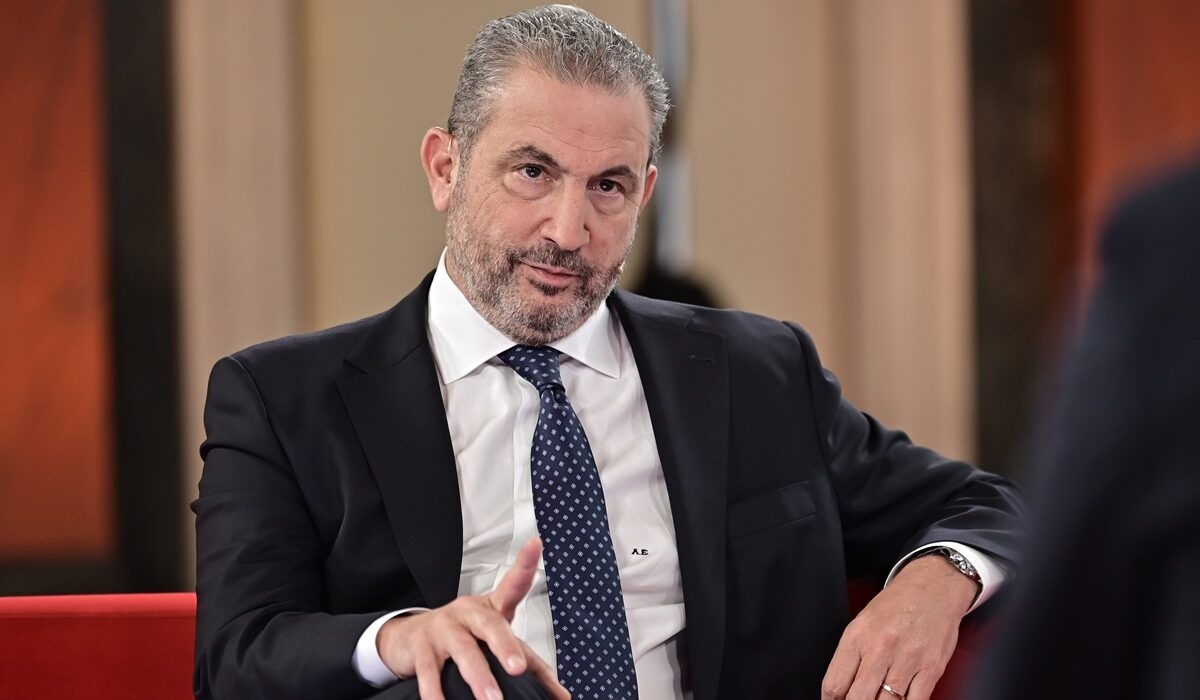
The intervention by Alexandros Exarchou at the Blue Strategy Summit 2026 sent shockwaves through Greece’s political and energy circles.
Behind the carefully measured words of the AKTOR Group chairman and CEO, many saw something much bigger unfolding: a direct warning that Europe is entering a new era of geopolitical confrontation, energy insecurity and strategic infrastructure wars.
And at the center of this emerging map stands an unexpected name:
Elefsina.
Against the backdrop of the Ukraine war, instability in the Middle East, the escalating US–China rivalry and Europe’s desperate search for new energy routes, Exarchou laid out a vision that insiders describe as “far more than a simple port investment.”
“Greece cannot rely on just one major international port”
Speaking alongside ONEX Group chairman Panos Xenokostas, Exarchou argued that the changing geopolitical environment is forcing Greece to rethink its infrastructure strategy.“Geopolitical developments are creating the need for new infrastructure and additional ports,” he stressed.
According to Exarchou, Greece may sit at the crossroads of three continents, yet in practice it still depends on only one major international port capable of handling large-scale global trade flows.
And that, he warned, will not be enough for what is coming next.
Behind closed doors, market analysts interpret these remarks as a clear signal that Athens is preparing for a dramatic increase in its geopolitical role across Southeast Europe and the Eastern Mediterranean.

Elefsina emerges as a strategic energy and logistics hub
The joint AKTOR–ONEX interest in the commercial development of Elefsina Port is now being viewed as a project of strategic national importance.
Exarchou emphasized:
- the port’s direct access to major road networks,
- its connection to the vertical energy corridor,
- and the availability of space for large-scale logistics infrastructure.
“Elefsina is ideally positioned to supply Southeast Europe,” he noted.
Energy executives believe the area could evolve into one of the region’s most important gateways for American LNG exports into Europe.
LNG becomes Greece’s geopolitical weapon
One of the strongest messages delivered by Exarchou concerned liquefied natural gas.
He made it clear that LNG is not simply a business opportunity for AKTOR.
It is a strategic geopolitical asset for Greece itself.
“LNG changes the geopolitical balance in favor of Greece,” he declared.
The broader plan revolves around creating a powerful vertical corridor capable of supplying large quantities of American LNG to Southeast and Central Europe at a time when:
- Russian gas is being phased out,
- tensions with Moscow remain high,
- and even Azeri gas supplies are increasingly uncertain.
Energy market insiders say Washington’s push for Europe to reduce dependence on Russian energy is accelerating these developments.
“The coming winter will likely be difficult”
The most alarming moment of Exarchou’s intervention came when he addressed Europe’s energy outlook.
“The coming winter will probably be difficult for Europe,” he warned.
According to him, Europe faces:
- tighter gas supplies,
- rising prices,
- renewed inflationary pressure,
- and increasing economic strain on businesses and households.
Exarchou even suggested the European Union may ultimately need a centralized response similar to the Covid-era recovery mechanisms:
- either through a new financial instrument,
- or potentially through a common European energy bond.
The remarks immediately fueled discussions in financial and political circles about the possibility of another major EU intervention package.
FSRUs, energy grids and billions in infrastructure
Exarchou also highlighted that long-term LNG agreements could unlock a new wave of infrastructure investment, including:
- floating storage and regasification units (FSRUs),
- upgrades to gas transmission networks,
- and large-scale energy projects across the Balkans.
The key factor, he explained, is predictability.
Long-term contracts create stable revenue flows and lower financing risk, making such projects highly attractive for banks and institutional investors.
New Balkan deals coming before summer
The AKTOR chief revealed that after securing long-term agreements with:
- Albania,
- and Bosnia-Herzegovina,
the group expects additional memoranda of understanding across Southeast Europe to evolve into full commercial agreements before the end of summer.
For Greece, the implications go beyond economics.“This gives Greece a level of influence in the regional energy landscape that it never had before,” Exarchou stated.
Analysts say Athens is increasingly positioning itself as a regional energy gatekeeper between Europe, the Balkans and global LNG suppliers.
A direct hit at old infrastructure failures
Exarchou also used the summit to criticize the structural weaknesses that have long plagued Greek public works projects.
In a clear reference to the delays surrounding the Thessaloniki Metro, he argued that:
- projects launched without mature studies create chaos,
- concession-based models are more efficient,
- and future mega-projects in Greece will increasingly rely on private-sector structures.
According to industry insiders, the message was unmistakable: the next generation of Greek infrastructure will be built through strategic partnerships, private capital and geopolitically driven investments.
And in that new landscape, Elefsina is no longer just another port.
It is rapidly becoming one of Greece’s most critical geopolitical assets.
Source: pagenews.gr