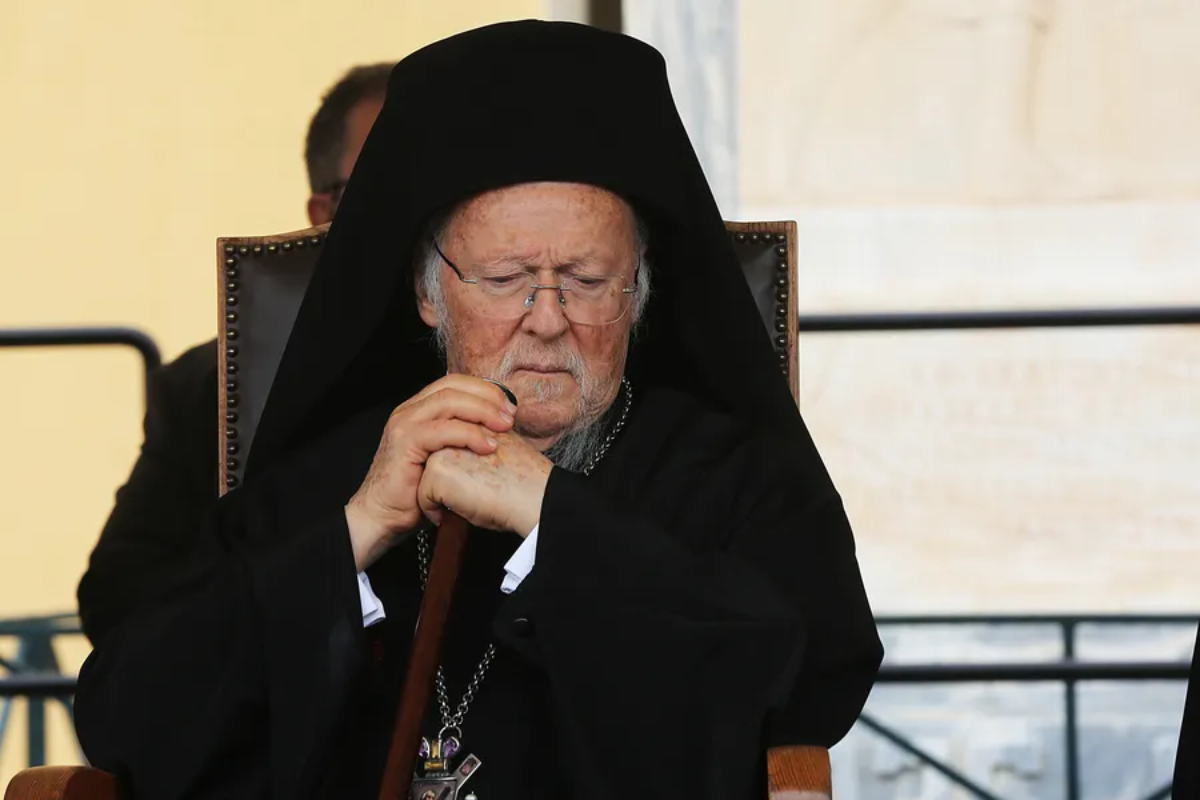
The possible reopening of the Halki Theological School as early as September is more than a religious development. It is a political test for Turkey, Greece, and the future of Greek-Turkish rapprochement.
Patriarch Bartholomew’s latest intervention was not simply another ecclesiastical statement.
It was a political message.
And it came at a moment when Greek-Turkish relations continue to oscillate between cautious optimism and the risk of renewed tensions.
In an interview with Turkey’s Hürriyet newspaper, the Ecumenical Patriarch argued that minorities should never be treated as bargaining chips in bilateral disputes. His message was direct: minority communities must not become hostages to political calculations or fluctuations in relations between Athens and Ankara.
The statement carries particular significance as the long-standing issue of the Halki Theological School returns to the spotlight. Closed since 1971, Halki remains one of the most symbolic unresolved questions in Turkey’s relationship with the Ecumenical Patriarchate, Europe, and the wider Christian world.
More Than a School
The Halki Theological School is not merely an educational institution.
It is a symbol of the Ecumenical Patriarchate’s historic presence in Turkey.
It is a symbol of religious freedom.
And for decades, it has stood as one of the most sensitive issues in Turkey’s relations with Greece, the European Union, and the United States.
Its reopening would not simply mean the restoration of a historic academy.
It would signal a broader political message: that Turkey is willing to approach minority rights and religious freedoms not as security concerns, but as indicators of democratic confidence and institutional maturity.
That is why Halki has long carried significance far beyond its campus.


The September Window
Patriarch Bartholomew stated that restoration work is expected to be completed by September and expressed hope that Turkish authorities will authorize the school’s reopening.
The optimism is not entirely new.
Over the past year, there have been increasing indications that discussions are taking place within Turkish institutions regarding possible legal and administrative pathways for reopening the school. According to Bartholomew, President Recep Tayyip Erdoğan instructed Education Minister Yusuf Tekin in 2024 to examine options for restoring its operation.
Perhaps most strikingly, the Patriarch suggested that if approval is granted, he would like to inaugurate the school together with President Erdoğan.
Such a gesture would carry enormous symbolic weight.
Ending the Logic of Reciprocity
The most important aspect of Bartholomew’s intervention, however, extends beyond Halki itself.
It concerns the broader treatment of minorities in both Greece and Turkey.
For decades, minority communities on both sides of the Aegean have often been viewed through a framework of reciprocity. Improvements in bilateral relations tended to create a more favorable environment, while periods of tension frequently translated into increased political pressure on minority populations.
Bartholomew is challenging that logic.
His argument is simple but profound: minority rights should not depend on the state of diplomatic relations.
They should not function as negotiating tools.
Nor should they become instruments of political leverage.
This is not merely a moral argument.
It is a call for a different understanding of citizenship, religious freedom, and democratic governance.
A Message to Ankara
For Turkey, the Halki issue is far more than an unresolved religious matter.
It is a test of international credibility.
At a time when Ankara is seeking to position itself as a key diplomatic actor—from Ukraine to the Middle East—the reopening of Halki would represent a highly visible gesture toward religious pluralism and institutional confidence.
It would send a positive signal to Washington and Brussels.
It would strengthen Turkey’s image as a country capable of balancing national sovereignty with respect for religious freedoms.
And it would allow Erdoğan to present the decision not as a concession to foreign pressure, but as an expression of Turkey’s own political self-confidence.
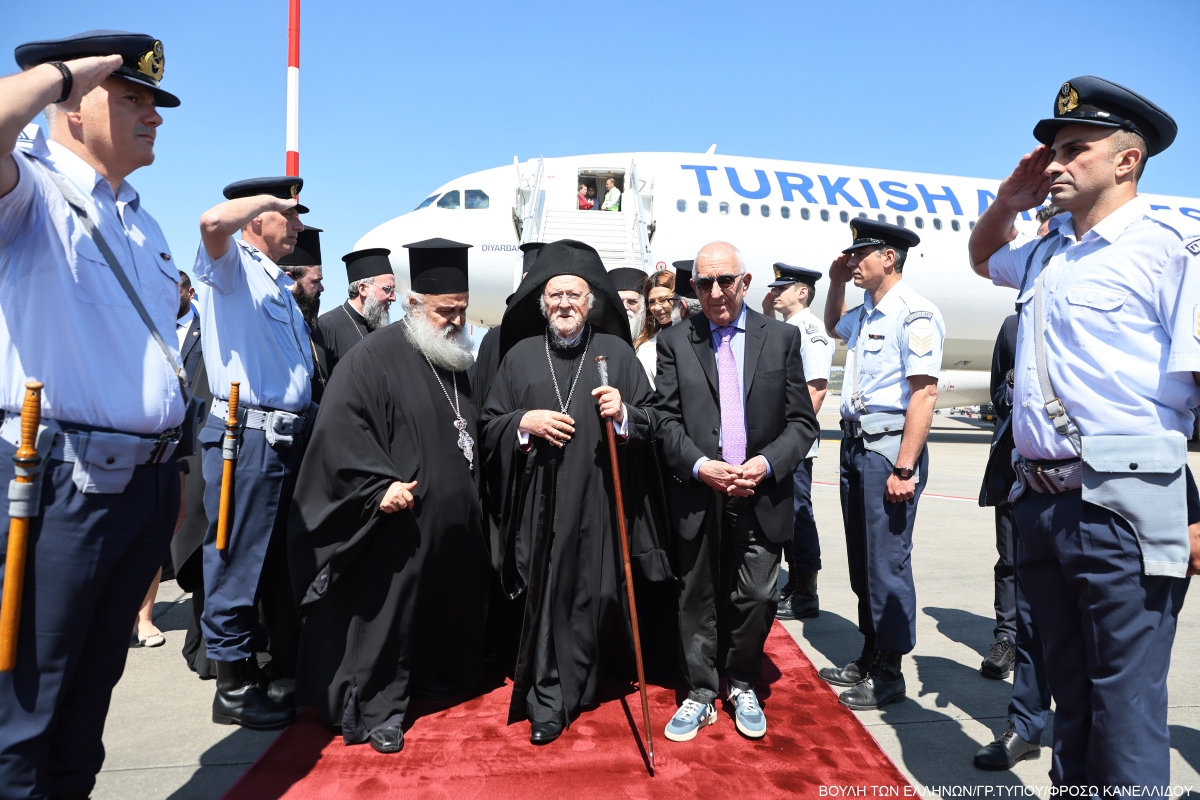

A Message to Athens
Bartholomew’s remarks were also directed at Greece.
By emphasizing that minority issues should not be tied to the trajectory of bilateral relations, he implicitly highlighted the need for consistency in the treatment of all minority communities.
His comments regarding the Muslim minority in Greece were notably measured, avoiding confrontation while reinforcing a principle of equal standards.
The message was clear:
Neither country can credibly demand respect for its own sensitive communities while viewing minority rights through the lens of geopolitical competition.
Institutional credibility requires consistency.
A Test for Greek-Turkish Rapprochement
The possible reopening of Halki will not solve the disputes of the Aegean.
It will not erase disagreements over maritime boundaries, Cyprus, or regional security.
Nor will it automatically resolve all questions surrounding the Ecumenical Patriarchate.
But it could establish an important precedent.
A precedent demonstrating that even the most symbolic and politically sensitive issues can move forward when political will exists.
In a region where mistrust often outpaces diplomacy, that matters.
Because trust is not built through declarations.
It is built through decisions.
The Broader Significance
Ultimately, Patriarch Bartholomew’s intervention highlights a deeper truth that both Greece and Turkey have often struggled to acknowledge openly.
Minorities do not exist to validate national narratives.
They are living communities with rights, histories, and futures.
If Halki reopens, it will undoubtedly be a historic moment for the Ecumenical Patriarchate.
But it will also be something larger.
A test of whether Turkey can approach the Patriarchate as an institution rather than a problem.
A test of whether Greece and Turkey can discuss minority issues without reflexive suspicion.
And a test of whether bilateral relations can move beyond crisis management toward confidence building.
Because Halki, in the end, is more than a school.
It is a measure of political maturity.
Source: pagenews.gr