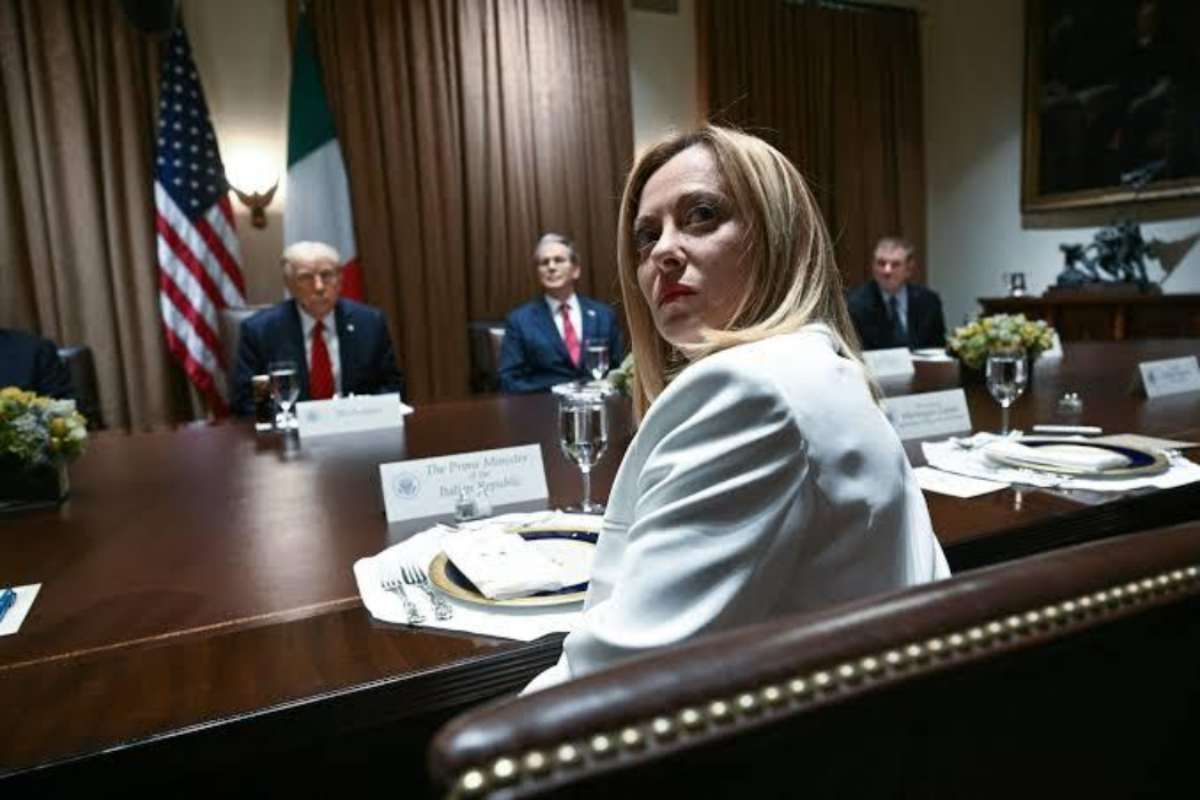
Giorgia Meloni made a political bet few European leaders were prepared to make: that she could remain a powerful European prime minister while simultaneously becoming one of Donald Trump’s closest and most trusted interlocutors on the continent. For a while, the strategy appeared to work. Now, however, the relationship that was supposed to give Rome privileged access to Washington risks becoming a political liability — and a warning to Europe’s wider conservative movement.
The Italian prime minister’s experience exposes a fundamental weakness in the idea of a transatlantic nationalist alliance: ideological affinity can go only so far when national interests begin to collide.
And under Trump, there is one principle that ultimately overrides personal friendships and political similarities: America First.
Iran became the breaking point
The most serious rupture emerged over Iran.
Italy refused to allow the United States to use Italian bases for American military operations against Tehran, putting Meloni in direct conflict with a president with whom she had carefully cultivated an unusually close relationship.
For Rome, the decision reflected domestic political, constitutional and strategic considerations.
For Trump, however, the calculation was considerably simpler: a European ally regarded as particularly friendly to his administration had failed to follow Washington when it mattered.
The personal chemistry began to deteriorate.
Trump, who had previously praised Meloni enthusiastically, moved towards public criticism. The dispute became increasingly personal, with the US president even suggesting that Meloni had sought a photograph with him at the G7 to improve her standing at home.
Meloni’s response carried its own sting: politically, her association with Trump had hardly been an uncomplicated advantage.
For a relationship once portrayed as a natural alliance between American and European conservatism, the transformation is striking.


Meloni’s miscalculation: MAGA and European conservatism are not the same thing
This is where the Italian story becomes much bigger than a disagreement between two leaders.
Meloni and Trump undoubtedly share ideological territory.
Immigration, cultural conservatism, criticism of progressive elites, national identity and scepticism towards parts of the Brussels establishment have all provided common political ground.
But shared ideology does not produce shared geopolitical interests.
MAGA begins with America First.
That means Washington’s interests come before the interests of allies — including ideologically sympathetic ones.
Italy may want preferential access to the American market. Trump wants to protect American industry.
Rome wants affordable and predictable energy. Washington can pursue foreign-policy objectives that send energy prices sharply higher.
Italy needs NATO but must also manage its public finances. Trump wants European allies to spend considerably more on defence.
Those contradictions cannot be solved by political chemistry.
Meloni wanted to become Trump’s bridge to Europe
Her original strategy was far from irrational.
After Trump returned to the White House, Meloni occupied a position unlike that of almost any other major European leader.
She could talk to the populist and nationalist Right in Washington while simultaneously operating inside the institutions of the European Union.
Her ambition was therefore potentially transformative: Meloni could become the bridge between Trump’s America and Brussels.
That role promised enormous political leverage.
It could strengthen Italy inside the EU, increase Rome’s influence in Washington and simultaneously establish Meloni as perhaps the most important figure on the European conservative Right.
For a significant period, she walked that tightrope carefully.
She avoided becoming a leading European critic of Trump over tariffs. She maintained caution over Washington’s changing approach towards Ukraine and repeatedly tried to preserve the transatlantic relationship when other European capitals were becoming more confrontational.
But personal diplomacy eventually encountered geopolitical reality.
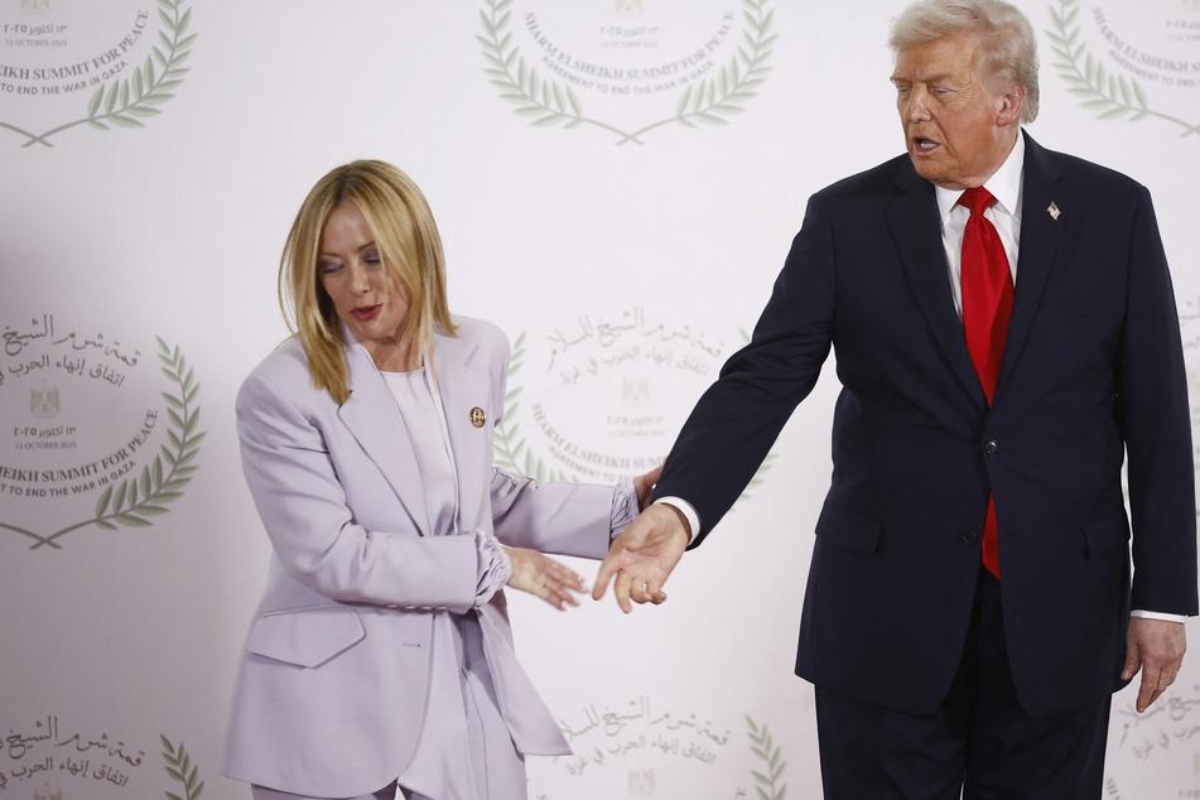

Tariffs, defence and Iran: America First has a price for Italy
The fundamental difficulty is that several pillars of Trump’s foreign and economic policy can directly damage Italian interests.
Italy is a major exporting economy. American protectionism therefore matters.
Higher NATO spending requires additional resources from a government already operating under fiscal constraints.
Instability in the Middle East can raise energy costs for an economy dependent on imported energy.
And military escalation involving Iran exposes Rome to political and security risks that are very different from those faced by Washington.
The supposedly privileged political relationship cannot eliminate any of these realities.
That is precisely why Meloni’s proximity to Trump risks becoming more difficult domestically: the closer she appears to Washington, the harder it becomes to explain policies from Washington that hurt Italian voters or businesses.
Then came the Pope
The political equation became even more uncomfortable following Trump’s criticism of Pope Leo XIV over the pontiff’s position on the Iran conflict.
For any Italian prime minister, an attack on the Pope carries obvious political sensitivities.
For Meloni, the problem is even sharper.
Her political identity has long emphasised nation, family and Christian values. Remaining silent when the pontiff was attacked would therefore have created a contradiction at the heart of her domestic political brand.
Meloni described the attack as unacceptable.
Even while attempting to avoid an unnecessary escalation with Washington, she had reached another point where Italian domestic politics and Trump’s political instincts could no longer comfortably coexist.
Can you be MAGA and pro-European at the same time?
This may be the most consequential question arising from the dispute.
The Meloni who governs Italy today is not simply the opposition politician who once attacked the Brussels establishment.
Government has forced pragmatism.
She remains firmly conservative on immigration and cultural issues, but she also works within European institutions and increasingly treats the EU as something to reshape from within rather than destroy from outside.
That creates an unavoidable tension with harder elements of the MAGA movement, where European integration itself can be regarded with suspicion.
Steve Bannon has already attacked Meloni as a “globalist”, illustrating how quickly admiration from the American populist Right can disappear when a European conservative chooses national or European interests over ideological alignment.
The paradox of a “Nationalist International”
There is an even deeper contradiction.
An international alliance of nationalist governments is inherently fragile because nationalism ultimately prioritises different nations.
The movements can agree on migration.
They can agree on cultural politics.
They can oppose progressive politics together.
They can criticise globalisation and established institutions.
But eventually comes the question that matters: whose national interest comes first?
For Trump, the answer is America.
For Meloni, it must ultimately be Italy.
And for every European government, there will eventually be a moment when those interests diverge.
That is why the concept of a permanent “Nationalist International” contains its own contradiction.
Nationalists can be ideological allies.
They cannot guarantee that they will remain strategic allies.
Rome now needs Washington — without depending on Trump
Italy has no interest in breaking with the United States.
The transatlantic relationship is far too important economically, militarily and geopolitically.
Rome’s challenge is therefore to distinguish between its relationship with America and its relationship with Donald Trump.
That means preserving institutional channels throughout Washington, maintaining relationships with senior administration officials and ensuring that disagreements between the two leaders do not contaminate the broader US-Italian alliance.
In effect, the objective becomes straightforward:
Save the strategic relationship even if the personal relationship cannot be saved.
The warning for the rest of Europe
This is where Meloni’s experience becomes a genuine European political lesson.
Other conservative governments may believe that ideological proximity to Trump gives them an advantage over liberal or centrist European leaders.
It probably does provide greater access.
But access should not be confused with protection.
A European leader can support tighter borders, criticise Brussels, embrace cultural conservatism and enjoy an excellent personal relationship with Trump — and still face American tariffs, demands for higher defence expenditure or intense pressure to support US military policy.
Because America First was never a promise to put America’s ideological friends first.
It was a promise to put America first.
Meloni attempted something politically ambitious: reconciling European conservatism, Italian national interests and Trump’s MAGA movement.
Her experience may ultimately demonstrate the limits of that project.
The lesson for Europe is larger than a Meloni-Trump quarrel: in an America First world, even Washington’s closest political friends abroad remain foreign allies — and the moment their national interests diverge, friendship stops being foreign policy.
Source: pagenews.gr