MAGA Turns on Big Tech: Trump Allies Blame AI Data Centres for Midterm Election Defeat
 ΧΡΟΝΟΣ ΑΝΑΓΝΩΣΗΣ 13 '
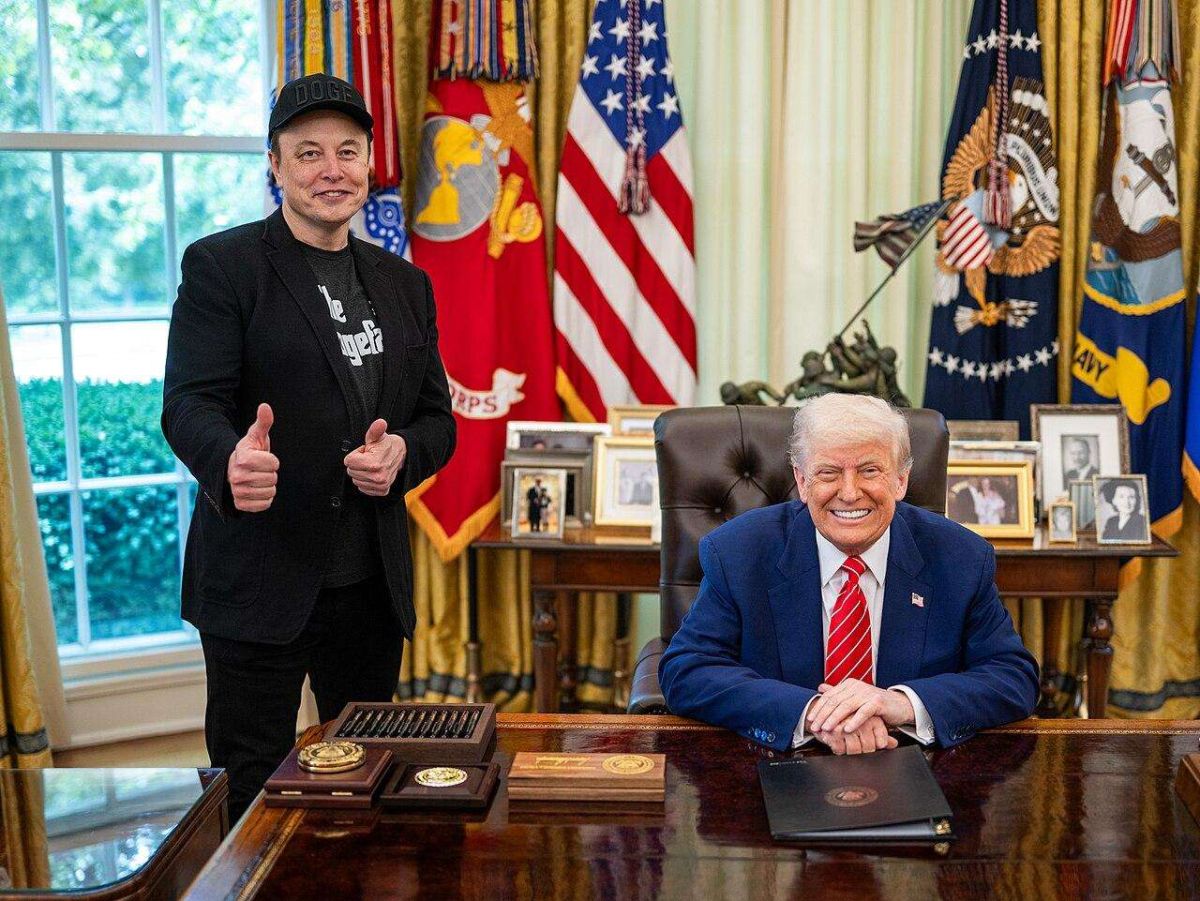
Πηγή Φωτογραφίας: Τραμπ – Μασκ στον Λευκό Οίκο 30 Μαΐου 2025 · Credit: Official White House Photo / Molly Riley. & Kevin Roberts – Heritage Foundation 15 Ιουλίου 2024 · Φωτογραφία από εκδήλωση στο Μιλγουόκι.



The political alliance between Donald Trump and Silicon Valley’s most influential billionaires is facing renewed scrutiny following the Republican Party’s setbacks in the November 3 midterm elections.
This time, criticism is coming not only from Democrats but also from prominent figures within the conservative movement who helped shape the ideological agenda of Trump’s presidency.
According to the Financial Times, influential MAGA strategists are increasingly blaming the Republican Party’s relationship with Big Tech, its enthusiastic support for artificial intelligence and the rapid expansion of data centres for contributing to the electoral backlash.
At the centre of the dispute lies a fundamental contradiction.
The Trump administration has presented AI development as essential to American economic competitiveness and national security. Yet some conservative voters are increasingly concerned that the same technological transformation could threaten employment, raise energy bills and concentrate economic power in the hands of a small number of corporations.
The result is an emerging political debate over whether the interests of Silicon Valley and those of Trump’s electoral base remain aligned.
The Project 2025 Architect Who Is Challenging Silicon Valley
Kevin Roberts, president of the conservative Heritage Foundation and a leading figure associated with Project 2025, has become one of the prominent voices questioning the Republican Party’s approach.
Speaking to the Financial Times, Roberts highlighted the anger among conservative voters over the construction of large data centres.
He argued that Republicans had underestimated the extent of local opposition, allowing Democrats to turn the issue into an electoral advantage.
His criticism is particularly significant because it comes from within the broader conservative movement rather than from Trump’s traditional political opponents.
Roberts has not abandoned his support for the president. Instead, his argument points to a growing disconnect between the administration’s technology strategy and the concerns of some voters.
He also identified the economic consequences of the war involving Iran as another factor in the Republican Party’s electoral difficulties.
The intervention reflects a broader reassessment taking place among conservative strategists following the midterms.
Trump’s AI Ambitions Meet Resistance From His Own Voters
Trump has made the expansion of America’s artificial intelligence industry a central component of his economic and strategic agenda.
His administration has opposed regulatory measures it considers likely to slow technological innovation, arguing that the United States must maintain its advantage over China.
The argument has considerable support within the technology industry.
Companies developing advanced AI systems require enormous computing capacity, creating demand for new data centres, electricity generation and transmission infrastructure.
Supporters argue that these investments strengthen American technological leadership, attract capital and generate economic activity.
But the expansion is increasingly controversial in communities where major facilities are being planned.
Residents have raised concerns about electricity consumption, water usage, pressure on local infrastructure and the possibility that the costs of development could be passed on to households.
For these communities, the question is not simply whether artificial intelligence will benefit the national economy.
It is whether the economic benefits will outweigh the costs experienced locally.
That distinction has become increasingly important in American politics.
Texas Becomes a Symbol of the Data Centre Backlash
Texas emerged as a particularly significant battleground in the political debate surrounding artificial intelligence infrastructure.
Democrat Gina Hinojosa, who won the state’s gubernatorial election, made concerns about data centre expansion and the influence of major business interests part of her campaign.
The outcome attracted attention because Texas has become an important destination for investment in technology and energy infrastructure.
According to the Financial Times, Elon Musk spent approximately $225 million supporting Republican candidates in the state.
The spending highlighted the scale of financial involvement by major technology entrepreneurs in American electoral politics.
Nevertheless, the Republican Party suffered significant setbacks.
The result does not establish that opposition to data centres was the decisive factor in the election.
Voters make political choices for multiple reasons, including economic conditions, public services, national policy and perceptions of political leadership.
However, the controversy surrounding AI infrastructure had become a visible part of the campaign.
It also demonstrated that opposition to large technology projects can emerge in communities traditionally associated with conservative politics.

Republican Congressman Chip Roy Challenges the AI Industry
Texas Republican congressman Chip Roy has also questioned the party’s relationship with major technology companies.
Speaking at a Heritage Foundation event examining the election results, Roy argued that concerns about artificial intelligence extend well beyond electricity and water consumption.
He pointed to a deeper anxiety about the future of employment and the growing power of technology corporations.
The contradiction, according to his argument, is that AI executives frequently discuss the possibility of widespread automation while simultaneously asking communities to accommodate enormous computing facilities.
Residents are therefore being asked to support an economic transformation whose consequences for their own employment and communities remain uncertain.
Roy’s intervention illustrates how scepticism towards Big Tech has developed across different ideological groups.
Progressive critics have traditionally focused on corporate concentration, environmental impacts and labour protections.
Conservative critics increasingly raise questions about local autonomy, economic security and the influence of technology companies over national policy.
Although their political priorities differ, both groups are challenging aspects of the rapid expansion of artificial intelligence.
Elon Musk and the Growing Contradictions Within MAGA
Elon Musk occupies a particularly prominent position in this debate.
The billionaire entrepreneur has been a major financial supporter of Republican candidates and one of the most recognisable figures associated with the political relationship between Trump and Silicon Valley.
At the same time, his business interests are closely connected to technologies that could accelerate automation and transform labour markets.
For some voters, the promise of technological progress sits uneasily alongside concerns about job displacement and the concentration of wealth.
This tension raises questions about the economic direction of the conservative movement.
Trump’s political message has frequently emphasised domestic manufacturing, employment and the restoration of American industrial strength.
The AI industry, meanwhile, is promoting technologies that could fundamentally alter the demand for human labour across many sectors.
The two objectives are not necessarily incompatible.
Artificial intelligence may generate new industries and employment opportunities even as it changes or replaces existing tasks.
But the transition creates uncertainty over which workers and communities will benefit, and which may face disruption.
That uncertainty has become a politically sensitive issue.
Local Referendums Reveal Wider Resistance
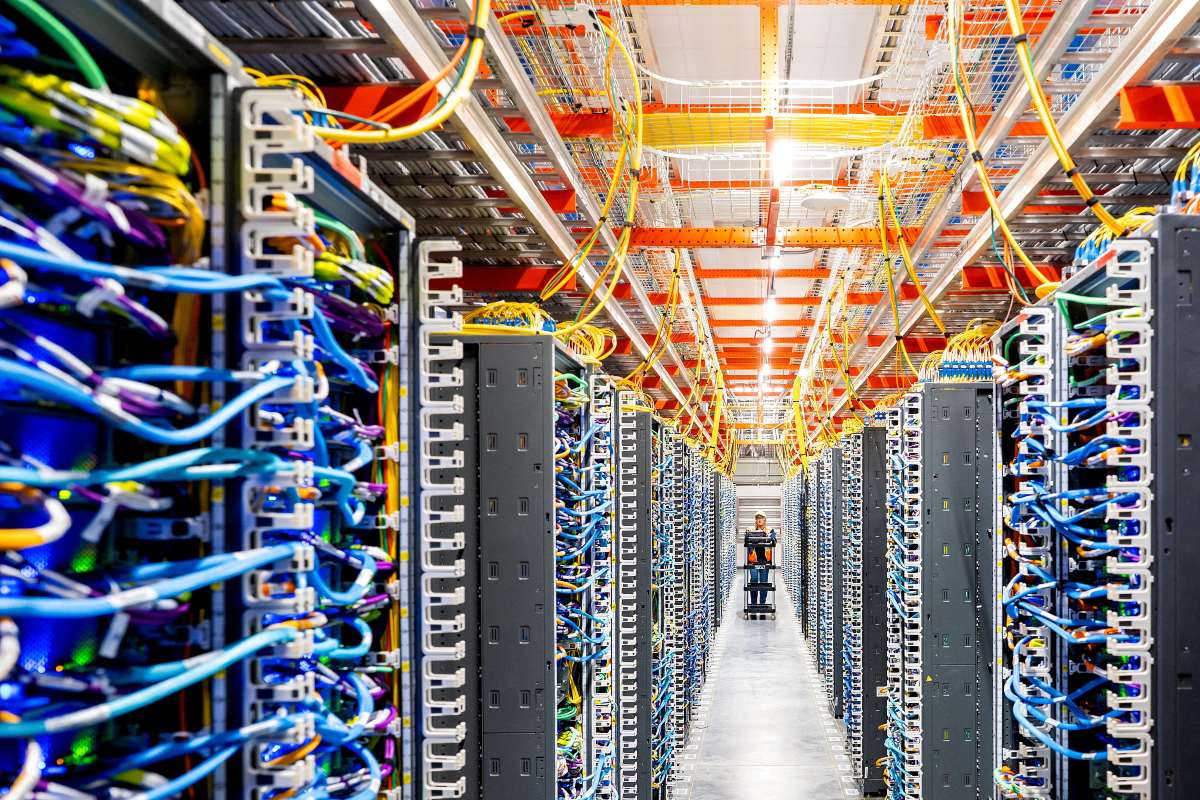
The backlash against data centres has also appeared in local ballot measures.
According to figures cited by the Associated Press, voters approved restrictions on data centre developments in 44 of 45 local referendums for which results had been recorded.
The measures reportedly included stricter approval requirements, development restrictions and temporary pauses on new projects.
These votes suggest that opposition is not confined to national political campaigns.
In many communities, residents want greater influence over decisions involving large industrial and technological facilities.
The results should not be interpreted as evidence that Americans broadly reject artificial intelligence.
Rather, they highlight concerns about how AI infrastructure is developed, who benefits economically and who bears the environmental and financial costs.
The distinction matters because public attitudes towards technological innovation can differ substantially from attitudes towards individual infrastructure projects.
A voter may support American leadership in artificial intelligence while opposing a data centre proposed near their home.
Electricity Prices Turn AI Into a Cost-of-Living Issue
One of the most politically significant aspects of the debate concerns energy.
Advanced AI systems require substantial computing resources, and the facilities supporting them consume large quantities of electricity.
The rapid expansion of data centres has increased attention on the ability of electricity networks to meet future demand.
Utilities may need to invest in additional generation capacity, transmission lines and local infrastructure.
How those costs are distributed between technology companies, utilities and consumers has become a central question.
Critics argue that households should not be required to subsidise infrastructure built primarily for highly profitable corporations.
Technology companies and project developers counter that their investments can support grid expansion, local tax revenues and economic development.
The actual impact varies by project, electricity market and regulatory framework.
Nevertheless, the debate has connected artificial intelligence to one of the most important issues in American electoral politics: the cost of living.
For voters already concerned about household expenses, the possibility of higher electricity bills can make data centre expansion an immediate political issue rather than an abstract debate about technology.
The Iran War and Inflation Complicate the Republican Post-Mortem
The Republican Party’s electoral setbacks cannot be explained by artificial intelligence alone.
Economic uncertainty, inflation, energy prices and the consequences of the conflict involving Iran were also part of the political environment surrounding the midterms.
Kevin Roberts acknowledged that the economic effects of the war contributed to the party’s difficulties.
Other political analysts have similarly warned against attributing the election results to any single issue.
Opposition to data centres often overlaps with broader concerns about affordability, corporate influence and the distribution of economic benefits.
In that sense, AI infrastructure may have become a focal point for dissatisfaction rooted in several different economic pressures.
The distinction is essential when assessing the significance of the conservative backlash.
MAGA strategists are offering a political interpretation of the election results, not demonstrating that Big Tech alone caused the Republican defeat.
The 2028 Debate Is Already Taking Shape
Republican pollster Kristen Soltis Anderson has also identified artificial intelligence as an increasingly important political issue.
Speaking at the Heritage Foundation’s post-election discussion, she suggested that AI had become a recurring concern throughout the campaign and would remain prominent in the political debate approaching 2028.
The issue extends beyond data centre construction.
Artificial intelligence is increasingly connected to employment, education, children’s safety, national security, energy policy and the regulation of powerful corporations.
For Republicans, the challenge is to reconcile support for American technological leadership with the concerns of voters who fear that rapid innovation could undermine economic security.
For Democrats, the challenge is to translate criticism of corporate influence and infrastructure development into policies that address local concerns while preserving opportunities for investment.
Neither party can easily separate technological competitiveness from the economic and social consequences of AI adoption.
Silicon Valley Faces a Political Reality Check
The debate emerging from the 2026 midterms suggests that technological innovation can no longer be treated solely as an economic growth strategy.
The companies developing artificial intelligence increasingly depend on public infrastructure, energy resources and regulatory decisions.
Their expansion therefore raises political questions about accountability, environmental impacts and the distribution of economic gains.
For technology executives, the challenge is to demonstrate that AI development can produce tangible benefits for communities beyond investors and shareholders.
For policymakers, the challenge is to establish rules that support innovation while addressing legitimate concerns about infrastructure costs, employment and corporate power.
The tensions within MAGA are particularly revealing because they demonstrate that opposition to aspects of Big Tech’s expansion is not confined to one side of the American political spectrum.
The debate is no longer simply about whether the United States should lead the artificial intelligence revolution. It is about who will shape that revolution, who will pay for its infrastructure and who will ultimately benefit from its economic transformation.
As Republicans assess their midterm losses and both parties begin preparing for the next presidential election cycle, the relationship between Silicon Valley and American politics is entering a more contested phase.
The technology industry remains central to Washington’s economic and strategic ambitions.
But its political influence is increasingly being challenged by voters who want greater control over the consequences of rapid technological change.
Source: pagenews.gr
Διαβάστε όλες τις τελευταίες Ειδήσεις από την Ελλάδα και τον Κόσμο