The confrontation between Washington and Tehran is entering a potentially decisive economic phase.
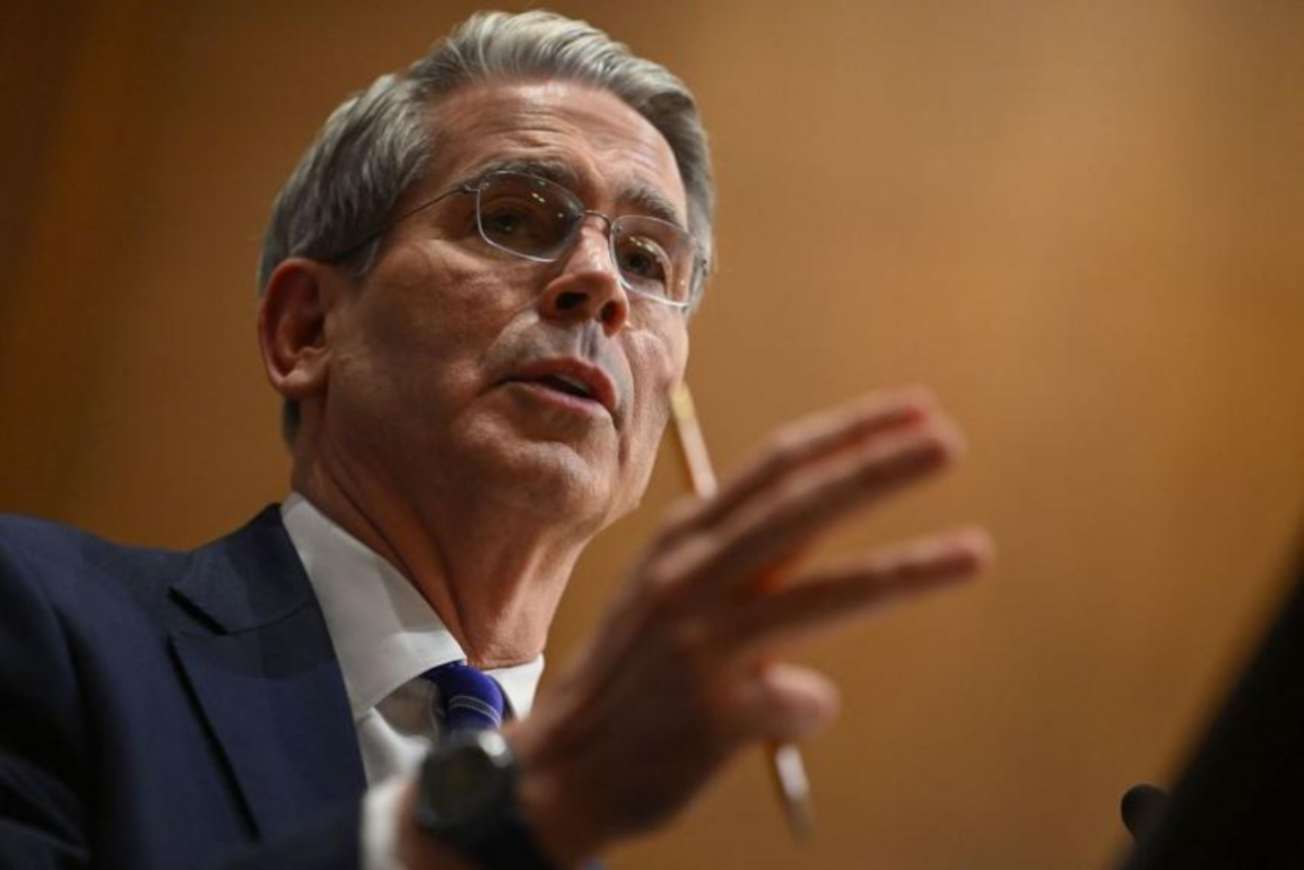
U.S. Treasury Secretary Scott Bessent is expected on Monday, August 24, to provide details of a new sanctions offensive against Iran, following President Donald Trump’s declaration of an “Economic D-Day” designed to dramatically increase the financial pressure on the Islamic Republic. Associated Press reported Sunday that Bessent is expected to announce new measures Monday after Washington pledged an “unprecedented” level of economic warfare and isolation.
The strategy appears to go considerably beyond another round of sanctions against individual Iranian companies or officials. Washington is signaling that it wants to squeeze the broader international network that allows Iran to sell oil, move money and maintain commercial links despite existing restrictions.
Bessent has already issued the warning.
“It is a one-two punch. We have the blockade, and we are going to have the toughest sanctions in history.”
And his message to countries continuing to deal with Tehran was equally explicit:
“If you insist on doing business with them, then the U.S. Treasury and U.S. government will put its full might and force against you.”
From military pressure to economic warfare
Trump announced the new campaign after attempts to secure a broader agreement with Tehran stalled, particularly over Iran’s nuclear program and the reopening of the Strait of Hormuz, one of the world’s most important energy corridors.
The president described what is coming as the “MOST CRUSHING ECONOMIC OPERATION EVER TAKEN AGAINST ANY COUNTRY” and warned that countries providing Iran with an economic “lifeline” could themselves face serious consequences.
The shift matters because it suggests Washington is attempting to increase pressure on Iran without immediately returning to another large-scale military escalation.
Bessent has explicitly linked maximum economic pressure to the possibility of avoiding renewed major kinetic operations.
“If we are doing the maximum economic pressure, then that means that likely there will not be a large-scale kinetic restart,” he said.
The numbers behind the confrontation
- August 24: expected presentation of the new measures
- Nearly six months: duration of the current Iran conflict
- 50 years: Iran has operated under varying U.S. sanctions
- 80%+: estimated share of Iranian seaborne oil purchased by China
- ~20%: share of globally traded oil that passed through Hormuz before the war
- Billions of dollars: Iranian revenues Washington is trying to disrupt
- Secondary sanctions: potentially the most powerful weapon in the next phase
China could become the real target
The biggest question is therefore not simply what Washington does to Iran.
It is what Washington is prepared to do to countries that continue doing business with Iran.
That immediately places China at the center of the equation.
China has been by far the most important destination for Iranian seaborne crude. Cutting Tehran off from that market would strike directly at one of the Islamic Republic’s principal sources of foreign currency.
But sanctioning Chinese companies, banks or refiners would also dramatically increase the geopolitical stakes.
Bessent acknowledged the China question while arguing that Beijing itself has an interest in restoring stability to Gulf energy flows.
“Keep in mind that the Chinese get 50% [of their] energy from the Gulf. So it would do them a big service to get with the program.”
This is where Trump’s “Economic D-Day” could evolve from an Iran sanctions package into something much larger: a test of whether Washington can force major economies to choose between access to Iran and access to the American financial system.
Iran’s shadow economy in Washington’s sights
The Treasury Department has already spent months expanding Operation Economic Fury, targeting Iranian oil exports, shadow banking structures, intermediaries, shipping networks and vessels accused of helping Tehran evade sanctions.
Previous Treasury actions have targeted networks connected to Iranian petroleum and LPG sales as well as financial intermediaries used to move and repatriate revenues. Treasury has also warned foreign companies and financial institutions that facilitating illicit Iranian commerce could expose them to U.S. measures, including secondary sanctions.
Monday’s announcement could therefore attempt to close the remaining gaps.
The pressure points include:
Oil. Restricting Iran’s ability to find buyers and receive payment.
Shipping. Targeting vessels, operators and intermediaries involved in the shadow fleet.
Banking. Increasing the risks for foreign institutions processing Iran-related transactions.
Third countries. Punishing companies or governments providing Tehran with alternative commercial channels.
China. The ultimate test of whether secondary sanctions can meaningfully reduce Iranian oil revenues.


Tehran: “We have seen this movie before”
Iran, however, is signaling that it has no intention of capitulating simply because Washington increases economic pressure.
Foreign Minister Abbas Araghchi dismissed the American threat with a deliberately provocative response:
“We have seen this movie before. Same bull. Different bullies.”
Tehran’s argument is straightforward: Iran has survived decades of sanctions, developed alternative payment mechanisms, constructed clandestine trading networks and learned how to move oil through intermediaries.
But the circumstances today are substantially more dangerous.
Iran is simultaneously dealing with war, pressure on its oil exports, restrictions on its ports and severe domestic economic strains. Meanwhile, divisions are becoming increasingly visible inside its political establishment over whether the country should negotiate an exit from the confrontation.
President Masoud Pezeshkian on Sunday defended negotiations with Washington as the best available route out of the current military and economic deadlock, while harder-line figures continued warning against submission to American pressure.
Hormuz turns sanctions into a global economic gamble
The Strait of Hormuz is what makes this confrontation fundamentally different from a conventional sanctions dispute.
Before the war, roughly a fifth of globally traded oil passed through the narrow waterway. Disruptions have already transformed Hormuz from a regional security issue into one of the biggest risks facing energy markets.
Washington is effectively trying to construct a bargain through coercion:
economic isolation in exchange for Iranian concessions on the nuclear issue and the reopening of Hormuz.
But Tehran retains its own leverage. The more severe the economic pressure becomes, the greater the possibility that Iran could use maritime disruption or regional escalation as a counterweight.
That creates a dangerous feedback loop: tougher sanctions can squeeze Iranian revenues, but instability around Hormuz can simultaneously push global energy and shipping costs higher.
The real test begins Monday
Trump’s new strategy therefore represents much more than another sanctions announcement.
It is an attempt to determine whether American financial power can accomplish what months of military confrontation and diplomacy have failed to achieve.
Washington wants to force Tehran to choose between deeper economic isolation and compromise. Tehran appears to be betting that it can survive long enough for high energy prices, geopolitical divisions and pressure on Trump’s own administration to weaken the American campaign.
Monday’s announcement will reveal just how far Washington is prepared to go.
If the administration targets only another group of Iranian companies, vessels and intermediaries, the impact could remain incremental.
If it begins aggressively enforcing secondary sanctions against Iran’s largest foreign economic partners, particularly Chinese entities, the confrontation enters a fundamentally different phase.
Then Trump’s “Economic D-Day” will no longer be solely an American economic war against Iran.
It could become a test of American financial power against the countries still willing to keep Tehran connected to the global economy.