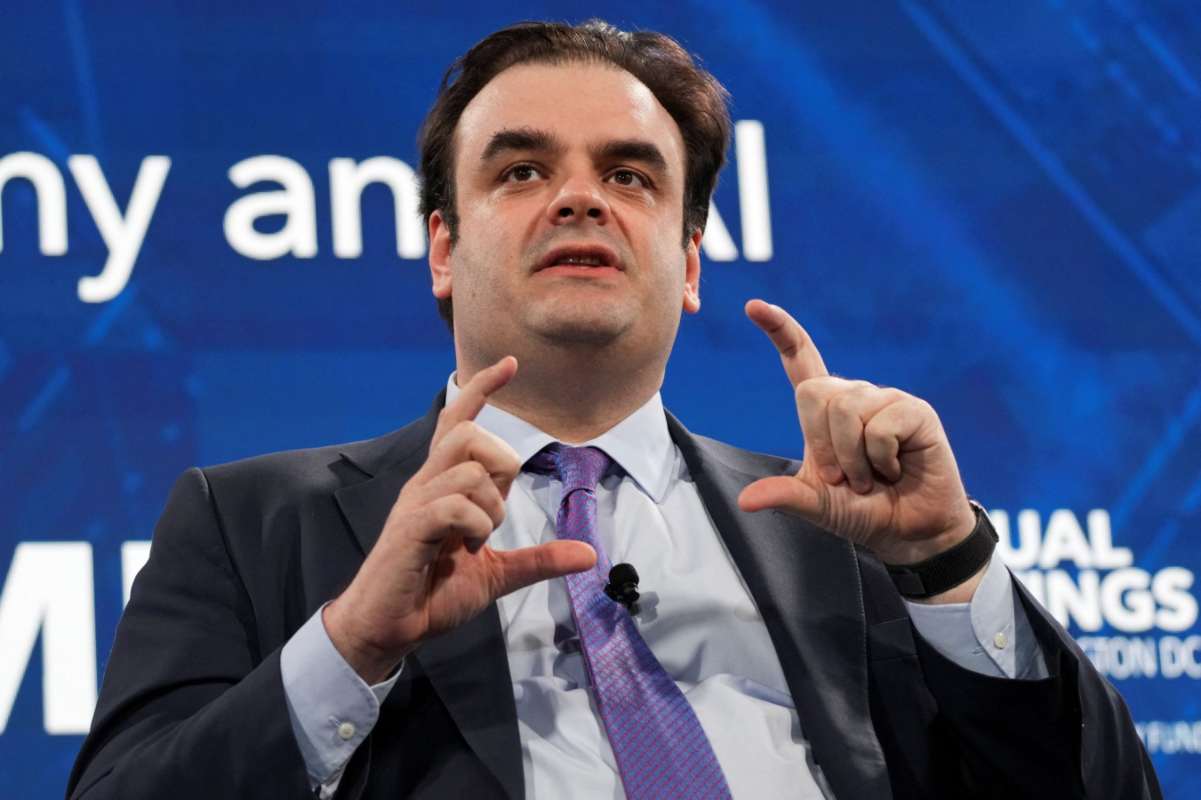
The Greek government is preparing a three-pronged economic push in September, with Economy and Finance Minister Kyriakos Pierrakakis putting household income, private debt and international investment at the centre of the agenda.
His message ahead of the Thessaloniki International Fair is clear: the government does not want to return to a model based primarily on temporary handouts, but to pursue permanent interventions aimed at reducing tax burdens and increasing disposable income.
“The answer cannot be limited to a policy of handouts,” Pierrakakis said.
He outlined the broader strategy in three parts:
“What is needed is a plan that supports income today, addresses burdens from the past and creates more opportunities for the future.”
Thessaloniki Fair: Permanent measures for millions of citizens
The first major milestone will be the Thessaloniki International Fair, where Prime Minister Kyriakos Mitsotakis is expected to unveil the government’s economic programme.
Pierrakakis has already identified the groups at the heart of the plan: pensioners, employees, self-employed professionals and farmers.
“The aim is to ease the family budget, reduce tax burdens and strengthen disposable income,” he said.
The crucial element, however, is that the measures are intended to be permanent.
“With permanent measures, within the real capabilities of the economy,” Pierrakakis stressed.
The government is therefore seeking to draw a clear distinction between one-off financial support and structural tax changes that continue to benefit households over time.
September 21: New move on first-home protection
The second front comes with a specific date.
On September 21, a new measure aimed at protecting primary residences through the out-of-court debt settlement mechanism is due to come into effect.
“September, however, does not end with the Thessaloniki International Fair,” Pierrakakis said.
“On the 21st of the month, another important measure in our private-debt plan comes into effect, with the protection of the primary residence through the out-of-court mechanism.”
The intervention is part of a broader government strategy aimed at dealing with accumulated private debt and providing viable restructuring options for borrowers.


Private debt is also a social issue
Pierrakakis is also giving the issue a broader political dimension.
The government’s approach, he argues, cannot treat bad debt solely as a banking or fiscal problem.
“Addressing private debt is an economic issue, but also a deeply social one,” he said.
The wider strategy includes changes to the out-of-court settlement mechanism and other measures designed to make debt restructuring more accessible to eligible borrowers.
The underlying objective is to allow households carrying unsustainable legacy debt to regain financial stability without undermining payment discipline.
The bigger surprise: Athens targets international funds
The third part of the September agenda may prove the most significant from an investment perspective.
Athens wants to attract international asset managers not simply to invest in Greek assets, but to establish genuine operations in Greece.
That means offices, executives, specialised staff and investment expertise physically located in Athens.
“We have created a modern and competitive framework so that international investment-fund managers choose Greece as a base for real activity,” Pierrakakis said.
The ambition goes considerably further than attracting another round of foreign capital.
The government wants Greece to capture part of the financial industry that manages that capital.
Banks, lawyers, consultants and tech around the funds
The arrival of international asset managers could generate a broader ecosystem of high-value services.
Pierrakakis specifically points to legal, auditing, banking, consulting and technology services that can develop around international fund-management operations.
In practical terms, the objective is not merely to have more foreign money flowing through Greece.
It is to have part of the industry managing that money operating from Greece.
That distinction could be significant for Athens’ ambitions to strengthen its position as a regional financial and business centre.
“Significant developments” expected within weeks
Pierrakakis is also signalling that announcements may not be far away.
Without yet identifying individual international groups, he says developments are expected shortly.
“In the coming weeks, we expect significant developments in this direction,” the minister said.
This is now one of the key elements to watch: which international asset managers may be considering an Athens presence and what form their investment could take.
September’s three-front economic agenda
The government’s September strategy therefore rests on three pillars:
- Permanent measures targeting income and taxation
- Primary-residence protection and private-debt restructuring
- Attraction of international asset managers with real operations in Greece
Pierrakakis sums up the political philosophy behind the plan in simple terms:
“More money should remain with families. Someone carrying a burden from the past should be able to make a new start. Investments that create jobs and opportunities should come to Greece.”
A crucial September for the Greek economy
September is therefore shaping up as a pivotal month for the government’s economic policy.
First comes the Thessaloniki International Fair and the package targeting household income and taxation.
Then, on September 21, comes the intervention concerning primary residences and private debt.
At the same time, the government is signalling potentially important announcements concerning international investment firms establishing operations in Athens.
The broader political challenge is straightforward: translating Greece’s improved macroeconomic performance into more tangible gains for households and businesses.
As Pierrakakis puts it:
“We want every step forward for the economy to become a step forward in citizens’ lives as well.”
Source: pagenews.gr