Mitsotakis Draws Red Line With Ankara: “Turkish Reactions Will Not Change Our Plans”
 ΧΡΟΝΟΣ ΑΝΑΓΝΩΣΗΣ 6 '
Πηγή Φωτογραφίας: eurokinissi/Mitsotakis Draws Red Line With Ankara: “Turkish Reactions Will Not Change Our Plans”



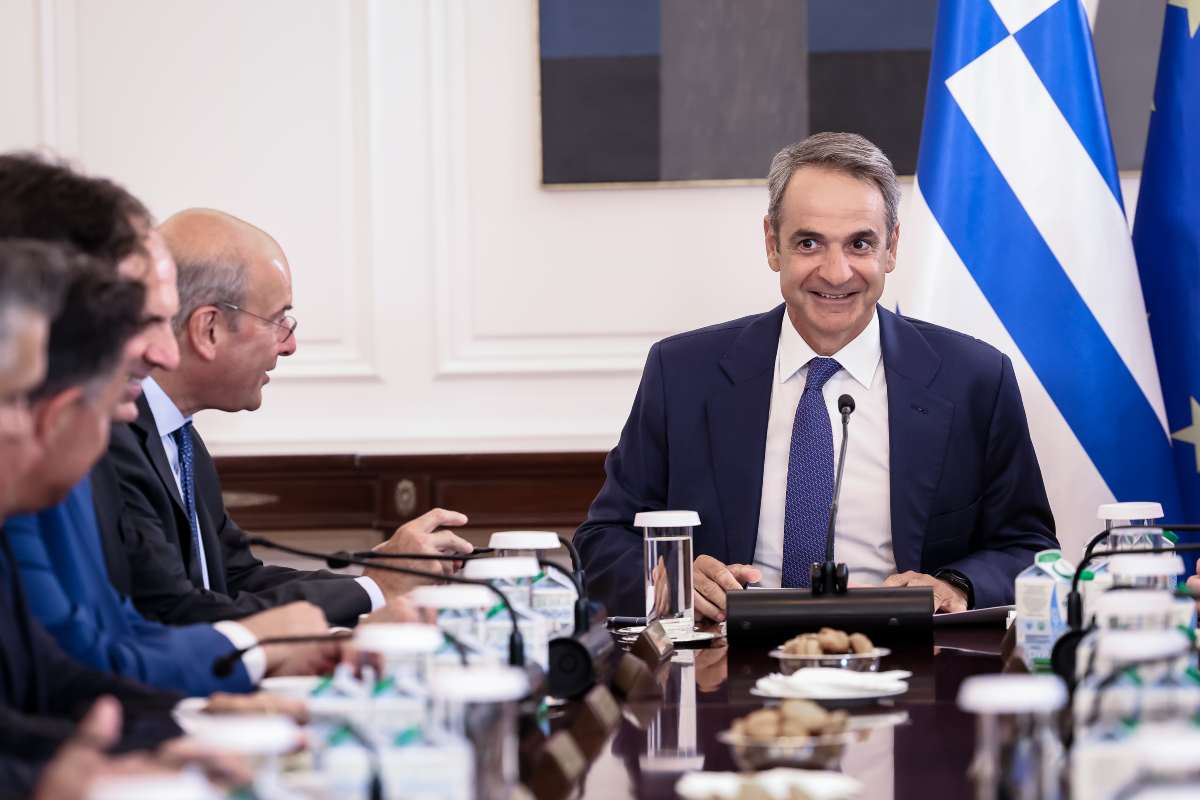
Prime Minister Kyriakos Mitsotakis sent a clear message to Ankara that Turkish objections will not act as a veto over Greek policy, while firmly restating Athens’ red lines in Greek-Turkish relations.
Speaking at the Cabinet meeting, Mitsotakis addressed Turkey’s latest reactions to Greek initiatives, including the country’s new Special Spatial Planning Frameworks for renewable energy and tourism.
“The reactions from the east that follow our own actions do not affect our planning,” the prime minister said.
The statement comes at a sensitive moment in Greek-Turkish relations. Athens and Ankara continue to maintain channels of communication, but fundamental disagreements remain over the Aegean and the Eastern Mediterranean.
Mitsotakis: Greek sovereignty stems from international law
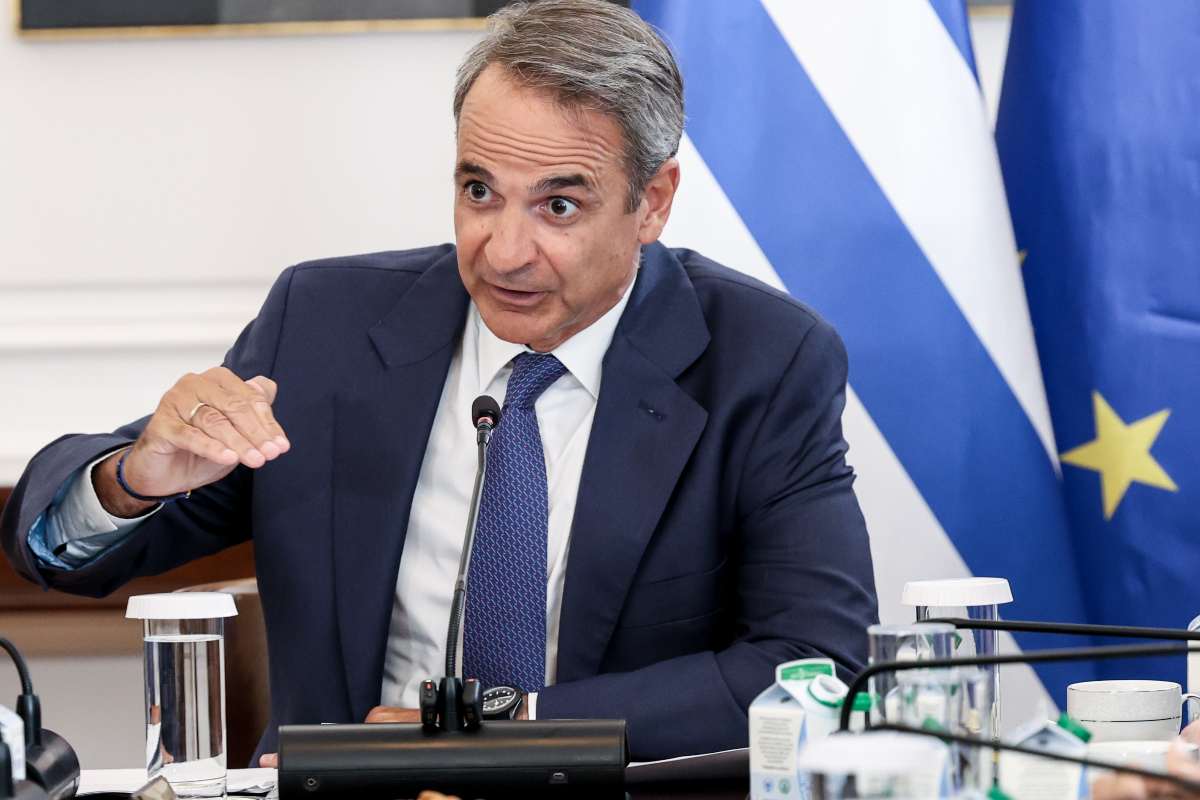
The prime minister went further, directly linking Greece’s policy to sovereignty and international law.
“The areas under Greek sovereignty derive from international law, and we are ready to defend them at any moment,” Mitsotakis said.
Athens is seeking to make a clear distinction between two elements of its Turkey policy.
On the one hand, Greece wants dialogue, lower tensions and open channels of communication.
On the other, the government insists that dialogue cannot mean suspending Greek initiatives or allowing Turkish objections to determine where and how Greece exercises its sovereign rights.
For Athens, therefore, dialogue does not mean inaction.
“We discuss nothing beyond the continental shelf and EEZ”
Mitsotakis was equally explicit about what Greece is prepared to discuss with Turkey.
“We want good relations with our neighbours. However, we do not discuss anything beyond the delimitation of the continental shelf and the EEZ in the Aegean and the Eastern Mediterranean,” he stressed.
The statement reaffirms Greece’s longstanding position that the only bilateral dispute that can be negotiated is the delimitation of maritime zones.
Athens rejects Turkish efforts to broaden the agenda to questions that Greece regards as matters of sovereignty.
The political message is straightforward: negotiations may take place over maritime delimitation, but not over Greek sovereignty.
What triggered Ankara’s latest reaction
The latest dispute is linked to Greece’s Special Spatial Planning Frameworks for Renewable Energy Sources and Tourism.
Turkey has objected to elements of Greek planning that, according to Ankara, involve geographical areas whose sovereignty it disputes.
The Turkish Defence Ministry has also reiterated that Ankara intends to continue protecting what it describes as Turkey’s rights and interests in the Aegean.
Athens rejects that reasoning and argues that its sovereign rights and territorial status are firmly established under international law.
Mitsotakis’ intervention was therefore designed to make one point particularly clear: a Turkish objection will not be enough to stop Greece from implementing its own policies.
Athens’ new doctrine: Greece acts, Turkey reacts
There is also a broader strategic context behind the prime minister’s remarks.
Mitsotakis had already outlined in June what he sees as a shift in the balance of initiative between Athens and Ankara.
“Now, for the first time, Greece is setting the agenda and Turkey, to some extent, is reacting,” he said at the time.
That concept is increasingly central to the government’s narrative on Greek-Turkish relations.
Athens does not want Greece to be seen merely as responding to Turkish initiatives.
Instead, it wants to pursue its own strategic agenda and then manage Ankara’s reaction without abandoning its plans.
Marine spatial planning, parks and energy south of Crete
The government places the latest developments within a broader sequence of Greek strategic initiatives.
These include Marine Spatial Planning, the creation of marine parks in the Aegean and Ionian seas, energy exploration south of Crete, island electricity interconnections and Greece’s maritime delimitation agreement with Egypt.
The government argues that these initiatives address long-standing strategic and regulatory issues that previous administrations had left unresolved.
Mitsotakis has repeatedly stressed that Greece does not require another country’s permission to exercise its lawful rights.
In July, he put the argument particularly sharply:
“I do not see us asking anyone for permission right now.”
The prime minister referred specifically to electricity interconnections, marine parks and Greece’s Marine Spatial Planning as examples of policies Athens intends to pursue irrespective of Turkish objections.
Dialogue without retreat
At the same time, the government is not abandoning its policy of keeping channels open with Ankara.
That is the second part of the Mitsotakis strategy.
Athens wants stable relations, fewer unnecessary tensions and continued communication with Turkey.
But the government insists that de-escalation must not be confused with concessions.
The distinction is becoming increasingly important to Athens’ foreign-policy narrative: dialogue is considered useful precisely because it reduces the risk of crisis, but it does not give Turkey a veto over Greek decisions.
The message ahead of the Thessaloniki Fair
The timing of Mitsotakis’ intervention also carries domestic political significance.
The government is entering the final stretch ahead of the Thessaloniki International Fair, where the prime minister is expected to set out his economic and political roadmap.
Today’s Cabinet agenda includes the completion of the “Greece 2.0” Recovery Plan, inflation and the cost of living, the new school year and spatial-planning reforms.
Yet Mitsotakis chose to devote a distinct part of his intervention to Turkey.
That decision underscores the importance the government attaches to projecting a clear line on national issues as Greece enters a politically intense period.
The message to Ankara is therefore twofold.
Greece wants dialogue and stable relations with Turkey.
But Turkish reactions will not determine Greek policy.
And when Athens and Ankara eventually sit down to discuss their outstanding differences, Mitsotakis insists that Greece’s negotiating agenda remains strictly defined:
“We do not discuss anything beyond the delimitation of the continental shelf and the EEZ
Source: pagenews.gr
Διαβάστε όλες τις τελευταίες Ειδήσεις από την Ελλάδα και τον Κόσμο