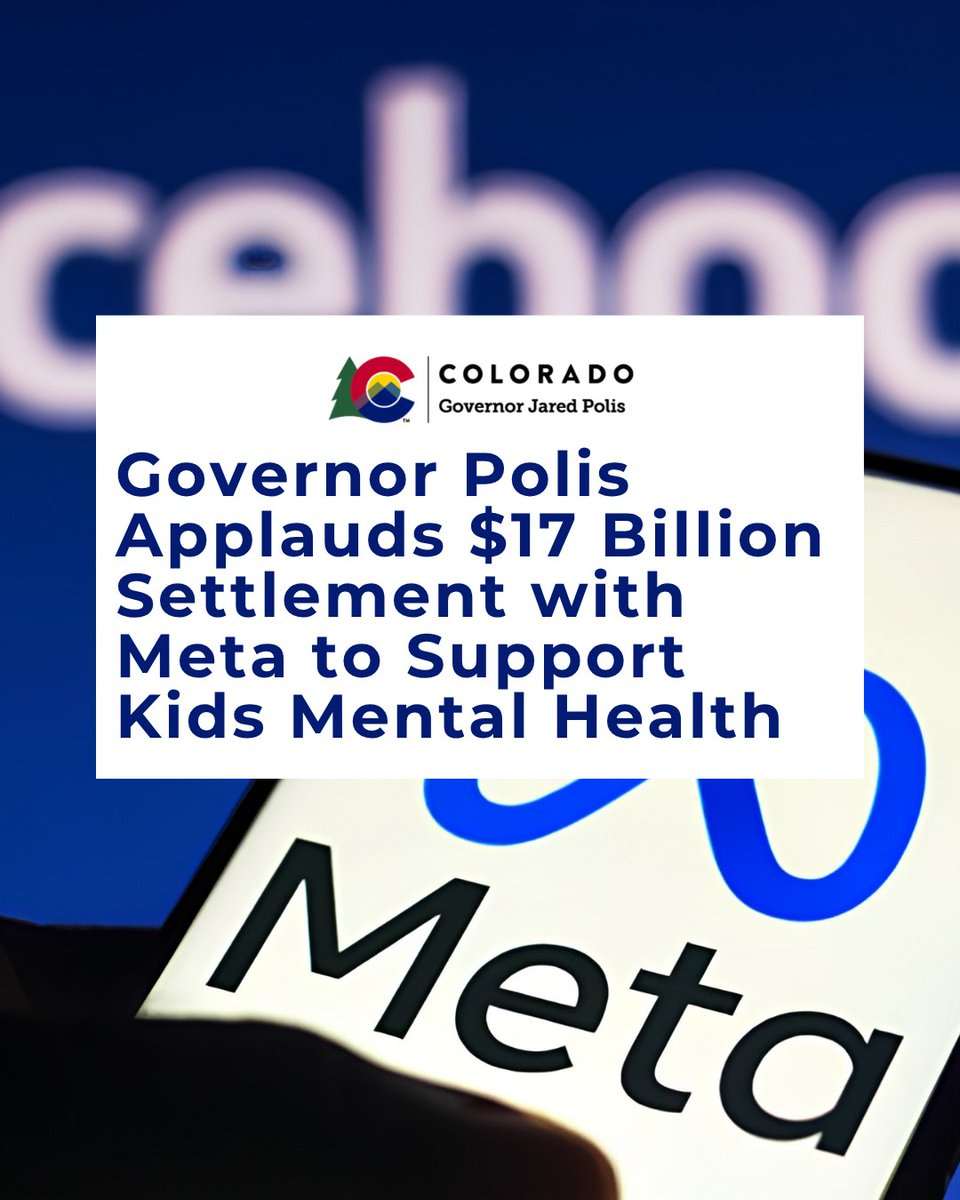
Meta is being forced to change how Instagram and Facebook operate for millions of underage users in a settlement that could become a turning point for the entire social media industry.
The parent company of Facebook and Instagram reached an agreement with dozens of U.S. states that had accused it of designing platform features in ways that encouraged excessive use among children and teenagers while failing to adequately address the risks involved.
State attorneys general have described the settlement as worth about $17.1 billion, while Meta says the broader financial framework could reach roughly $18 billion because part of the payments depends on specific conditions.
The agreement still requires court approval.
Two Hours a Day and a Midnight Cutoff
The most important part of the settlement is not the money.
It is the product redesign.
For users under 18, the framework includes:
- a two-hour daily usage limit,
- restricted access from midnight to 6:00 a.m.,
- muted notifications during school hours,
- stricter age-assurance tools,
- stronger parental controls,
- tighter restrictions on features seen as encouraging compulsive use.
The agreement also provides for independent compliance monitoring, meaning Meta’s commitments will not rely solely on voluntary corporate enforcement.
Why States Took Meta to Court
The case followed a years-long investigation by U.S. attorneys general.
States argued that features including infinite scroll, repeated notifications, personalized recommendations and other engagement mechanisms were designed to keep young users on the platforms for as long as possible.
Meta was also accused of allowing children under 13 onto its services and of failing to apply sufficient protections around minors’ data and platform access.
The company denied wrongdoing, but ultimately chose to settle after the case reached one of the most significant trials yet over the impact of social media on children.


Phil Weiser: “This Is the First Step”
Colorado Attorney General Phil Weiser, one of the leading figures in the case, argued that the agreement matters because the protections can be introduced without years of appeals.
“This case was always about protecting kids and getting those protections in place,” he told PBS NewsHour.
Weiser said the goal goes beyond simply reducing screen time.
It is also about limiting the features that repeatedly draw users back into the platform.
“Having a cap on total time and not having notification alerts that get people back on the platform can make a difference,” he said.
Meta Calls on TikTok and YouTube to Follow
Meta is now trying to turn the settlement into a broader industry standard.
The company’s Chief Legal Officer, C.J. Mahoney, directly called on TikTok and YouTube to adopt similar protections.
“Teens move fluidly across dozens of apps. We need an industry-wide solution,” Mahoney said.
Meta wants rival platforms to introduce comparable daily limits, nighttime restrictions and age-assurance systems.
There is also a major financial incentive built into the agreement.
According to Meta, around $5.3 billion of the broader settlement framework depends on YouTube and TikTok adopting similar measures and making comparable financial commitments.
“If They Don’t Come to the Table, They’re Next”
U.S. regulators are being even more direct.
Weiser said other major platforms could face litigation if they refuse to adopt similar protections.
“If YouTube or TikTok is unwilling to come to the table and do something on the order of what we just got here, then we will take them to trial too,” he said.
Snapchat is also in regulators’ sights as part of the broader debate over minors and social media use.
The message is clear: Meta may be the first, but regulators do not intend for it to be the last.
Independent Oversight Will Police Compliance
One of the biggest questions is how regulators will make sure the new rules are actually enforced.
The agreement establishes independent oversight of Meta’s compliance.
Weiser stressed that the restrictions are not optional.
“This is not an option. It’s a mandate. It’s enforceable by a court,” he said.
That clause matters because critics have long argued that many platform “well-being” tools were either easy to bypass or depended too heavily on users voluntarily activating them.
The Big Loophole: The Algorithms Stay
The settlement does not eliminate the core of Meta’s business model.
The company will still be allowed to use personalized recommendations and much of the algorithmic machinery that drives engagement.
That has drawn criticism from digital-safety advocates who argue that time limits are important, but do not fully change the incentive structure behind social platforms.
Some product features tied to autoplay and recommendations are not being banned outright in every case.
That leaves open the central question of whether guardrails can truly offset a system still designed to maximize user attention.
The Big Tobacco Comparison
U.S. attorneys general are increasingly comparing the fight against social media companies to the legal battles against Big Tobacco in the 1990s.
Those tobacco settlements did more than impose financial penalties.
They reshaped advertising, regulation and public expectations across an entire industry.
Weiser argues the Meta settlement could become the beginning of a similar shift.
“This is the start of how we start protecting our kids,” he said.
States have already described the agreement as one of the largest consumer-protection settlements in U.S. history outside the major tobacco cases.
Meta Is Not Done With the Courts
The settlement does not end all of Meta’s legal problems.
The company still faces lawsuits from school districts, families and individual plaintiffs over the alleged effects of social media use on children and teenagers.
Earlier in 2026, a U.S. court had already found Meta and YouTube liable in a case involving the allegedly addictive design of social platforms for minors.
That means this settlement may be historic, but it does not close the wider legal battle over youth safety and Big Tech.
This Is Bigger Than Instagram
The real significance of the settlement lies beyond the headline number.
For the first time, a concrete U.S. regulatory model is emerging under which social media platforms may be required to design their products differently when the user is a minor.
Until now, the basic business equation of social media has been simple:
more time on the app means more engagement, more data and more advertising value.
This framework tries to put an enforceable limit on that equation.
If TikTok, YouTube and Snapchat are eventually pushed into similar rules, the result will no longer be a Meta-specific settlement.
It could become the beginning of a different internet for minors.
And it may mark the first serious shift of responsibility away from parents and young users alone — and toward the companies that design the systems capturing their attention.
Source: pagenews.gr