The war in Ukraine is entering a more dangerous phase.
Not because another weapons package has been announced.
But because the West is beginning to transfer something potentially more strategic than finished missiles:
the know-how to produce them.
Britain said on August 24 that it would allow MBDA to release classified information on British components of the French SCALP missile so that local assembly lines could eventually be established in Ukraine in cooperation with France. SCALP is the French version of the Storm Shadow cruise missile and belongs to the same Franco-British weapons family.
For Moscow, that crosses a different threshold.
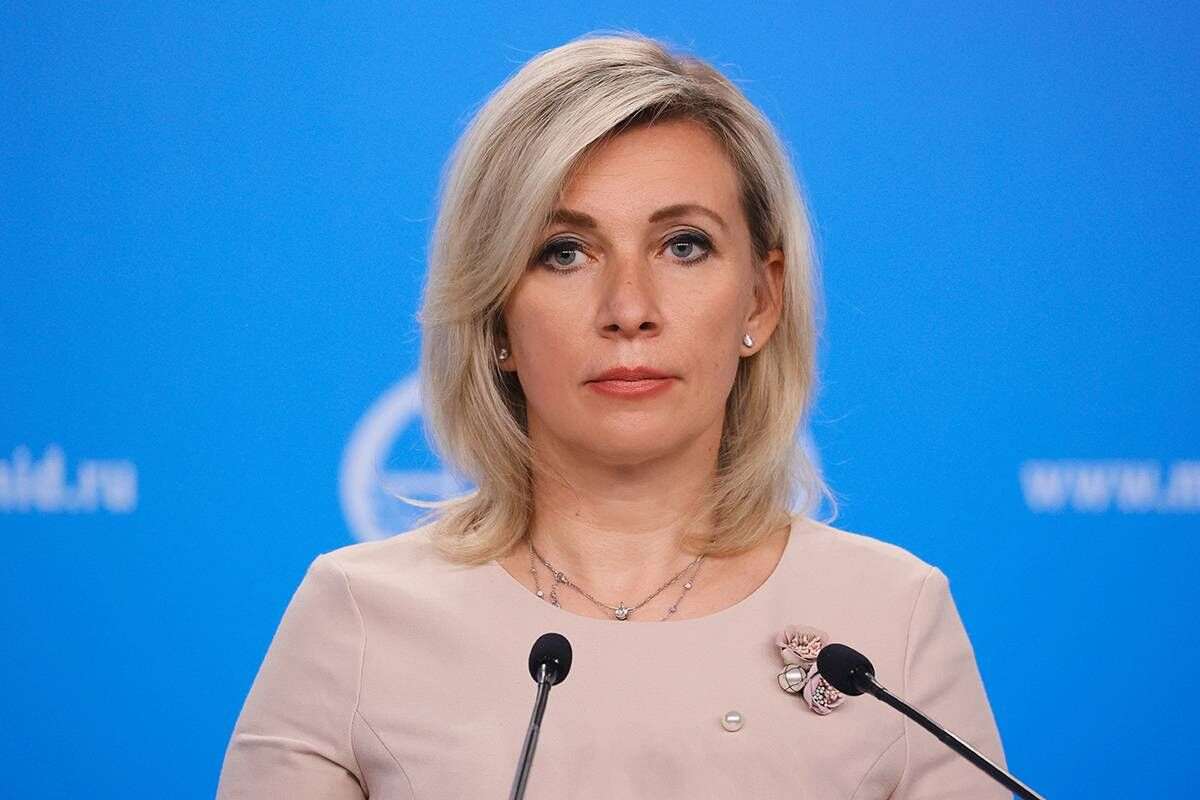
Russian Foreign Ministry spokeswoman Maria Zakharova said Britain and France were “playing with fire” by providing Ukraine with sensitive missile technology and warned of “unpredictable consequences” for London and Paris.
She then went further.
“Russia could strike British military targets inside and outside Ukraine”, she warned, presenting such action as a possible response to Ukrainian strikes on Russian territory using British-supplied missiles.
The Threat Changes the Level of the Confrontation
The wording matters.
Moscow has repeatedly warned Western governments that supplying Ukraine with advanced weapons represents escalation.
This time, however, the threat is more explicit.
It is not only about retaliating against Ukrainian targets.
It refers to British military assets.
And, according to Zakharova, potentially to targets beyond Ukrainian territory.
She also urged London to abandon what she described as its “hostile stance” toward Russia and warned that continued escalation could take the conflict to an “entirely new level.”
That phrase may be even more important than the threat itself.
Because it captures the growing risk that a Russia-Ukraine war could gradually turn into a more direct Russia-NATO confrontation.
What Britain Is Actually Giving Ukraine
A crucial distinction is needed.
London did not simply announce another delivery of Storm Shadow missiles.
The British government approved the release of classified information relating to British components of the SCALP system so that France and Ukraine can move toward local assembly.
That is strategically more significant.
A missile shipment can be exhausted.
A production line creates enduring military capacity.
And that is precisely the transition Moscow is reacting to.
Storm Shadow and SCALP: One Industrial Ecosystem
Storm Shadow and SCALP-EG are essentially British and French variants of the same long-range cruise missile family.
They share a common industrial and technological base through MBDA.
Ukraine already uses this class of weapon for deep strikes.
The new development changes the relationship.
Kyiv would no longer depend entirely on how many missiles Western governments are willing to transfer from existing inventories.
The objective is to give Ukraine at least part of the industrial capability needed to sustain production.
That creates a very different strategic equation.


Why Moscow Is Reacting So Aggressively
From Russia’s perspective, technology transfer reduces one of the main constraints on Ukraine’s war effort:
dependence on Western stockpiles.
Production connected to Ukraine could potentially mean:
greater availability,
faster replenishment,
more operational autonomy,
and a stronger ability to conduct deep strikes.
For Moscow, that would mean military infrastructure, command centers, storage sites and air bases deeper inside Russian territory could remain under threat even if Western governments later decide to slow direct deliveries.
France Moves Deeper Into the Equation
Paris has already agreed to make its technical contribution to the SCALP program available within the framework of cooperation with Ukraine.
That means this is not merely a British initiative.
It is Franco-British.
And that matters to Moscow.
Russia now sees two European nuclear powers moving beyond simple missile deliveries toward helping Ukraine establish a more durable industrial capability.
That represents a different level of military involvement.
Europe Is Moving From Supply to Co-Production
The development fits into a broader shift.
Europe is increasingly treating Ukraine not only as a recipient of weapons.
It is beginning to treat Ukraine as part of the future European defense-industrial base.
At the August 24 meeting of the Coalition of the Willing, allies committed to strengthening air defense, increasing cooperation with Ukraine’s defense industry and expanding relevant technology transfers.
That is the real strategic backdrop to Moscow’s latest warning.
Russia is not only seeing more Western missiles.
It is seeing Ukraine being integrated more deeply into Western military production.
London’s Red Line
Britain, for its part, continues to insist that support for Ukraine will not be reduced.
British Prime Minister Andy Burnham said during his visit to Kyiv that the United Kingdom remained firmly behind Ukraine and argued that the international community should increase support ahead of the winter.
For now, neither side is showing signs of backing down.
Moscow is escalating its rhetoric.
London is expanding military and technological support.
And the margin for miscalculation is narrowing.
The Critical Question: What Counts as a “British Military Target”?
This is the most dangerous ambiguity.
Zakharova did not define exactly what Moscow considers a British military target outside Ukraine.
That ambiguity is probably deliberate.
In theory, it could refer to:
British military personnel,
military installations,
logistics hubs,
training centers,
or other infrastructure linked to support for Ukraine.
Russia does not need to define the target set more precisely for the threat to have deterrent value.
The uncertainty is part of the pressure.
NATO and the Gray-Zone Problem
The larger problem for the Alliance is that any Russian response does not have to take the form of an overt missile strike on British territory.
It could instead remain below the threshold of conventional war:
cyberattacks,
sabotage,
electronic interference,
attacks on infrastructure,
or other hybrid operations.
That may be the more dangerous scenario.
Because it complicates the question of when collective NATO action becomes necessary.
Political EU: Paris and London Raise the Risk — and the Deterrence
From the European perspective, there is another reading.
The ability of Ukraine to strike Russian military assets at greater depth is seen as a form of deterrence.
The more Russian air bases, depots and command facilities become vulnerable, the higher the cost of continuing the war for Moscow.
The European strategy is therefore not simply about “more weapons.”
It is about increasing the military and economic cost of the war for Russia while reducing Ukraine’s dependence on slow political decisions over each individual weapons shipment.
But that same strategy also increases the risk of direct confrontation.
The War Is Moving From “Who Supplies Missiles?” to “Who Can Build Them?”
This is the real turning point.
In the first phase of the war, the central question was:
Will the West give Ukraine long-range missiles?
Then it became:
Will Kyiv be allowed to use them deep inside Russia?
Now the question is:
Will the West help Ukraine build them itself?
That is far more strategic.
Weapons transfers are temporary political decisions.
Industrial technology transfer creates permanent military capability.
That is exactly what Moscow fears.
And it is increasingly what Paris and London appear willing to support.
That is why Zakharova’s warning should not be read simply as another piece of hardline Kremlin rhetoric.
It is a response to a deeper change in the war:
Ukraine is gradually moving from being a customer of Western weapons toward becoming a producer within the Western defense ecosystem.
If that process accelerates, the next line of confrontation between Russia and Europe will not only run across the battlefield.
It will run through factories, classified technology and missile supply chains.
Source: pagenews.gr