The Thessaloniki International Fair is shaping up to be more than another platform for individual economic announcements.
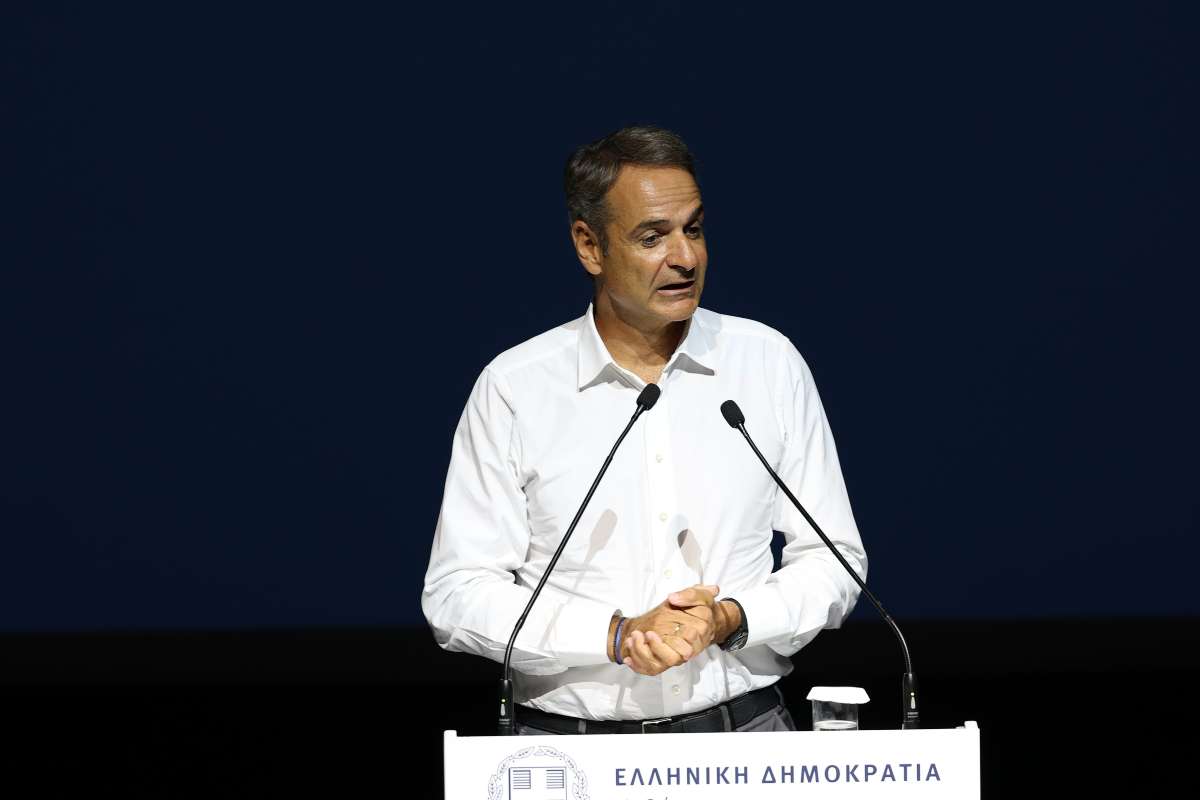
Prime Minister Kyriakos Mitsotakis is preparing to use TIF 2026 to unveil a broader strategy for incomes, taxation and the middle class, with measures taking effect primarily in 2027 and a political and economic horizon extending to 2030.
At the heart of the plan is a package of permanent interventions expected to exceed €1 billion, while estimates suggest the overall fiscal envelope could move considerably higher as the final measures are locked in.
The political objective is increasingly clear: shift the debate from Greece’s improving macroeconomic indicators to one question that matters directly to voters — how much money ultimately remains in their pockets.
The central bet: Higher disposable income
The government’s strategy revolves around boosting net household income through several channels rather than relying on a single headline benefit.
Measures under consideration include tax relief for businesses and professionals, support for families and farmers, interventions benefiting pensioners and a further reduction in social security contributions.
Another 0.5-percentage-point reduction in contributions is planned for 2027, lowering non-wage labour costs while potentially increasing employees’ net income.
At the same time, public-sector salaries are moving into a new framework under which they increase in connection with adjustments to the statutory minimum wage.
The government wants this to be seen as a structural mechanism for rising incomes rather than a return to one-off benefits.


No full 13th salary — but another door opens
This is where one of the most politically sensitive scenarios emerges.
The government continues to reject the full restoration of the 13th salary for public-sector workers, citing a permanent fiscal cost estimated at around €1.5 billion.
But a smaller, targeted additional payment for public employees is reportedly under consideration.
The idea would resemble the model used for additional support to pensioners rather than restoring an entire extra monthly salary.
No final decision has been announced, and the amount — if the proposal ultimately survives the final fiscal calculations — remains open.
Politically, however, the significance is already evident.
Such a move would represent a compromise: the government would continue to reject the expensive restoration of the 13th salary while acknowledging the demand for additional income support among public employees.
Pensioners remain at the heart of the package
Pensioners are another key constituency in the government’s calculations.
The plan being discussed includes a potential increase in the permanent annual payment received by eligible pensioners, with scenarios pointing to a higher benefit and possibly a broader pool of recipients.
The broader government strategy is to combine pension increases with permanent targeted interventions rather than return to large universal payments.
This allows Athens to direct fiscal resources toward lower and middle incomes while maintaining tighter control over permanent expenditure.
Minimum wage heading above €950
The private sector forms another pillar of the strategy.
The government remains committed to taking the statutory minimum wage above €950 in 2027, with Mitsotakis having already signalled that the final level could exceed the original target if economic conditions permit.
The change now has broader consequences.
Because public-sector wage adjustments are increasingly linked to the minimum wage, further increases affect not only private-sector workers but also the trajectory of government salaries.
This creates a wider income mechanism spanning both parts of the labour market.
Businesses could also see significant tax relief
The TIF package is not expected to focus exclusively on households.
Among the scenarios being examined are a reduction in the corporate tax prepayment, possible abolition of the business levy for legal entities and adjustments to the presumptive taxation system for self-employed professionals.
Tax compliance could become an important criterion in determining who receives additional relief.
A further reduction in social security contributions would also lower labour costs for employers.
The political bargain the government wants to establish is straightforward: businesses receive a lighter tax and contribution burden while being encouraged to channel part of the benefit into higher wages and investment.
The middle class becomes the real political target
Behind the individual measures lies a much broader electoral constituency.
Self-employed professionals, small and medium-sized businesses, private-sector employees, families with children, public servants and pensioners face different economic pressures but share a common concern: disposable income.
That explains why the government appears inclined to divide the available fiscal space across multiple permanent interventions instead of concentrating it in one spectacular measure.
The objective is to create a broader group of beneficiaries.
And that makes the TIF package as much a political strategy as an economic one.


The other battle: Mitsotakis versus Tsipras on economic credibility
At the same time, the government is escalating its attack on the economic programme presented by former prime minister Alexis Tsipras.
Athens has questioned both the overall cost of his proposals and the revenues that would supposedly finance them.
The government has particularly challenged the expected proceeds from higher taxation of the wealthiest taxpayers, arguing that the numbers do not generate anything close to the revenue required to finance the wider programme.
This reveals the second political battlefield at TIF.
The argument will not simply be about who promises more.
It will increasingly be about who can prove that the promises can actually be financed without destabilising the public finances.
TIF becomes a rehearsal for 2027
This is ultimately the larger political significance of Mitsotakis’ appearance in Thessaloniki.
TIF 2026 is not only about the next budget.
The government wants to present a multi-year economic narrative extending to 2030, linking higher wages, lower taxes, investment and targeted social support with Greece’s broader economic transformation.
For Mitsotakis, the challenge is to convert fiscal stability and economic growth into improvements voters can actually feel.
That is why the possible additional payment for public-sector workers matters beyond its eventual size.
It could encapsulate the philosophy behind the entire package: no return to the large universal bonuses of the past, but a redistribution of available fiscal space through targeted, permanent measures designed to put more money into the hands of a much broader section of society.
Source: pagenews.gr