Greece is seeking to redefine culture not simply as a field of preservation, but as a strategic development asset — and Thessaloniki is emerging as one of the clearest examples of that shift.
Around €42 million in Recovery and Resilience Facility funding has been directed to cultural projects across Thessaloniki, accelerating the restoration of historic monuments, upgrading major cultural institutions, improving accessibility and pushing forward the digital transformation of the city’s cultural infrastructure.
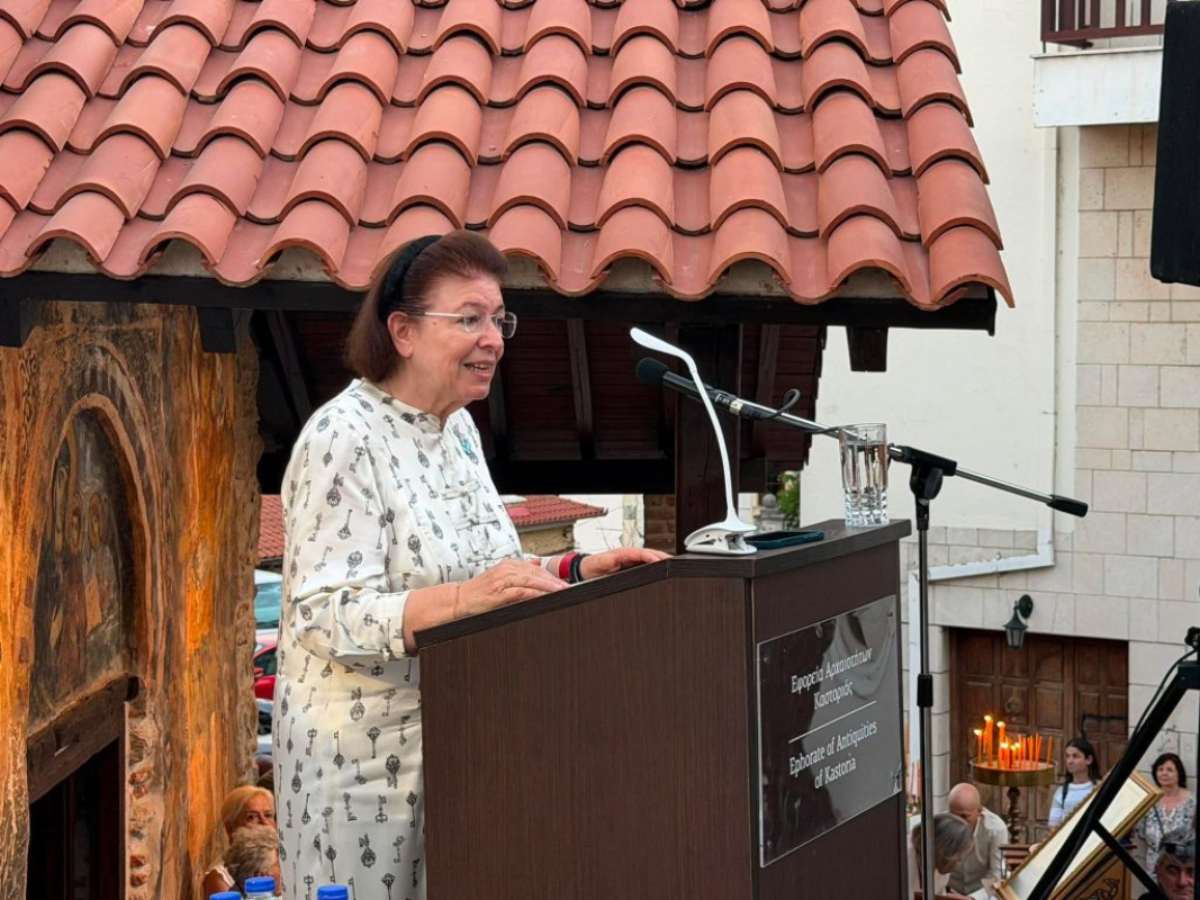
Culture Minister Lina Mendoni, speaking at an event held at the MOMus Museum of Contemporary Art during the 90th Thessaloniki International Fair (TIF), presented the investments as part of a broader strategy connecting heritage with sustainable tourism, urban regeneration and the local economy.
A €42 million transformation already visible across the city
The impact is increasingly visible in Thessaloniki’s urban landscape.
Projects include the restoration of the Alcazar, work at the nearby Bey Hamam, interventions at the city’s Byzantine monuments, the renovation of the State Conservatory of Thessaloniki and upgrades at the Thessaloniki Concert Hall.
The programme also extends into contemporary culture, including the new MOMus-Air, a permanent contemporary-art presence at Thessaloniki’s “Makedonia” Airport.
Taken together, the investments point to a broader ambition: to connect Thessaloniki’s extraordinary historical depth with the infrastructure of a modern European cultural destination.
Mendoni: The strategy began before the Recovery Fund
Mendoni stressed that the investment programme was not assembled after European funding became available.
According to the minister, the Culture Ministry had already mapped cultural needs across Greece from 2019.
“At the Ministry of Culture, as early as 2019, we designed 13 maps, one for each Region, with the Regional Units as subsets. We recorded what needed to be done, what local communities and cultural institutions were asking for, and which interventions would ultimately benefit each area,” she said.
That planning created a pipeline of projects that could move quickly once financing became available.
The Recovery Fund accelerated projects by at least four years
This is where the Recovery and Resilience Facility became decisive.
Mendoni said the funding mechanism allowed Greece to bring forward projects that would otherwise have had to wait years for the next EU financing cycle.
“The Recovery Fund came to finance projects which, under normal circumstances, would have moved forward at least four years later, at best, when the new NSRF funding period opened,” she said.
Projects that were already mature — or could rapidly be brought to maturity — were therefore able to enter implementation much sooner.
The significance of the €42 million investment is consequently not only financial. It also represents a compression of the time between planning and delivery.
Alcazar and Bey Hamam reconnect heritage with the city
Some of the most visible interventions are located along Thessaloniki’s central Egnatia axis.
The restoration of the Alcazar and work on Bey Hamam are bringing major historic monuments back into the everyday urban landscape, alongside interventions at Byzantine monuments that have been or are being returned to the public.
The strategy reflects a broader approach to heritage investment: restoring a monument can also transform the public space around it.
That means cultural investment can generate effects well beyond conservation — influencing visitor flows, neighbourhood identity, commercial activity and the overall attractiveness of the city centre.
MOMus-Air takes contemporary art to Thessaloniki’s gateway
The new MOMus-Air represents a different model.
By establishing a permanent contemporary-art presence at “Makedonia” Airport, Thessaloniki is bringing culture directly into the visitor journey.
For international travellers, the city’s contemporary cultural identity can now become part of their experience from the moment they arrive.
It is a small but strategically interesting shift: culture moves beyond the museum building and becomes part of the destination itself.
Thessaloniki Concert Hall: Accessibility meets modern production
Investment at the Thessaloniki Concert Hall combines social inclusion with technological and cultural-production capacity.
The venue has achieved comprehensive accessibility, while its new advanced recording centre expands what the institution can produce and host.
The principle is important: cultural infrastructure should not only look better after renovation. It should perform better, reach more people and create more content.
A new chapter for the State Conservatory
The restoration of the historic State Conservatory of Thessaloniki is another major element of the programme.
Alongside the building works, digital tools are being developed to support the institution’s operations.
This combination of restoration and technology illustrates the broader direction of Greece’s cultural policy: preserving historic institutions while giving them the tools required to remain relevant and sustainable in the digital era.
€450 million and 208 cultural projects nationwide
Thessaloniki forms part of a much larger national investment programme.
According to figures presented by Mendoni, approximately €450 million in direct Recovery Fund resources has been channelled into culture across Greece, excluding additional national resources and VAT financed from the national budget.
The Culture Ministry has used those resources to implement 208 projects nationwide.
They range from archaeological sites and monument restoration to new museums, redesigned permanent exhibitions and digital transformation projects.
The scale suggests that the Recovery Fund is leaving behind more than individual restorations. It is reshaping a significant part of Greece’s cultural infrastructure.
Digital transformation becomes a question of survival
Mendoni placed particular emphasis on digital transformation.
The shift is important because digitalisation is increasingly being treated not as an optional technological upgrade but as a condition for the long-term sustainability of cultural institutions.
Museums and cultural organisations are no longer competing only for visitors physically present in a city.
They compete internationally for attention, digital audiences, educational engagement and cultural visibility.
For a country whose cultural capital is one of its strongest global assets, that digital dimension increasingly matters.


From monuments to hotels, restaurants and local businesses
The economic significance of the strategy extends well beyond museum ticket revenues.
A restored monument can increase visitor numbers and time spent in a destination. It can support hotels, restaurants and retail, create new cultural routes and help regenerate neighbourhoods.
That is why the connection between cultural heritage, sustainable tourism and the local economy was central to the TIF discussion.
For Thessaloniki — a city shaped by Byzantine, Ottoman, Jewish, modern Greek and contemporary cultural layers — that diversity can become a significant competitive advantage.
Culture, in other words, can become part of the city’s economic infrastructure.
What happens after the Recovery Fund?
There is, however, a larger policy question ahead.
The Recovery Fund allowed projects that might otherwise have waited years to move forward at exceptional speed.
The real test will be whether that momentum can be sustained after the current European financing cycle comes to an end.
Restored monuments require maintenance. Museums need audiences after their reopening. Digital systems require continuous upgrades.
The next phase will therefore depend not only on securing new capital but on ensuring that today’s investments remain financially, operationally and culturally sustainable.
Thessaloniki is investing in its identity
The €42 million figure ultimately tells a story larger than the amount itself.
It reflects a policy choice to treat culture as development infrastructure rather than a luxury financed only when resources are available.
From the Alcazar and Bey Hamam to MOMus-Air, the Concert Hall and the State Conservatory, Thessaloniki is building a denser, more accessible and more modern cultural network.
And that is the broader message emerging from Mendoni’s TIF presentation: investing in the past can become an investment in the future — when restored heritage is returned to the city, its people and its economy.
Source: pagenews.gr