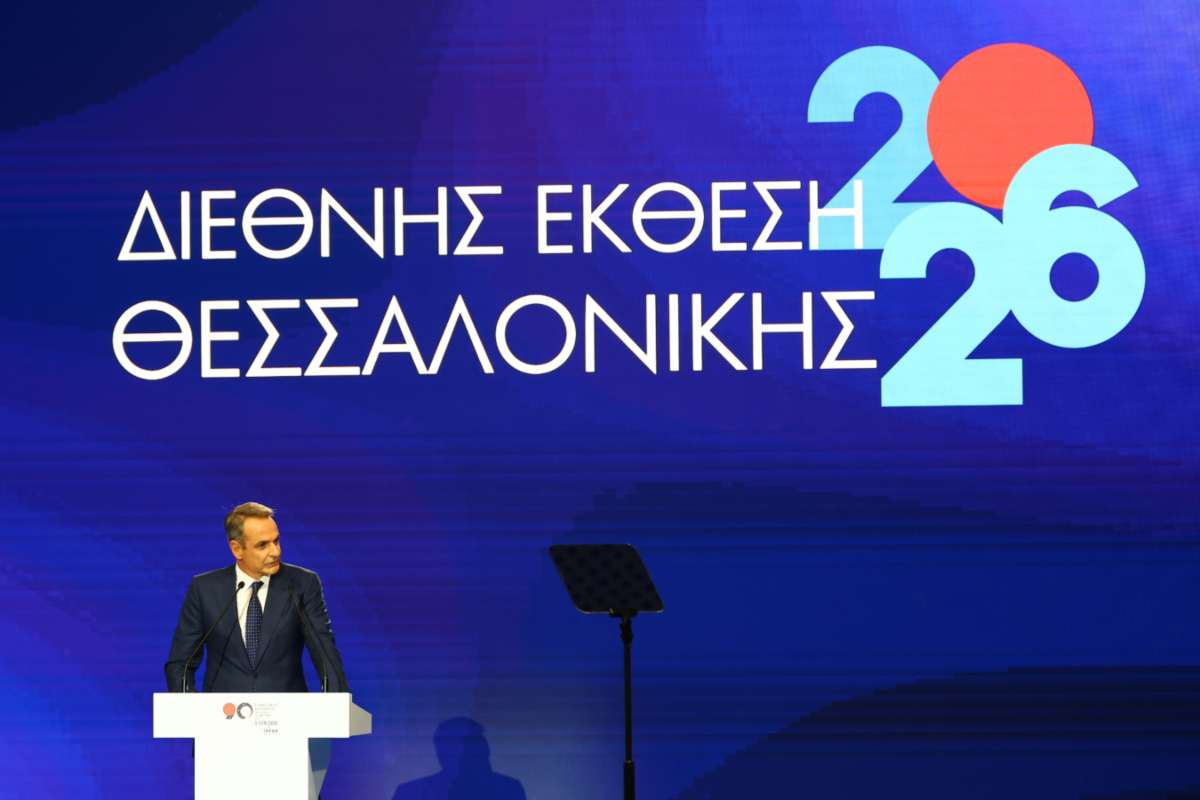
Prime Minister Kyriakos Mitsotakis used the 90th Thessaloniki International Fair to present a broader political contract rather than a conventional one-year package of benefits.
Under the title “Progress and Prosperity Agreement — Growth Dividend for All,” the government set out 12 flagship measures that stretch across 2027, 2028 and 2029 and are designed to turn Greece’s fiscal and economic gains into permanent benefits for households and businesses.
The political logic is clear: almost every major social group is given a specific point of entry into the plan — businesses, self-employed professionals, pensioners, farmers, three-child families, public-sector workers, young couples and new parents.
1. Business levy abolished — first in the regions, then in Attica
The annual business levy will be abolished in two stages.
The first phase comes in 2027 for businesses outside Attica, while full abolition in the Athens region is scheduled for 2029.
The sequencing gives the measure a clear regional-development dimension, with businesses outside the capital receiving relief first.
2. Presumptive taxation eased for compliant professionals
The government is also changing the presumptive taxation framework for self-employed professionals.
Those considered tax-compliant will be exempted from upward adjustments linked to turnover and payroll.
The underlying policy is straightforward: reward compliance while maintaining pressure on tax evasion.
3. Advance corporate tax gradually cut to 50%
Legal entities will see their advance tax payment reduced by five percentage points per year, eventually falling to 50%.
The process is set to begin from tax year 2028.
For businesses, the main benefit is improved liquidity, as less capital will be tied up in advance tax obligations.


4. Pensioners: Annual support rises to €400
The annual payment to pensioners will rise to €400, while eligibility will expand to everyone over the age of 65.
The intervention therefore increases both the amount and the size of the beneficiary pool.
Politically, it is one of the package’s clearest signals to a group that remains particularly exposed to inflation and the legacy of the previous debt crisis.
5. Farmers: Zero income tax up to €20,000
Professional farmers will pay no income tax on annual income of up to €20,000.
The measure is designed to leave more disposable income in the agricultural economy at a time when producers continue to face pressure from energy costs, input prices, animal disease and climate-related disruption.
6. Three-child families: Zero tax up to €20,000
Families with three children will receive the same zero-income-tax treatment up to €20,000.
This places the measure squarely inside the government’s demographic strategy.
The message is that family support should not rely solely on benefits, but should also be built directly into the tax system.
7. Minimum wage to reach €1,000 within 15 months
One of the most visible commitments is the gradual increase of the minimum wage to €1,000 within 15 months.
For the government, this is one of the key tests of whether economic growth is actually feeding through into earned income.
The political challenge will be whether the increase is strong enough to outpace the continuing pressure from housing and living costs.
8. Public-sector workers: €500 Christmas payment
Public-sector employees will receive a €500 Christmas payment from December 2027.
The government has resisted a full restoration of a 13th salary on fiscal grounds, so the €500 payment represents a middle path: targeted support without taking on the full permanent cost of restoring the old system.
9. “My Home 3”: New €2 billion housing programme
Housing remains one of the government’s most politically sensitive fronts.
The new “My Home 3” scheme will carry a budget of €2 billion and target younger households seeking to buy their first home.
The programme is part of a broader effort to counter affordability pressures and expand access to home ownership.
10. A new investment account for newborns
Perhaps the most innovative element of the package is a new investment account for children.
The state will match the annual amount deposited by parents up to a defined ceiling.
The aim is to build a long-term savings pot that could exceed €60,000 by the time the child turns 18, according to the government’s example.
The policy combines three goals in one instrument: family support, long-term savings and a financial starting point for the next generation.
11. Electricity prices: Target of a 30% reduction by 2029
Energy is another central pillar.
The government is targeting a 30% reduction in wholesale electricity prices by 2029.
This marks a shift in emphasis away from temporary subsidies and toward structural cost reduction.
For households and businesses alike, this is one of the package’s most important medium-term promises.
12. Disability benefits to be indexed to inflation
The final flagship measure is the indexation of disability benefits.
The objective is to protect their real value as prices rise.
It may attract less political attention than housing or electricity, but it is a socially significant measure for people whose financial security depends heavily on fixed state support.
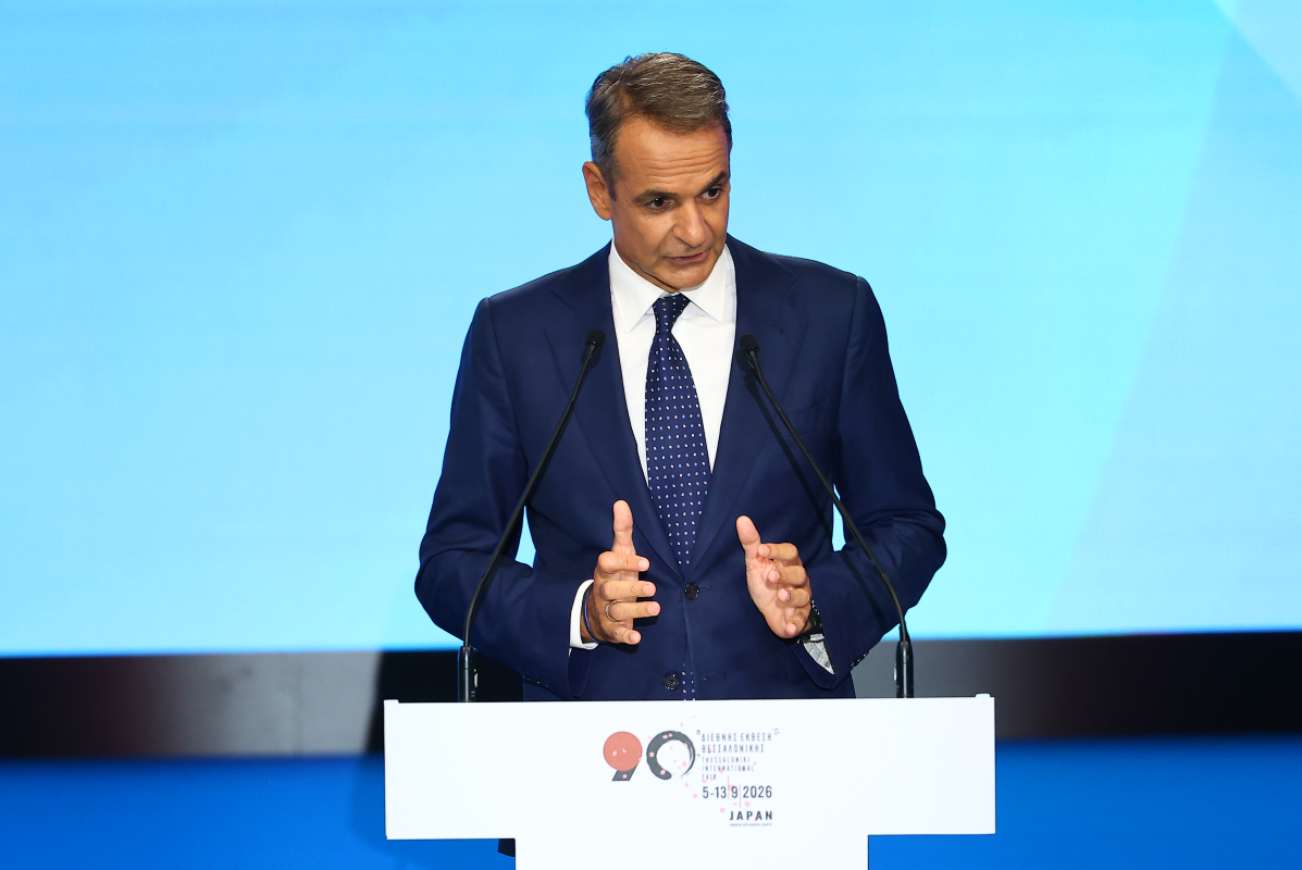

The political architecture behind the 12 measures
The importance of the package lies not only in the individual measures, but in how they are distributed.
Businesses gain from lower levies and reduced advance taxation.
Self-employed professionals gain from changes to presumptive taxation.
Farmers and three-child families benefit from zero income tax up to €20,000.
Pensioners receive higher annual support.
Public employees receive a Christmas payment.
Younger workers are targeted through the minimum wage.
Young couples are targeted through housing.
New parents are targeted through the child investment account.
The political design is therefore deliberately broad: almost every major constituency is given a concrete reason to see itself inside the government’s plan.
From a package to a timetable
The second defining feature is timing.
Many of these measures do not begin immediately.
They are spread across 2027, 2028 and 2029.
That allows the government to present a large multi-year package without loading the full fiscal cost into a single budget year.
But it also creates a political risk: every date becomes a promise that can later be checked against delivery.
TIF becomes an electoral roadmap
The “Progress and Prosperity Agreement” is therefore more than an economic programme.
It is also an electoral roadmap.
Mitsotakis is attempting to build a clear path from today’s fiscal stability toward a period of lower taxes, higher wages, cheaper energy and stronger support for housing and families.
The political dividing line he wants to establish is straightforward:
gradual, costed and permanent growth dividends versus larger promises without secured financing.


The real test: Execution
The government can claim one of the broadest packages announced at TIF in recent years.
But its political value will ultimately depend on implementation.
Will the minimum wage actually reach €1,000?
Will electricity prices fall by 30%?
Will “My Home 3” translate into real home purchases?
Will the advance tax be reduced on schedule?
Will the newborn investment account become a practical savings tool rather than a headline?
That is why the political significance of the 2026 TIF goes beyond the 12 measures themselves.
Mitsotakis has effectively placed 12 milestones on the table — and those milestones will become benchmarks against which the government is judged through 2029.
Source: pagenews.gr