Putin–Trump Reopen the Ukraine File: Witkoff and Kushner in Moscow as Kyiv and Moscow Pause Capital Strikes
 ΧΡΟΝΟΣ ΑΝΑΓΝΩΣΗΣ 9 '
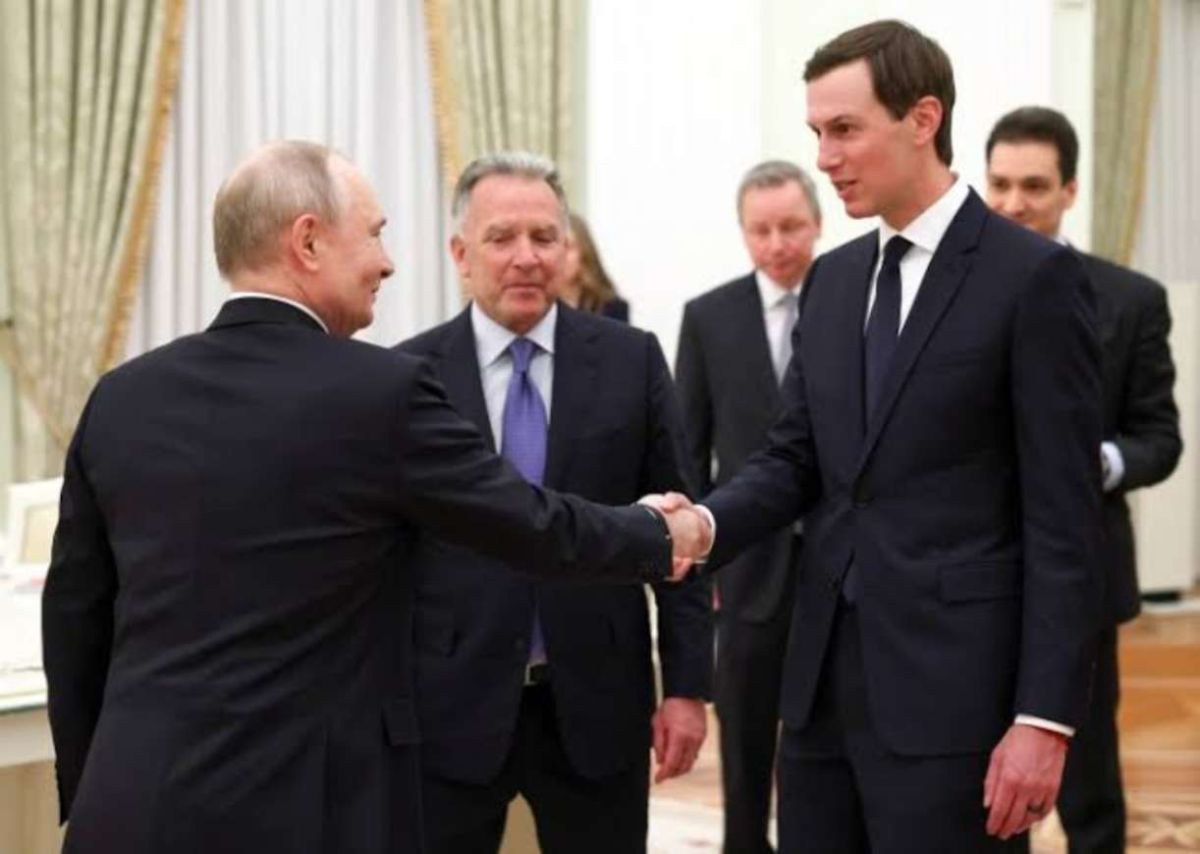
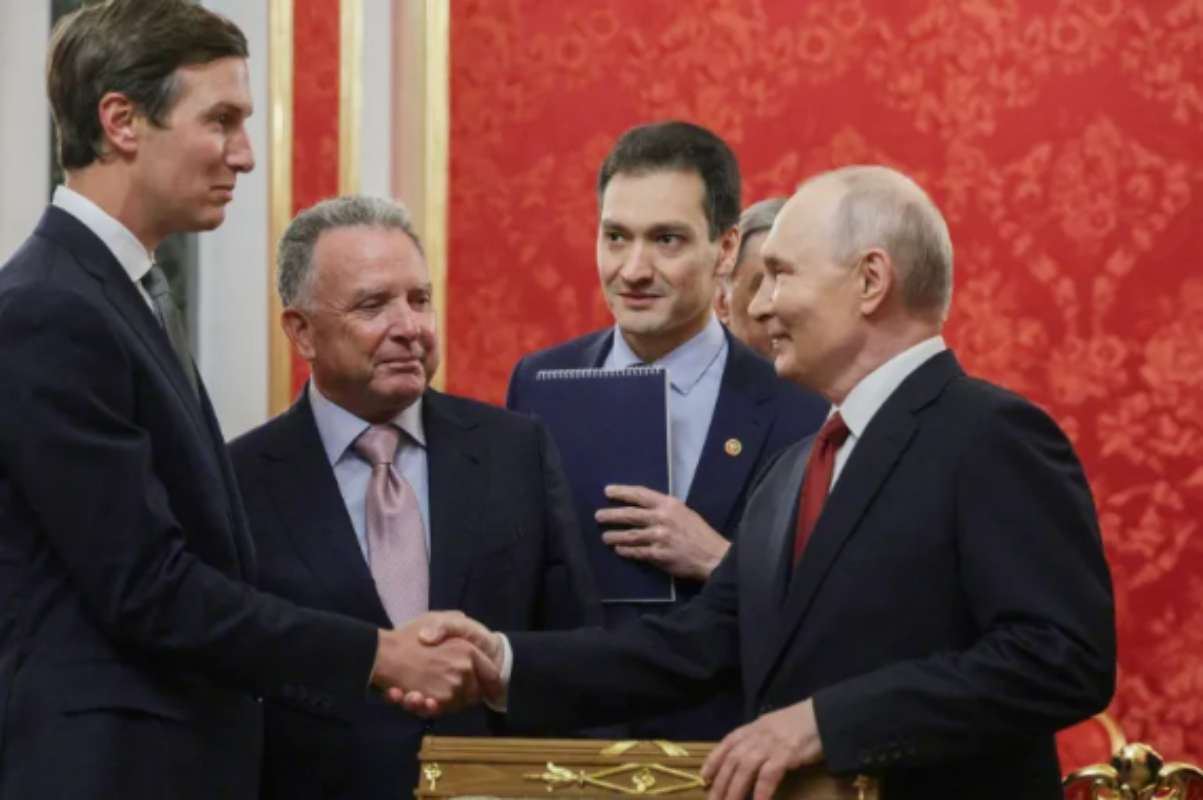
Πηγή Φωτογραφίας: Vladimir Putin welcomes US envoys Steve Witkoff and Jared Kushner for talks in Moscow on Saturday [Gavriil Grigorov/Pool/AFP]



Diplomacy is moving back to the centre of the Ukraine war, with Russian President Vladimir Putin receiving Donald Trump’s envoys, Steve Witkoff and Jared Kushner, in Moscow as Washington attempts to relaunch negotiations aimed at ending more than four years of war.
The significance of the visit lies in the fact that the two Americans are not merely holding exploratory talks. According to Trump, they are carrying a new proposal to “end the war” before travelling to Kyiv for talks with Ukrainian President Volodymyr Zelenskyy.
The full details of the US plan have not been made public.
But the mission is clearly structured as shuttle diplomacy: first Moscow, then Kyiv, with Washington attempting to identify whether there is enough overlap between the two sides to restart a serious negotiating track.
Putin greets Trump’s envoys with a message to Washington
Putin welcomed Witkoff and Kushner at the Kremlin, acknowledging from the outset that the talks would not be easy.
“The situation, of course, is not simple,” the Russian president said.
He also asked the envoys to convey his thanks and best wishes to Donald Trump.
That opening matters because it signals that Moscow wants to keep a direct political channel to the White House open, even while fighting continues and the fundamental positions of Russia and Ukraine remain far apart.
Trump: “We have an idea for peace”
Trump raised expectations before the meetings began.
“I sent Steve Witkoff and Jared Kushner to see whether we can get something done,” he said, adding that Washington had a proposal aimed at ending the war.
The key unanswered question is whether that proposal requires Ukraine to accept any territorial compromise.
That is still the most explosive issue in the entire process.
Russia has repeatedly insisted that any final settlement must recognise what it calls the “realities on the ground”.
Ukraine, by contrast, has resisted any agreement that would permanently legitimise Russian territorial gains.
The first concrete move: Three days without strikes on the capitals
The first tangible result of the renewed diplomacy is not yet a ceasefire agreement.
It is a limited but politically significant de-escalation.
Russia and Ukraine have agreed not to strike each other’s capitals for three days while the US-led talks take place.
The Kremlin said Putin had ordered Russian forces not to target Kyiv during the agreed period.
Zelenskyy, meanwhile, said Ukraine would refrain from striking Moscow and confirmed that he had spoken with the US envoys ahead of their expected arrival in Kyiv.
The measure is narrow.
It does not cover the entire frontline.
It does not stop strikes elsewhere in either country.
And it does not amount to a general ceasefire.
But it does create a first test of whether both sides can honour even a limited reciprocal commitment during negotiations.
This is not a ceasefire — but it is a test
The war continues.
Russian and Ukrainian forces remain active across the battlefield, and strikes outside Moscow and Kyiv are not covered by the arrangement.
That is why the three-day pause should not be overstated.
But politically, it has value.
If both sides comply, it could provide a small amount of confidence that broader limited agreements are possible.
If even this narrow commitment collapses, the prospects for any wider ceasefire will immediately look much weaker.
The real obstacle remains territory
The diplomatic process may have restarted, but the core Russian position has not fundamentally changed.
Moscow continues to argue that any durable settlement must address territorial control.
In practice, that means several unresolved questions remain at the centre of the talks:
- Which territories does Russia retain?
- Which areas does Moscow still claim?
- What, if anything, could Kyiv accept?
- What security architecture would prevent renewed war?
- And how would any ceasefire be sequenced with a final political agreement?
These are not technical details.
They are the core of the conflict.
Moscow is talking — but on its own terms
There has, however, been a shift in tone from Russia.
Putin had previously suggested that negotiations were effectively frozen.
Moscow is now showing greater willingness to hear new proposals and engage with Trump’s envoys.
That does not mean Russia has abandoned its objectives.
It means the Kremlin appears willing to test whether Washington can produce a framework that accommodates enough Russian demands to make negotiations worthwhile.
For Moscow, talks are useful only if they reshape the political settlement in a way that reflects the battlefield balance.
Kyiv sees a possible new opening
Ukraine is also allowing the talks to proceed.
Zelenskyy has indicated that Kyiv is willing to examine the US proposals and discuss possible pathways toward ending the war.
That is politically significant.
Ukraine is not signalling acceptance.
But it is signalling that it does not want to be seen as the side refusing diplomacy.
That gives Washington room to test proposals directly with both capitals.
Witkoff and Kushner become Trump’s key intermediaries
The choice of envoys is also telling.
Steve Witkoff has repeatedly handled sensitive diplomatic missions for Trump.
Jared Kushner, the president’s son-in-law, is returning to a high-level foreign-policy role with a mandate that appears broader than routine diplomacy.
Together they are being used as political negotiators with direct access to Trump.
Their mission is not simply to listen to Putin and Zelenskyy.
It is to carry proposals, receive counterproposals and attempt to narrow the gap between the two sides.
That gives the process a highly personalised Trump-style structure.
Why now?
There are several reasons the peace effort is returning now.
First, the war has entered a prolonged phase of attrition, with enormous costs but no decisive military outcome.
Second, strikes deep inside both Russia and Ukraine have increased, raising civilian losses and political pressure.
Third, Trump still wants to be seen as the leader capable of delivering a settlement where previous diplomatic efforts failed.
The Witkoff-Kushner mission is therefore both geopolitical and political.
Trump’s plan must solve three almost impossible equations
For a real deal to emerge, Washington must bridge at least three major divides.
- Territory and the future of Russian-occupied areas.
- Security guarantees for Ukraine and its long-term relationship with NATO.
- The sequencing of a ceasefire, sanctions relief and a final political settlement.
The order matters enormously.
Kyiv does not want to stop fighting without guarantees that Russia cannot simply regroup and attack again.
Moscow does not want a temporary ceasefire that allows Ukraine to rearm while the political dispute remains unresolved.
Washington therefore needs a formula that both sides can defend domestically.
That is the real difficulty.
The three-day pause could be only the beginning
The temporary halt to strikes on Moscow and Kyiv is extremely limited.
But if it holds, it could open the door to narrower confidence-building steps.
Those could include:
- a pause on attacks against energy infrastructure,
- a wider reduction in missile and drone strikes,
- humanitarian exchanges,
- and eventually a broader ceasefire.
None of those steps is guaranteed.
But the capital-strike pause gives negotiators at least one small mechanism to test compliance.
Trump puts himself back between Putin and Zelenskyy
The new mission shows that Washington wants to reclaim the central role in Ukraine diplomacy.
Witkoff and Kushner speak first with Putin.
Then they travel to Zelenskyy.
Between those meetings, Moscow and Kyiv accept a limited three-day de-escalation.
That is not peace.
It is not even a full ceasefire.
But it is the clearest sign in months that the US negotiating track has moved back into active territory.
The real question is no longer whether Trump has a proposal.
He does.
The question is whether he has found the one thing that has eluded every previous effort:
a formula under which Putin does not believe Russia is losing the war, and Zelenskyy does not believe Ukraine is being forced to surrender.
If that point exists, the Kremlin meeting could prove to be much more than another diplomatic photo opportunity.
It could become the beginning of the most serious negotiation yet over how this war ends.
Source: pagenews.gr
Διαβάστε όλες τις τελευταίες Ειδήσεις από την Ελλάδα και τον Κόσμο