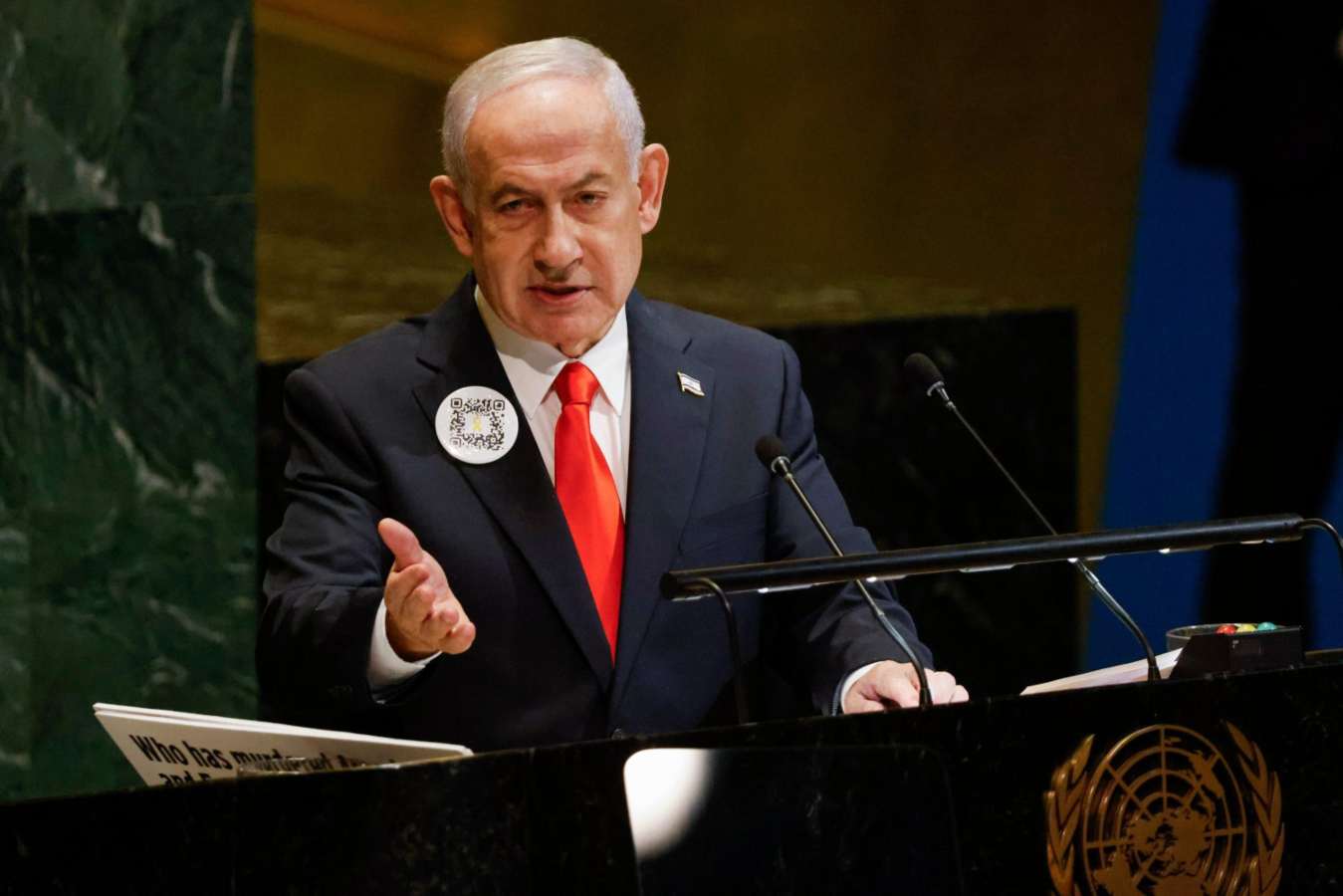
A private flight from Israel to the United Arab Emirates.
Four hours on the ground in Abu Dhabi.
A meeting that had not been announced in advance.
And behind it all, perhaps the most politically explosive question still following Benjamin Netanyahu:
What did Israel know before October 7, 2023?
The Israeli prime minister traveled to the UAE on Sunday and met President Mohamed bin Zayed Al Nahyan, widely known as MBZ.
Netanyahu’s office subsequently confirmed the visit.
But what has turned the trip into a major political story inside Israel is the reported reason behind it.
According to Al-Monitor, citing sources who spoke to Israeli journalist Ben Caspit, Netanyahu sought a denial from MBZ of reports that the Emirati leader had warned him before October 7 that Hamas was preparing a major attack.
The UAE has not publicly confirmed that account.
Netanyahu’s office categorically denies that he received such a warning.
The Flight That Reopened the October 7 File
Israel’s Channel 12 first reported that Netanyahu had traveled to the Emirates.
According to the network, his aircraft left Israel shortly after midday and landed in Abu Dhabi at around 3:10 p.m.
The delegation remained in the UAE for roughly four hours.
Senior Israeli security officials traveled with Netanyahu, including the head of Mossad and the head of the National Security Council.
Netanyahu’s office later sharply criticized publication of the trip before the delegation had returned to Israel, arguing that the disclosure created a serious security risk.
There is therefore no longer a question over whether the visit happened.
The unanswered question is what was discussed behind closed doors.


Al-Monitor: Netanyahu Wanted MBZ to Deny the Warning
According to Al-Monitor’s sources, Netanyahu asked Mohamed bin Zayed to reject reports that he had warned the Israeli prime minister before the October 7 massacre.
The controversy erupted earlier in September.
A Haaretz report, based on a forthcoming book by journalists Shlomi Eldar and Ruth Yovel, alleged that MBZ had communicated with Netanyahu roughly a week and a half before the Hamas attack.
According to that account, the Emirati leader warned him that intelligence indicated Hamas could be preparing a major operation.
Netanyahu denied the report in unequivocal terms.
“No Warning Was Given”
The Israeli prime minister’s office responded:
“No warning was given to the prime minister by the United Arab Emirates before October 7.”
It went further.
Netanyahu’s office said there had been no conversation between Netanyahu and MBZ from the beginning of September until October 7, 2023.
It also threatened legal action against Haaretz and the journalists behind the report.
The allegation therefore remains disputed.
What the UAE Has — and Has Not — Said
Abu Dhabi has taken a much more cautious approach.
It has not confirmed the allegation that MBZ personally warned Netanyahu.
But neither has it issued the kind of categorical public denial that would definitively settle the controversy.
The Emirati position has been that it does not comment on media speculation.
At the same time, UAE officials have stressed that Israel and the Emirates have maintained “open and direct channels of communication” since normalization in 2020 and that relevant security information is passed through the appropriate mechanisms.
That formulation left an important question unresolved:
Could Emirati intelligence have warned Israeli security services even if MBZ did not personally warn Netanyahu?
Channel 12: UAE Intelligence Warned Shin Bet
Days later, the story became even more complicated.
Channel 12 reported, citing three senior Emirati officials with direct knowledge, that UAE intelligence had indeed warned Israel’s Shin Bet in September 2023 that Hamas could be preparing violent action.
That is materially different from saying MBZ personally telephoned Netanyahu.
And the distinction matters.
Intelligence may have been exchanged between security services without establishing that a personal warning ever reached the Israeli prime minister.
That question remains unresolved.
The “Earthquake” Warning
At the heart of the reports is another striking allegation.
Then-Hamas leader Yahya Sinwar is said to have told a former Palestinian official that something major was approaching, reportedly using the word:
“earthquake.”
According to the published account, that information reached an Emirati adviser and eventually the UAE leadership.
Channel 12 subsequently reported that the warning passed by Emirati intelligence to Shin Bet contained substantially similar information.
Whether — and how far — that intelligence moved through Israel’s security and political hierarchy remains disputed.
Why This Is So Politically Dangerous for Netanyahu
This is not simply another diplomatic controversy.
October 7 remains the central accountability question confronting Israel’s political and security establishment.
The Hamas-led attack killed about 1,200 people in Israel and saw 251 hostages taken into Gaza.
Ever since, one question has persisted:
What warning signs existed, who saw them, and what was done with them?
That makes the distinction between the competing versions crucial.
If Netanyahu never personally received such a warning, as his office insists, this particular allegation would lack its central premise.
If evidence were to establish that such a warning reached him and was disregarded, the political and institutional implications would be very different.
At present, however, the claim of a personal warning has not been independently established.
The Timing Makes the Visit Even More Sensitive
The political calendar adds another layer.
Israel is heading toward elections on October 27.
Responsibility for the failures preceding October 7 is already part of the country’s political debate.
Netanyahu’s opponents have used the new reports to renew pressure for a comprehensive independent investigation.
Netanyahu rejects the allegations against him.
An authoritative statement from MBZ about what happened in September 2023 could therefore carry significant political consequences inside Israel.
Why Would MBZ Want to Get Involved?
That raises another question.
What incentive does the UAE president have to become involved in an Israeli domestic battle over October 7?
The Emirates have invested heavily in their relationship with Israel since the Abraham Accords.
At the same time, Abu Dhabi has sought to maintain an independent regional strategy and relationships across competing power centers.
A public intervention supporting either version of the October 7 controversy could transform MBZ from a regional partner into a participant in Israel’s internal political dispute.
That helps explain why Emirati silence matters.
This Was Not an Ordinary Diplomatic Delegation
The composition of Netanyahu’s delegation was also notable.
According to his office, he was accompanied by senior officials including:
Mossad director Roman Gofman,
National Security Council chief Shmuel Ben-Ezra,
the prime minister’s military secretary,
and Shin Bet security personnel.
That does not establish what was discussed.
But it demonstrates the level at which the visit took place.
The Flight Route Tells a Bigger Story
Flight-tracking data showed a private aircraft previously used by Netanyahu traveling from Israel toward the UAE through Jordanian and Saudi airspace.
A simple line across a flight map captures much of the Middle East’s transformed strategic geography:
Israel.
Jordan.
Saudi Arabia.
The UAE.
Behind that route stand the Abraham Accords, Iran, Gulf security and the continuing effort to construct a new regional security architecture.
One caution is essential, however: an archival flight-tracking image from November 2020 showing a Netanyahu-associated Gulfstream flying toward the region should not be presented as evidence of Sunday’s 2026 flight.
The Real Story Is Bigger Than a Secret Flight
The secrecy surrounding the journey is striking.
But the deeper geopolitical story lies elsewhere.
MBZ has become one of the relatively few regional leaders able to maintain important channels with:
Israel,
Washington,
the Arab Gulf monarchies,
and multiple competing centers of power across the Middle East.
That gives the UAE strategic weight far beyond its size.
It also creates a remarkable reversal.
In 2020, Netanyahu presented the Abraham Accords as one of his signature diplomatic achievements.
Six years later, one of the most important relationships created by those accords has become entangled in a far more difficult question:
What happened before the greatest security failure in Israel’s history?
The Question Abu Dhabi Has Not Publicly Closed
Nearly three years after October 7, the unanswered questions remain.
Did UAE intelligence warn Israel?
If so, which Israeli institution received the warning?
How seriously was it assessed?
Did it move up the chain of command?
Did Netanyahu personally receive any warning?
And if he did not, why did the intelligence not reach him?
For now, there are reports, denials and conflicting accounts — but no definitive public evidence establishing that MBZ personally warned Netanyahu.
That is why the Abu Dhabi trip matters.
Netanyahu has returned from the Emirates. The public answer that could settle the controversy has not.
Source: pagenews.gr